Hands-On With the Hasselblad X2D II 100C — Hasselblad Finally Got it Right (Mostly)


Table of Contents
 Hasselblad’s New Generation of Medium-Format


Hasselblad X2D II 100C
https://www.amazon.com/dp/B0BYQJJYF7/?tag=imaging-resource-bgfg-20The Hasselblad X2D II 100C features a 100-megapixel medium-format back-side illuminated CMOS sensor delivering up to 15.3 stops of dynamic range and native ISO 50 sensitivity. It supports 16-bit colour depth and Hasselblad’s HNCS HDR workflow. Continuous autofocus (AF-C) is enabled via phase-detect plus LiDAR sensing and subject detection for people, animals, and vehicles. In-body image stabilization (IBIS) offers up to 10 stops of compensation. The rear 3.6-inch OLED two-way tilt touchscreen reaches up to 1,400 nits brightness and supports the P3 colour gamut for HDR monitoring. Internal storage includes a 1 TB SSD plus a CFexpress Type B card slot.
- 100 MP medium-format BSI sensor with 16-bit colour for extremely high image detail and tonal depth.
- Up to 15.3 stops of dynamic range preserves highlight and shadow detail.
- In-body stabilization rated up to 10 stops enables handheld shooting at slower shutter speeds.
- Phase-detect AF with LiDAR-assisted continuous autofocus and subject detection.
- Bright, tilting 3.6-inch OLED touchscreen (1,400 nits) supports HDR monitoring.
- Internal 1 TB SSD plus CFexpress Type B slot for fast, flexible storage.
- No video recording capabilities — stills-only camera.
- Slow burst rate (around 3 fps) limits suitability for action photography.
- Medium-format body and lenses increase overall system size and cost.
- 100 MP RAW files demand significant storage and processing resources.
I have a long history with Hasselblad cameras. I grew up in an era when the Hasselblad 500-series cameras were the pinnacle of medium-format photography. I personally shot with the Hasselblad 501 and put plenty of rolls of 120 and 220 film through it.
When digital medium format cameras came to market, they were simply versions of the original film cameras that replaced the removable film magazine with one containing an imaging sensor. The bodies were upgraded to communicate electronically with the backs, but compared to today’s cameras, they were wildly unsophisticated.
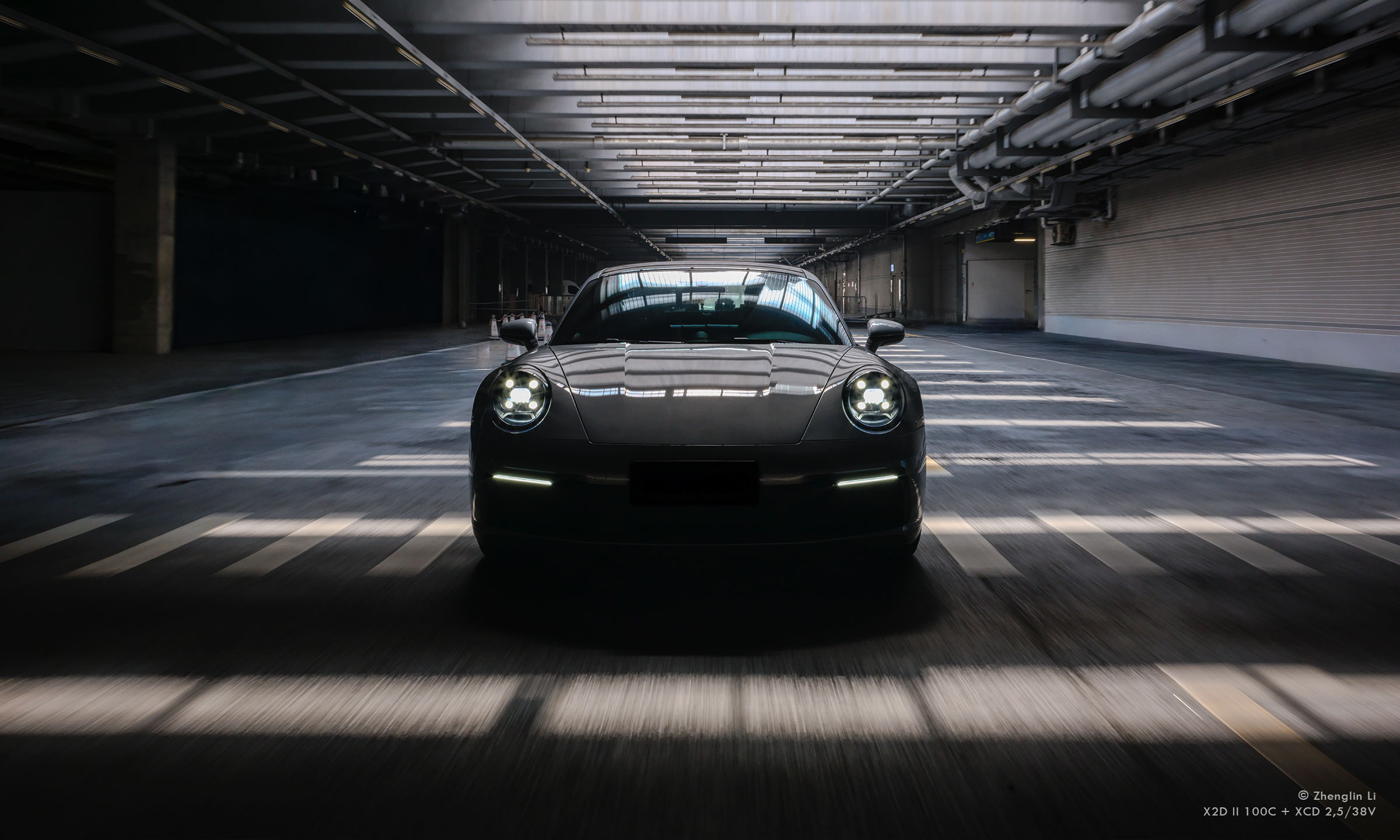
Hasselblad made a radical departure from its historical boxy 500-series cameras when it introduced the X1D 50C camera, a medium format system in a body that was clearly designed to look like the “modern” look of a DSLR of the era.
I remember seeing it at the Photokina trade show in Germany, and being fascinated by it. Instead of a medium format camera built around the tradition of a film body, this was a body built around a digital sensor.
It was not a perfect camera by any means. Focus was slow, operation was slow, and while the images were beautiful, using it was a chore.

The X2D was a major upgrade, tackling a lot of the issues photographers like me had had. It had a combination of contrast and phase detect autofocus versus the contrast detection system of the X1-series. As someone who leaves their memory cards at home often enough that I keep one in my wallet, having built-in 1TB of storage was a brilliant idea.
That camera had around seven stops of In Body Image Stabilization (IBIS), better than most full-frame cameras. It had around 15 stops of dynamic range, on par with the competing Fujifilm GFX100RF camera.
Despite limitations, it was a usable and impressive camera in a way that the X1D was not, at least in uses like portraiture and landscape. It still lagged behind full-frame cameras for documentary work, lifestyle photography, and fast-paced journalism, but it was a solid and usable camera.
Hasselblad’s New Generation of Medium-Format
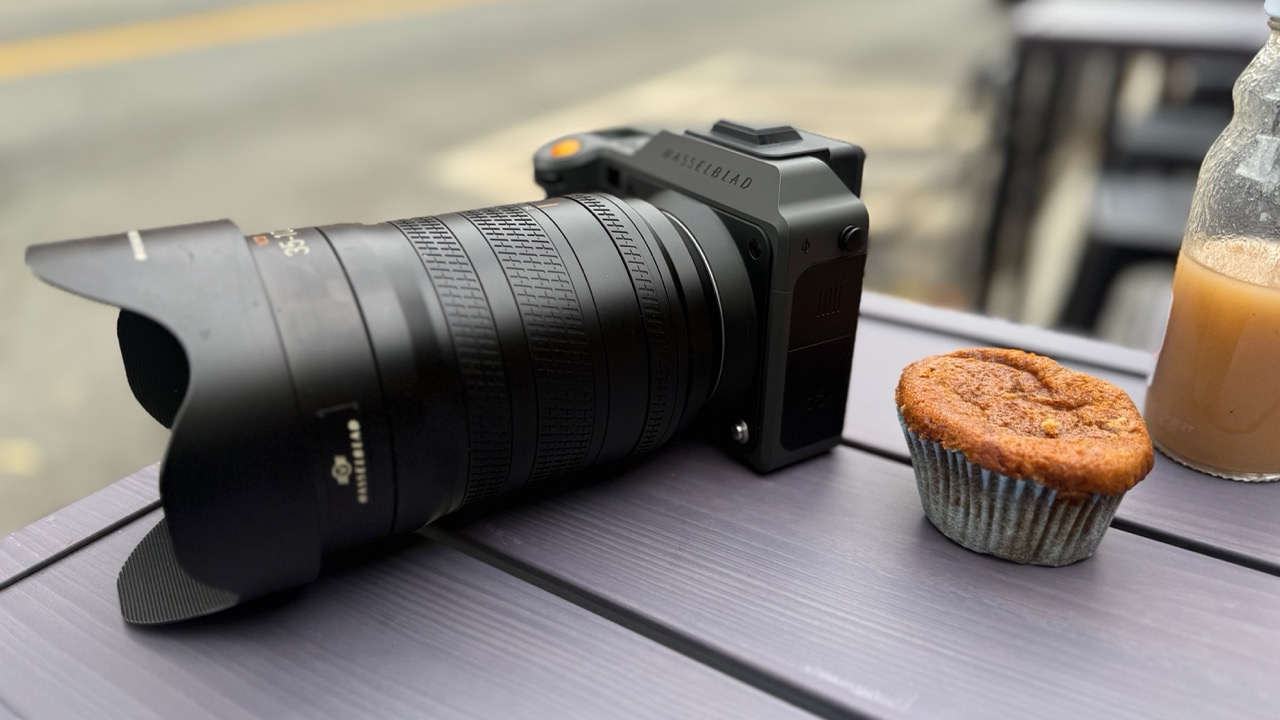
With the new Hasselblad X2D II 100C, the company is hoping that the fourth time’s a charm, and largely it is. I enjoyed shooting with it more than the other X-series Hasselblad cameras, and more than some full-frame and APS-C cameras I’ve reviewed over the years.
It’s still not a “fast” camera, but a medium format camera is unlikely to ever catch up to the performance of a similarly priced full-frame mirrorless, or even full-frame cameras that are a fraction of the price. Interestingly, the X2D II launched with a lower price than the X2D, at about $7,700 versus the $8.200 price of the X2D.
Mostly Excellent Autofocus
The biggest update is in the area where the X-series has been particularly weak, the autofocus. It now has continuous AF aided by LiDAR, and while it’s hard to say how much of the improved AF is better focusing algorithms, and how much is the LiDAR, it is unquestionably better at autocusing than predecessors.
The AF-S system of the older X-series cameras made them impractical for anything besides landscape photography or portrait work, where the subject isn’t moving. They were cameras you’d use to capture a bride and groom cutting their cake, but not one you’d use to capture them dancing.
With the new subject-detection autofocus system, aided by LiDAR, the X1D II 100C can nail subjects including humans and animals, for the most part.
A good test of the new autofocus system came at a No Kings protest. I would not have brought the original X2D to a protest rally, as there’s little chance it would have focused accurately on people marching and holding signs, but the X2D II managed to capture images that the X1D and even the X2D could not.


A person walking straight at the camera would have been too much for the AF-S on the X2D, since the focus would have locked on where the subject was at the time of shutter release. The blur might have been virtually unnoticeable, but it would be there.
The 425-point phase detect system, coupled with the new AF algorithm, tuned out the other spectators in favor of the main subject.
In this photo of my son, the camera had a hard time picking out the face. This is tricky for an eye-detection AF system, but I’ve captured many shots like this and the face detection is more accurate. In both images I’ve set the frame with the paintbrushes between myself and my son to see if the camera would leap onto the brushes. As brightly colored vertical elements, they could easily confuse an AF system, and they did not

That said, when pixel peeping, the minitature is in the sharpest focus. It’s relatively in the plane of the eyes, but there’s a tad more focus there than on the frames of his glasses or his eyelashes.


Animal Eye AF works very well, though it’s hard not to focus on the big eyes of a cat, but squirrel eyes are harder to detect since they’re black against dark fur, and the X2C II 100C nailed it.


At three frames per second, this camera isn’t winning any speed competitions, but in animal detection mode iit was fast enough to grab a few shots of swooping seagulls, and the animal-detect AF latched right onto the birds.


I also had the nwith me, and unsurprisingly, the R6 III outpaced it significantly. Still, the X2D II isn’t meant to be a photojournalist camera for fast-moving events, and it held up nicely.
Read Our Caon R6 III Review
It’s still a camera designed for portraits, environmental portraits, some street photography, landscapes, and fine art, but you can also put it in your camera bag and bring home in-focus images that the X2D and X1D would have missed.
An All HDR Workflow



The X2D II has an end-to-end High Definition Range (HDR) workflow, allowing it to capture, display, and process images with a massive tonal range. The HDR pipeline is 16-bit, meaning color and brightness information is nearly lossless from capture to output.
On the surface, this doesn’t seem different from shooting raw files, but a raw file is designed to provide a standard definition image, so any adjustments to tonality need to be done in post-production.
With an HDR workflow, every aspect of the process is tone-mapped to give you the most color-accurate image possible, with the maximum dynamic range available from capture.
The display on the X2D II is HDR, so that you can preview and review the full amount of dynamic range captured on the device. When editing photos on an HDR display, you can work with the full dynamic range available more easily than working on an SDR display. When preparing images for devices like the iPhone, iPad, Apple displays, and any other HDR device, you’ll know what the result will be.
To evaluate the HDR content, the camera has a 3.6-inch OLED touchscreen with 2.36 million pixels and a brightness of 1,400 nits. I had no problems using the camera in bright sun. The EVF is 5.76 million pixels and a .87x magnification.
The EVF doesn’t have the highest resolution on the market. That distinction goes to the 9.44 million pixel resolution EVFs found on cameras like the Sony a9 II and Canon R1. But the EVF is the same resolution as the Canon R5 II. From a component standpoint, this is the one under-spec’d part of the camera.
Note: The image compression used by WordPress is pretty aggressive. Evaluating these images after saving the draft, it’s obvious that the benefits of the HDR workflow are not going to be apparent here. Saturation of these images is washed out and details are softened compared to the originals.

Impressive In Body Image Stabilization (IBIS)
The Hasselblad X2D II 100C has a claimed 10 stops of IBIS, which is best in class. More accurately, it has IBIS that blows other systems out of the water. The medium format Fujifilm GFC100 has 5.5 stops, and the Canon R1 has up to 8.5 stops.
Ten stops of stabilization are insane. It’s impossible to measure just how accurate that claimed rating is, but the lack of motion blur in images where I was panning to track a subject is impressive. Even when shooting birds in flight—something this camera was not designed to do—I saw no motion blur unless I was shooting too slowly.

Video – Or Lack Thereof
There is no video recording capability on the X2D II, which may be enough to turn off some potential customers. I have no personal issues with the lack of video capabilities, as I wouldn’t want to capture from a 100MP sensor, and I’d think it would have considerable problems with overheating.
If you need a video camera, don’t buy the X2D II, but I suspect that if you’re considering this camera, it isn’t for video anyhow.
Hands On
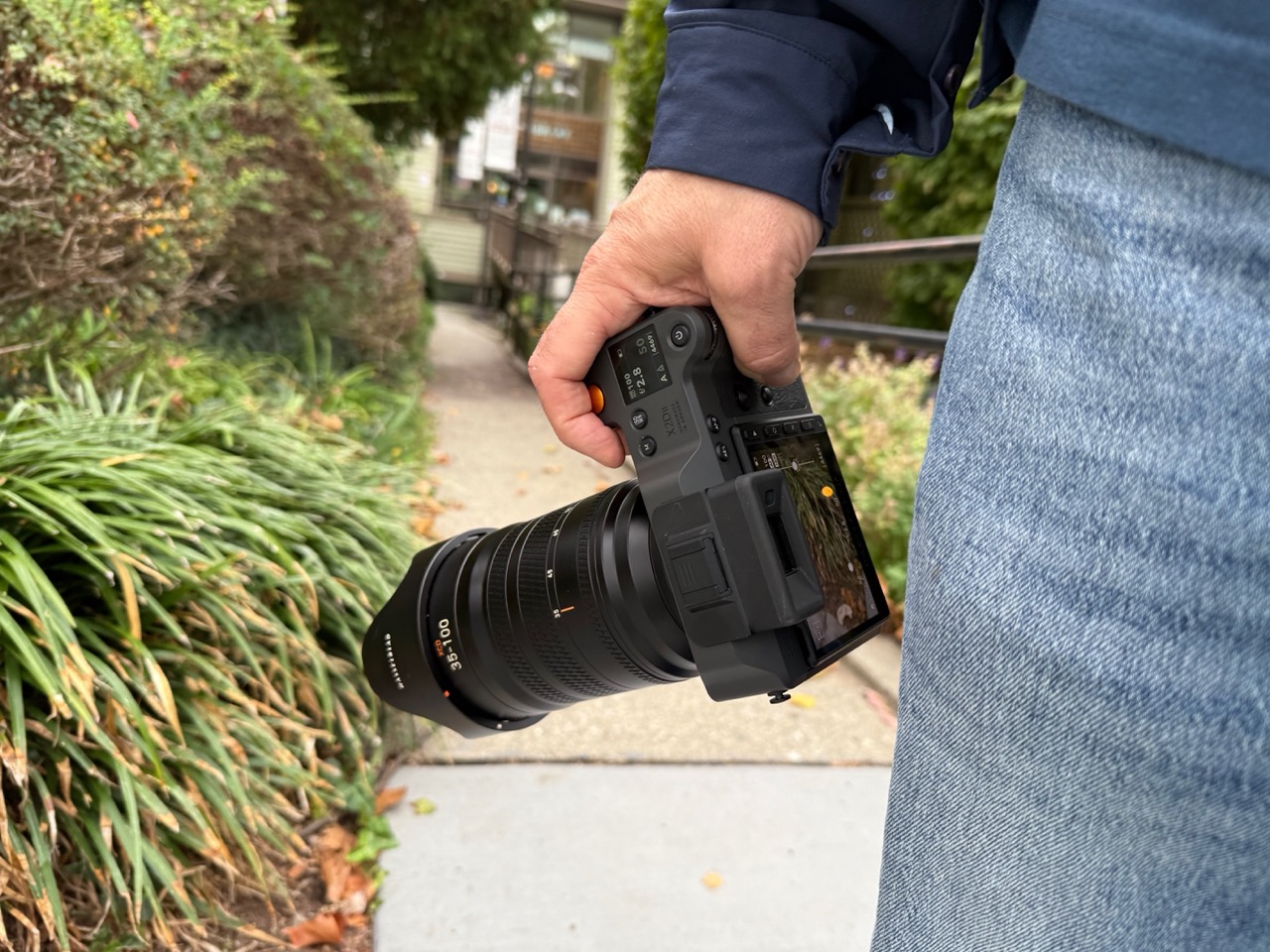
I utterly and unabashedly love the design of the X2D II, and have always loved the style of the X-series. When I first used it, it felt futuristic. In my review of the X2D, I mentioned that all other cameras were built around a film workflow. (Consumer-level cinema cameras did not yet exist.) SLRs were designed around the shape needed for the film canister. DSLRs evolved around that same design, and mirrorless cameras continued that tradition.
The X1 was one of the first cameras designed specifically for digital photography. Digital sensors are flat since there is no film canister. The size and thickness of the body are just thick enough to house the massive sensor, electronics, and a battery. The design is form-follows-function.
The double-edged sword of the design is that it was likely responsible in part for the performance of the earlier cameras. You can cram a lot of electronics in the part of a camera where film would have gone, and the X-series has little of that space.
The X2D II 100C carries on that tradition, and even slims down compared to previous models. It feels very similar to the Fujifilm GFX100RF. However, the Fujifilm camera is designed to emulate the analog past that original Hasselblads dominated, and the Hasselblad feels like it’s designed for the future.
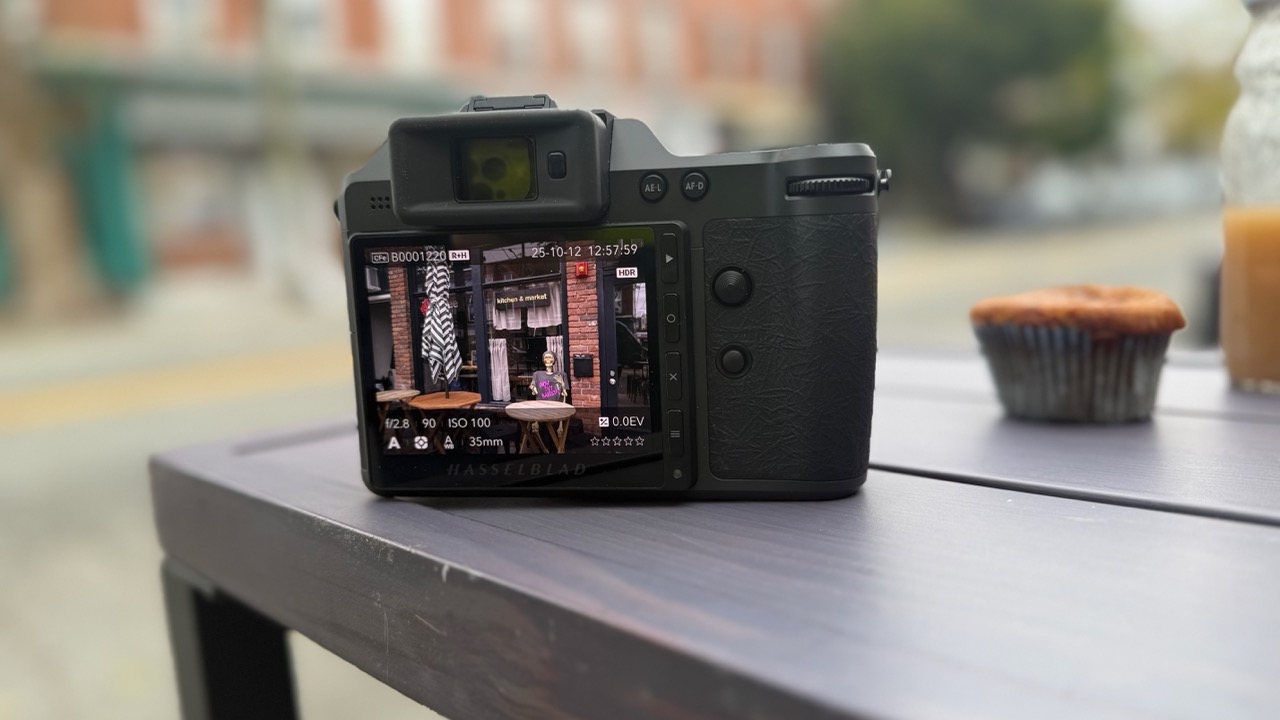
Controls are sparse. The back of the camera has only the display with four buttons to control scrolling through menus and making menu selections, as well as a button to bring up the menu. There’s an AE-L and AF-D button.
The latter is used to control the subject detection of the X2D II. Although that doesn’t seem like an obvious choice for a dedicated button, most systems require programming a custom button to handle AF subject control, and having a button just for the AF system is a smart idea.
The back has the rear control dial and a joystick that does double duty, selecting menu settings and moving through the interface.
The top deck is equally sparse, with just a power button, LED screen, mode button, ISO/WB button, and a front control dial. On the front is just a programmable button and the lens lock button.
The power button on the top deck is my one quibble with the layout of the camera. Most cameras use a switch to turn the camera on or off, while the X2D II uses a press-and-hold power button. This design is to keep the top of the deck flat, but pressing and holding a button to power the camera on feels like a slow and cumbersome step. The camera might activate as quickly as a toggle switch, but it definitely feels slower to activate.
Excellent Menus
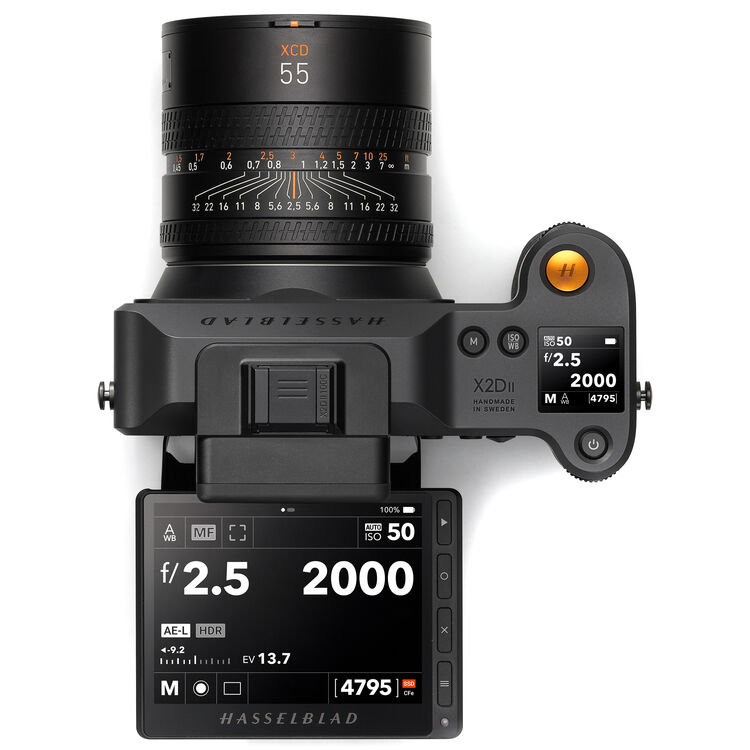
Most digital cameras have awful menus. They’re cluttered, poorly organized, and many of the settings are impossible to determine from the names they’re given. I spent ten minutes the other day trying to remember where the picture profile settings are on a Sony camera, and then wondering why it calls things PP1, PP2, etc., instead of S-Log3/S-Cine3.
The large LCD screen allows for big, visible controls. But it’s not just the size of the layout I like, it’s the way it’s laid out. Many cine cameras have a similar user interface where tapping a setting brings you immediately into the options, with clear ways to move between choices. The Hasselblad X2D II has one of the nicest interfaces on any camera today.
Lens Limitations
The Hasselblad X-series lens lineup comprises fewer than ten lenses, which is a much smaller number than any mirrorless full-frame system. It’s an even smaller collection than Fujifilm’s medium-format GFX-series lenses.
There are third-party options available for the Hasselblad system, and the lenses Hasselblad makes cover a wide range of focal lengths and apertures, so the relative dearth of lenses is probably not an issue for a potential customer of the X-series. It’s just good to keep in mind you’re buying into a system with fewer options than some others.
Software Woes
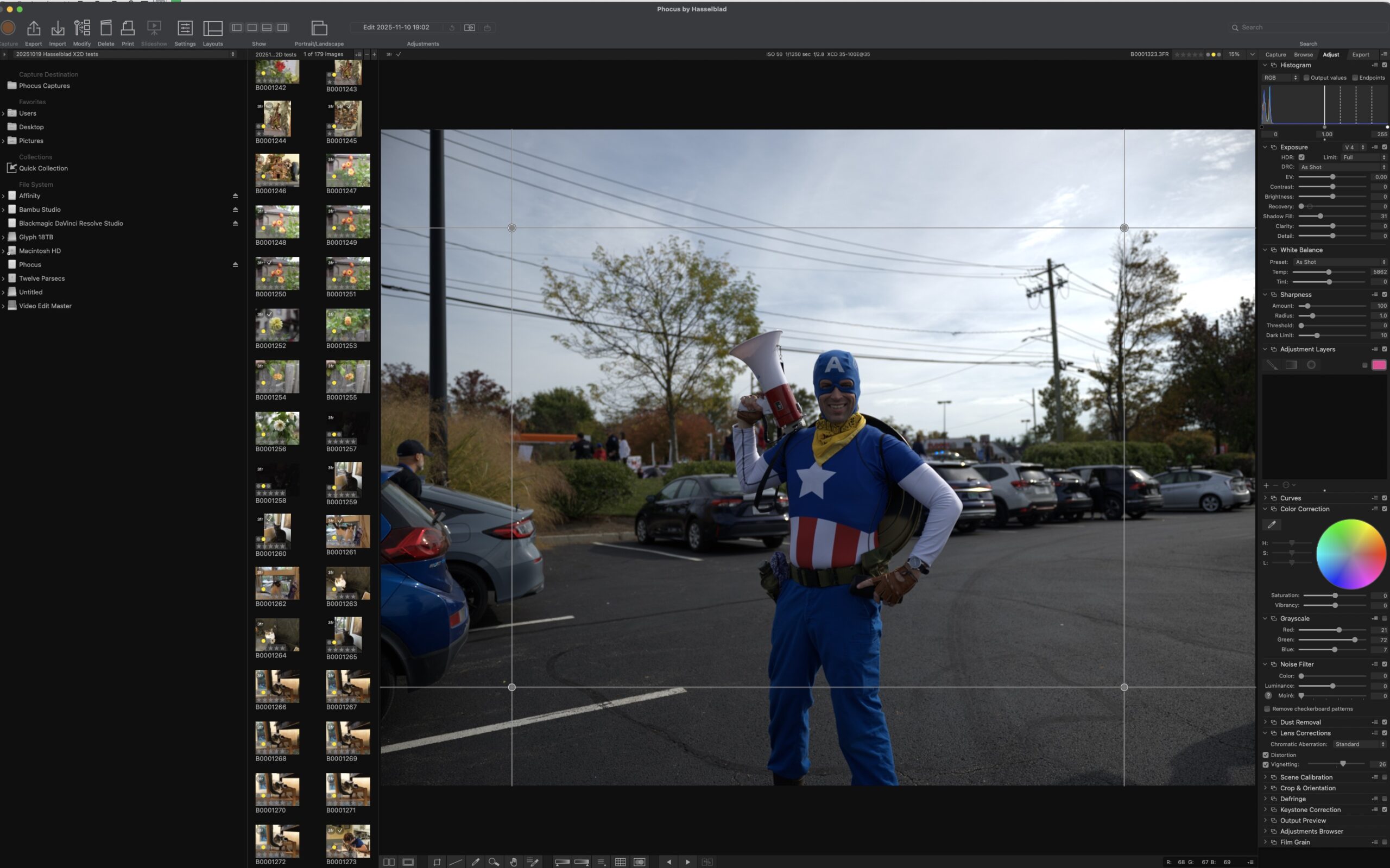
As of this article, Lightroom and Photoshop only have preliminary support for Hasselblad raw files. Capture One users will be disappointed to find out that there is not, nor likely ever will be Hasselblad support.
Capture One started life as software for the Phase One medium format camera system, and even though Capture One broke off from Phase One years ago, the grudge between the two is ongoing.
The alternative is to use Hasselblad’s Phocus software, which, as is the case with most camera manufacturers’ software, is dismal. The software is required for tethering workflows, but runs like molasses.
On my Mac Studio, which is fast enough to edit multiple streams of 4K footage in real time, Phocus often took more than ten seconds to load a file fully. Sometimes the full image data would fail to load until an adjustment was made, at which point the resolution and saturation would suddenly load. Sometimes dragging sliders had no effect at all.
With support for the full HDR workflow of the Hasselblad files, I’d like the Phoocus app to be speedier and for the tools to all work properly all the time.
Image Quality

While I usually discuss image quality earlier in a review, I’ve left this to last because the image quality on the X-series has always been impressive. The X2D II 100C is no exception.
Files are as detailed as you’d expect from a 100MP sensor. With the HDR pipeline, colors are rich and accurate. If image quality is your main objective in camera selection, this has some of the best I’ve seen in any camera, ever.
Images, in short, are superb. From the saturated colors of fall foliage to the skin tones in a portrait, the Hasselblad X2D II 100C delivers. In many ways, the image quality is the primary feature of this camera, with the design, autofocus, IBIS, and display secondary features.
However, the tradeoff with the high resolution of a 100 megapixel sensor is a higher amount of noise relative to lower resolution sensors, all else being equal.
Image noise is a function of the size of the sensor and the number of pixels. A sensor needs to be covered from edge-to-edge in pixels, so when the number of pixels increases, they get smaller and closer together. It’s the size of these pixels and their proximity to other pixels that determines the light-gathering abilities of the sensor.
You can think of this like putting a both a glass and a bucket outside in the rain. They both will have the same height of water after the rain stops, but the bucket will have more total water. When this comes to light, the bigger the bucket, the more light gathered.
So, a 100 megapixel medium format camera would have more noise in low light or high ISO than a 50 megapixel medium format camera sensor. There are technologies that change this equation. A Backside Illuminated Sensor (BSI) gathers more light than a traditional sensor due to how the wiring is structured.
In any case, the 100 megapixel X2D II 100C produces roughly the same amount of noise as the Sony a7R V at 61 megapixels. The sensor is smaller than medium format, but the lower resolution means bigger pixels.
If you don’t need the 40 megapixel difference between the a7R V and the X2D 100C, then that Sony, or any mirrorless camera with a 60mp BSI sensor, would have the same low light performance. With the Sony, you get some of the best autofocus in the business, a smaller body, a larger selection of lenses, video capabilities, and a price that’s a few thousand dollars cheaper.
To follow along with that math, a 50 megapixel camera would have even less noise, albeit at half the resolution as the 100 megapixel sensor in the X2D II 100C.
I don’t think that most customers considering the Hasselblad are between it and a full-frame camera, just as I don’t think most Leica customers are considering alternative systems.
Despite any noise tradeoffs, the HDR workflow and 100 megapixel sensor are hard to beat.
Who Is This For
The Hasselblad X2D II is not a camera for the masses. It’s even more particular of a camera than a Leica, in that it’s designed not only for a specific type of customer, but a specific type of shooting.
That said, it’s much more flexible than one might expect. The new autofocus, the HDR workflow, the IBIS, and the image quality make it an incredible option for a photographer looking for the ultimate in portable medium-format photography.
The X2D II 100C feels faster, smarter, and more accurate than any Hasselblad X-series camera. Finally, it fulfills the promise of that first X1 camera I saw at Photokina so many years ago.