
Best Canon Cameras: The Complete Buyer’s Guide for Every Photographer

Table of Contents
-
 Best Canon Cameras: Our Picks at a Glance
 -
Canon Full-Frame All-Rounders
-
Canon Vlogging and Social Media Creator Cameras
-
Canon High-Resolution Cameras
-
Canon Hybrid Video Cameras
-
Canon Sports & Wildlife Camera
-
Canon Portrait Cameras
-
Canon Landscape Cameras
-
Canon Travel Cameras
-
Canon APS-C Cameras
-
Canon Budget Cameras
-
Comparison Chart
-
Full Frame or APS-C?
-
Understanding Canon’s AF Systems
-
FAQs
David Schloss, Editor-in-Chief and the Imaging Resource staff
Canon’s 2025 lineup has something for everyone—from beginners to professionals and every creator in between. After a slow start in the mirrorless race, Canon now offers a wide range of EOS R models designed for every type of shooter.
Choosing the right camera depends on how you work and what matters most: sensor size, autofocus, speed, video features, and price. A good camera should feel intuitive, deliver consistent results, and leave room to grow.
Canon’s EOS R system now spans twelve models, from the compact R100 to the flagship R1. This guide organizes them by use and experience level to help you find the perfect fit for your needs.
Best Canon Cameras: Our Picks at a Glance
Why Trust Us
I’ve been testing and shooting Canon cameras since 2005, when I got my Canon EOS 1Dx. Since then, I’ve tested every Canon camera and most of its lenses. I’ve used Canon cameras for professional shoots, photos of family and friends, and for airshows, wildlife, and birding.
Our photography team has been testing and reviewing Canon cameras for over two decades, from the film era through the digital revolution to today’s cutting-edge mirrorless systems. We use Canon cameras professionally for commercial shoots, wildlife photography, and content creation, giving us real-world experience with their performance in demanding conditions.
We’ve personally tested every camera category in this guide, from entry-level models to professional flagships. Our recommendations are based on extensive hands-on testing, image quality analysis, and practical usability assessments. Canon’s EOS R system has been a particular focus, having reviewed every major release since the original EOS R.
We never take payment for placement, and even though our articles contain affiliate links, they never influence our editorial rankings.
Affiliate Disclosure: We may earn a commission from purchases made through our links.
Key Takeaways
Canon’s 2025 mirrorless lineup spans everyone from first-time creators to full-time professionals. The EOS R50 remains our go-to entry camera thanks to its compact body and autofocus inherited from higher-end models. Stepping up, the EOS R8 provides full-frame performance for hybrid shooters who want pro-level image quality in a lightweight design. The EOS R6 Mark II delivers the speed and stabilization for sports, events, and general versatility of the flagship EOS R1. The EOS R5 Mark II leads the range with its 45-megapixel sensor, 8K video, and advanced subject detection.
Canon Full-Frame All-Rounders
What I like to call “all-rounders” are those that can handle any subject, without paying more for features they don’t need. These models excel at both stills and video without favoring one creator’s style over another.

- 40fps electronic shutter with full autofocus tracking
- Unlimited video recording eliminates workflow interruptions
- 8-stop image stabilization enables handheld telephoto shooting
- Advanced subject detection works across humans, animals, and vehicles
- Dual card slots (CFexpress Type A + SD UHS-II)
- Weather sealing rated for professional outdoor use
- 24MP resolution limits heavy cropping compared to the R5 series
- An electronic shutter can show rolling shutter with fast motion
- Premium pricing approaches professional camera territory
- A large file buffer can slow down after extended burst shooting
- Sensor: 24.2MP full-frame CMOS
- Processor: DIGIC X
- Autofocus: Dual Pixel CMOS AF II with subject detection
- Video: 4K 60p, 6K oversampling, unlimited recording
- Image Stabilization: 8-stop in-body stabilization
- Viewfinder: 3.69M-dot OLED EVF
- LCD: 3.0” fully articulating touchscreen
- Battery: NP-E6NH (360 shots)
- Burst Rate: 12fps mechanical, 40fps electronic
- Dimensions: 5.4 x 3.8 x 3.5″ (138 x 98 x 88mm)
- Weight: 1.5 lb (670g) with battery
Not only is this Canon’s best mirrorless camera, I think it’s one of Canon’s best cameras.
The R6 Mark II delivers 24.2MP full-frame resolution with a crazy 40 fps with electronic shutter shooting and unlimited video recording in all modes. Its 8-stop in-body image stabilization works with any RF lens. Canon’s excellent subject detection autofocus tracks people, animals, and vehicles automatically.’
I’ve used this camera for both stills and video projects, and what I like is how it performs in any shooting situation. It’s fast enough for sports, just high enough resolution for portraits, and it’s a video monster.
The 24.2-megapixel full-frame sensor delivers beautiful images with Canon’s excellent “color science.” Canon’s Dual Pixel CMOS AF II system is among the best autofocus systems you’ll find in this price range, and in any system.
It has Canon’s subject-detection system, which locks focus onto people, animals, birds, and other subjects quickly and accurately. Canon’s Eye Detect AF is precise and stays locked on.
Combined with 12 frames per second using the mechanical shutter (or 40 fps with the electronic shutter), it’s a strong performer for sports, events, or wildlife work.
Video shooters get just as much love. The R6 Mark II records oversampled 4K60 footage with full sensor readout and 10-bit color, and it avoids the heavy crop and overheating issues that plagued earlier Canon models. The inclusion of in-body image stabilization makes handheld video smooth and steady, even when walking or shooting run-and-gun footage. For vloggers and solo creators, that’s a huge advantage.
There are some tradeoffs, of course. The camera isn’t as small or light as the R8, and you might feel the extra weight when carrying it all day. It’s also more expensive, putting it out of reach for casual shooters who don’t need its burst speed or advanced stabilization. But for photographers who split their time between stills and video–or anyone who wants professional-level performance in a body that’s still compact, the R6 Mark II hits a near-perfect balance.

The R8 delivers full-frame 24.2MP sensor performance in a compact 461g body at Canon’s most accessible full-frame price point. It shares the same sensor and autofocus system as the R6 Mark II but removes in-body stabilization and uses a smaller battery to achieve its compact size and lower cost.
The Canon EOS R8 brings full-frame performance to a compact, travel-friendly body, ideal for creators who want pro-level image quality without the bulk. Featuring a 24.2MP sensor and DIGIC X processor (the same as the R6 Mark II), it delivers superb dynamic range, fast autofocus, and impressive low-light capability.
With 40fps burst shooting and oversampled 4K 60p video, it’s a strong choice for hybrid shooters. Despite its lightweight build, it feels premium and reliable in hand. The bottom line is that the R8 is perfect for enthusiasts, vloggers, and travelers who want Canon’s renowned full-frame quality in a body that won’t weigh them down.
- Houses the same full-frame sensor and processor as the much more expensive EOS R6 Mark II.
- Great autofocusing abilities.
- Lightweight for a full-frame camera.
- Solid video capabilities, including uncropped, oversampled 4K/60p.
- Lacks in-body image stabilization (IBIS).
- Shorter battery time due to the smaller LP-E17.
- Lacks a dedicated AF joystick.
- Single SD card slot.
- Sensor: 24.2MP Full-Frame CMOS Sensor.
- Video: 4K/60p (oversampled from 6K, uncropped), Full HD (1080p)/180p.
- Codecs: MP4 (H.264/H.265, AAC/LPCM), supports Canon Log 3.
- Audio: Built-in stereo microphone, 3.5 mm external mic input, 3.5 mm headphone output
- Connectivity: Wi-Fi, Bluetooth, USB-C, Micro-HDMI.
- Storage: Single SD/SDHC/SDXC (UHS-II) card slot.
- More Features: Dual Pixel CMOS AF II with subject detection (people, animals, vehicles), DIGIC X processor, 2.36m-Dot OLED EVF, vari-angle touchscreen.
I’ve recommended the Canon EOS R8 to many YouTube creators looking for a reliable studio camera without spending flagship-level money.
It’s a perfect example of how Canon’s lower-cost models can still deliver professional results, even though they have some limitations. In the case of the EOS R8, that limitation is the lack of In-Body Image Stabilization (IBIS), making the camera more prone to blur from hand shake or slow shutter speed.
But, in a controlled environment, like in a studio, the lack of in-body image stabilization isn’t really an issue. For creators recording talking-head videos, product demos, or streaming setups, it’s one of the best entry points into Canon’s full-frame ecosystem.
Outside the studio, the R8 holds its own surprisingly well. Its 24.2-megapixel full-frame sensor is the same one found in the higher-end R6 Mark II, producing sharp, detailed images with Canon’s “color science. I think the autofocus system is great, tracking subjects in both stills and video use. Because it’s so lightweight–just 461 grams–it’s an easy camera to pack for landscapes, travel, or casual wildlife photography, where you’ll likely be shooting from a tripod or monopod anyway.
Again, the tradeoff for that compact design is the lack of an IBIS system. While Canon’s digital stabilization can help a bit, it’s not a substitute for optical correction inside the body, but it’s not a dealbreaker for most use.
Handheld video shooters will notice camera shake, and vloggers trying to film while walking will struggle to get smooth footage, but the camera can be paired with optically stabilized lenses for shake reduction.
Canon designed the R8 as its most accessible full-frame body, and it succeeds at that goal. By removing the stabilization system and using a smaller battery, Canon kept the size and cost down without sacrificing image quality or autofocus. The result is a camera that feels like a serious step up from APS-C models but remains affordable for beginner full-frame shooters.
Canon Compact Cameras
Compact cameras offer image quality in pocketable packages, making them perfect for travel, street photography, and situations where larger cameras would be impractical. These models feature fixed lenses but offer convenience and portability that interchangeable lens cameras can’t match.

I love this compact camera because it combines a 1-inch sensor with a 24-100mm equivalent f/1.8-2.8 lens in a 304g body that easily fits in a jacket pocket. Its flip-up LCD and built-in streaming capabilities make it a great small camera for YouTube and social media creators, and the autofocus is best in class. YouTube streaming directly from the camera is a feature I wish all compact cameras had. The only limitation is the lack of a viewfinder, which can make framing more difficult in bright light.
- Large 1-inch sensor delivers excellent image quality for its size
- Fast f/1.8-2.8 lens provides good low-light performance
- Versatile 24-100mm zoom range covers most shooting situations
- Live streaming capability directly to YouTube
- Ultra-compact design fits in a shirt pocket
- No electronic viewfinder limits use in bright sunlight
- The small NP-BX1 battery provides only 235 shots
- Limited zoom range compared to superzoom alternatives
- Complex menu system for a point-and-shoot camera
- Sensor20.1MP 1-inch stacked CMOS: 20.1MP 1-inch stacked CMOS
- Processor: DIGIC 8
- Lens: 24-100mm f/1.8-2.8 equivalent (4.2x zoom)
- Autofocus: Dual Pixel CMOS AF with face detection
- Video: 4K 30p, 1080p 120p
- Viewfinder: None
- LCD: 3.0” flip-up touchscreen (180°)
- Battery: NP-BX1 (235 shots)
- Burst Rate: 20fps RAW burst, 30fps JPEG
- Dimensions: 4.1 x 2.4 x 1.6″ (105 x 61 x 41mm)
- Weight: 0.7 lb (304g) with battery
The Canon PowerShot G7 X Mark III is one of those cameras I find myself recommending years after its release, especially for creators who want solid image quality without dealing with interchangeable lenses.
It’s compact, discreet, and easy to use, which is why I recommend it to vloggers, people on vacation, and anyone who needs a capable pocket camera for both photo and video work.
I’ve used the G7 X Mark III in situations where carrying a larger setup just isn’t practical, and it consistently punches above its weight. The 1-inch, 20.1-megapixel sensor produces crisp, detailed images with vivid color and balanced skin tones. The built-in 24-100 mm equivalent zoom lens lets it cover everything from wide-angle landscapes to portraits, although the background blur isn’t as nice as that of an APS-C or full-frame camera.
The tilting touchscreen makes it easy to shoot at awkward low or high angles, and it flips around forward for selfie-recording.
For video, it captures uncropped 4K30 and 1080p120 slow motion. It doesn’t have 4K/60 but most people don’t need that frame rate anyhow. The built-in ND filter is great when shooting outdoors, and the autofocus–while not at the level of Canon’s Dual Pixel system–is quick enough for casual vlogging or handheld travel footage.
That said, there are a few tradeoffs. Without in-body stabilization, handheld video can look a bit shaky. The lack of an electronic viewfinder can make bright outdoor shooting tricky because the screen washes out in bright light easily. Battery life is also mediocre, so you’ll want a spare or two if you’re recording long sessions.
Still, for its size and image quality, the G7 X Mark III remains a strong choice for anyone who wants a compact, all-in-one camera with great image quality, something I still appreciate even with far more advanced gear sitting in my camera bag.

The G5X Mark II adds a pop-up electronic viewfinder and weather sealing to the 1-inch sensor formula, creating a more traditional camera experience in a compact package. Its 24-120mm equivalent lens provides slightly more reach than the G7X series.
- Pop-up EVF enables precise composition in bright light
- Longer 120mm telephoto reach than the G7X series
- A fully articulating LCD is more versatile than a flip-up design
- Weather sealing protects against light rain and dust
- Comprehensive manual controls in a compact body
- Larger and heavier than ultra-compact alternatives
- Same limited battery life as other 1-inch compacts
- Pop-up EVF mechanism adds complexity and potential failure point
- Premium pricing for the compact camera category
- Sensor: 20.1MP 1-inch stacked CMOS
- Processor: DIGIC 8
- Lens:: 24-120mm f/1.8-2.8 equivalent (5x zoom)
- Autofocus: Dual Pixel CMOS AF with face detection
- Video: 4K 30p, 1080p 120p
- Viewfinder: Pop-up 2.36M-dot OLED EVF
- LCD: 3.0” fully articulating touchscreen
- Battery: NP-BX1 (230 shots)
- Burst Rate: 20fps RAW burst, 30fps JPEG
- Dimensions: 4.3 x 2.4 x 1.8″ (110 x 61 x 46mm)
- Weight: 0.8 lb (370g) with battery
The Canon PowerShot G5 X Mark II is like a still-photography-first version of the G7 X Mark II. It balances portability with just enough manual control to feel like a “real” camera. It uses the same 20.1-megapixel, 1-inch sensor as the G7 X Mark III but adds a pop-up electronic viewfinder, which makes it far easier to compose shots in bright sunlight.
The 24-120 mm equivalent f/1.8-2.8 lens gives it a touch more zoom range and better low-light performance than many compact competitors. Image quality is excellent for a camera of this size, and Canon’s color rendering on this camera looks just like their larger mirrorless siblings.
It’s not ideal for serious video work since it lacks a microphone input and advanced recording options, but as a compact travel or everyday camera, it delivers great stills and solid 4K footage without the need to carry extra gear. It’s the kind of camera I’d bring in my bag for when I want to shoot but not break out the bigger body and long lenses of my mirrorless setup.
Canon Vlogging and Social Media Creator Cameras
Content creators need cameras optimized for video quality, ease of use, and creator-friendly features. These models prioritize flip-out screens, good autofocus tracking, and streamlined operation for solo shooting scenarios.

(See full details and specs in the Best Canon Budget Camera section)
My list of excellent vlogging cameras always includes the R50. The R50’s combination of advanced autofocus, 4K video, flip-out screen, and ultra-compact size makes it ideal for content creators.
At 328g, it’s light enough for extended handheld shooting, and it features Canon’s legendary autofocus.
With its strong autofocus and color performance in a small, easy-to-use body, the Canon R50 simplifies mirrorless photography for newcomers. The R50’s 24-megapixel APS-C sensor produces clean results, and the fully articulating screen makes it easy to compose from any angle. The Dual Pixel AF II system is fast and accurate, helping new users achieve sharp results with minimal effort.
Designed as a first mirrorless camera, the R50 offers straightforward controls and a guided menu that helps users learn as they shoot. It’s light enough for daily carry and pairs well with compact RF-S lenses, making it a good companion for travel or content creation. While it lacks weather sealing and in-body stabilization, the R50’s combination of portability, image quality, and reliability make it one of Canon’s best budget options.
- Advanced subject detection autofocus rivals cameras costing $1,000 more
- Ultra-compact 328g body fits easily in small bags
- 4K video with oversampling provides sharp footage
- Flip-out touchscreen ideal for selfies and vlogging
- Compatible with RF and RF-S lens ecosystems
- Limited RF-S lens selection requires expensive RF lenses for variety
- Electronic-only stabilization is less effective than in-body systems
- The LP-E17 battery provides a modest 320-shot capacity
- Single command dial limits manual control efficiency
- Sensor: 24.2MP APS-C CMOS
- Processor: DIGIC X
- Autofocus: Dual Pixel CMOS AF II with subject detection
- Video: 4K 30p oversampled, uncropped
- Image Stabilization: Electronic only
- Viewfinder: 2.36M-dot OLED EVF
- LCD: 3.0” fully articulating touchscreen
- Battery: LP-E17 (320 shots)
- Burst Rate: 12fps mechanical, 15fps electronic
- Weight: 0.7 lb (328g) with battery
The Canon EOS R50 is designed for people who are just starting to take photography or video seriously. It’s lightweight, (relatively) simple to operate, and produces results that look better than what you’ll get from your smartphone, especially with the right lenses. I’ve recommended it to beginners who want to learn the fundamentals without being overwhelmed by complex controls or menus.
The R50 uses a 24.2-megapixel APS-C sensor and Canon’s Dual Pixel CMOS AF II system, which means autofocus performance that is nearly as fast and accurate as Canon’s more expensive bodies.
It can shoot bursts up to 15 frames per second using the electronic shutter, and it has Canon’s “color science,” which means images are vivid, with bright colors and accurate skin tones.
If you’re looking for a great video camera, the R50 has you covered as well, in fact I think it’s a better camera for capturing video than stills.
The R50 capture oversampled 4K/30 from 6K footage, and can do Full-HD high-speed catpure at 120fps. It can even capture 10-bit footage, for the most amount of color and lighting data in your video. This is great for editing after capture.
A “Demo Mode” allows you to create product unboxing and demonstration videos easily. In this mode, when you hold something in front of the camera, focus jumps to the object and then jumps back to the face as soon as the item leaves the frame.
There are limitations, of course. The camera lacks in-body image stabilization (IBIS), and while digital IS can help a bit, handheld footage can still look shaky. This is a camera better suited to a studio than to a walk-and-talk vlogger.
Rolling shutter, an effect mostly seen in video where the image seems to warp, is noticeable when panning quickly, and the smaller body doesn’t leave much room for physical controls or larger batteries. But for new creators or photographers stepping up from a smartphone, I think it’s one of the most straightforward ways to enter Canon’s mirrorless system.

The R10 provides more physical controls and faster burst shooting than the R50, making it suitable for creators who want traditional camera operation alongside video capabilities. Its APS-C sensor offers a 1.6x crop that can be useful for tighter framing, but makes it harder to shoot wide scenes without a specialized lens.
The Canon EOS R10 has advanced autofocus, fast bursts, and high-quality 4K capture into a compact APS-C mirrorless body. Its 24.2-megapixel sensor, paired with Canon’s Dual Pixel AF II, delivers fast, accurate tracking. So if you shoot portraits, wildlife, and even sports, these features will come in handy.
The body design borrows ergonomics from Canon’s higher-end R-series, giving it a solid grip and intuitive control layout without adding unnecessary weight.
Although it lacks in-body stabilization, the R10 stands out for its responsiveness and overall performance in both stills and video work. Oversampled 4K/30p video is sharp and detailed, while 15 fps mechanical bursts give it versatility far beyond its price point. It’s a capable hybrid camera for creators who need reliable autofocus and professional-grade handling in an affordable package.
- Great Autofocusing abilities.
- High shooting speed of 23 fps using the electronic shutter.
- Quality uncropped 4K/30p video oversampled from 6K.
- Comfortable Ergonomics.
- Lacks in-body Image Stabilization.
- Significant crop while shooting 4K/60p mode.
- Lacks a headphone jack for audio monitoring during video recording.
- Smaller Electronic Viewfinder compared to higher-end cameras.
- Sensor: 24.2MP APS-C CMOS Sensor.
- Video: 4K/60p (cropped), 4K/30p (oversampled from 6K, uncropped), Full HD (1080p)/120p.
- Codecs: MP4 (H.264/H.265, AAC/LPCM).
- Audio: Built-in stereo microphone, 3.5 mm external mic input.
- Connectivity: Wi-Fi, Bluetooth, USB-C, Micro-HDMI.
- Storage: Single SD/SDHC/SDXC (UHS-II) card slot.
- More Features: Dual Pixel CMOS AF II with subject detection (people, animals, vehicles), DIGIC X processor, 2.36m-Dot OLED EVF, vari-angle touchscreen.
The Canon EOS R10 is one of my favorite recommendations for photographers who want something faster and more capable than an entry-level body but still small enough to take anywhere. It feels like the sweet spot in Canon’s APS-C lineup, offering better controls, slightly more customization, and strong autofocus performance. The price is still way below Canon’s full-frame models.
I’ve used the R10 for travel and casual landscape work, and it delivers nice images from its 24.2-megapixel sensor. The autofocus system is the same Dual Pixel CMOS AF II design used in Canon’s higher-end cameras (and in the R50), which means subject detection and tracking are excellent for both stills and video. The mechanical shutter can shoot at 15 frames per second, and the electronic shutter increases that speed to 23 fps, which makes it one of the more capable sports or action cameras in its class.
Video performance is solid too, with oversampled 4K60 footage that looks great, especially for such a small camera body. Like most entry-level camras, the R10 doesn’t have in-body image stabilization, so handheld video can be shaky, especially when panning or shooting in low light, but pairing it with stabilized lenses works well enough for travel or walk-and-talk vlogs. Even though I think the small grip will be too small for some, it makes it easy to carry all day.
The R10 sits in a comfortable middle ground. It’s not as stripped down as the R50, and it doesn’t try to compete with full-frame models like the R8 or R6 Mark II. Instead, it’s a compact, well-rounded camera that gives you most of Canon’s best features at a reasonable price, which is why I often point new photographers toward it when they’re ready to move beyond their smartphone.
Canon High-Resolution Cameras
High-resolution cameras prioritize maximum detail and image quality for applications requiring large prints, heavy cropping, or commercial work. These models feature sensors with 45MP or higher resolution along with advanced stabilization to manage the demands of high-resolution capture.
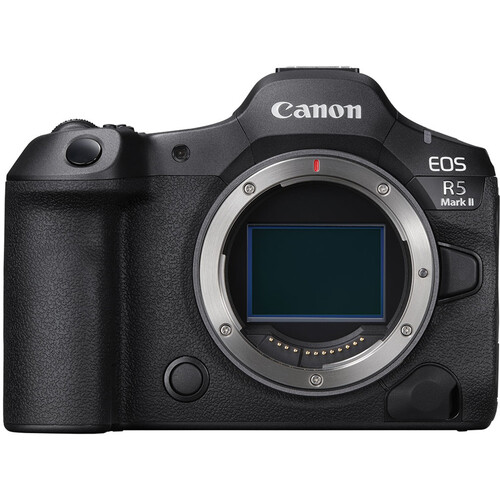
I’ve shot this camera more than any other Canon mirrorless, and a lot more than some of the Canon DSLRs I owned. The R5 Mark II features a 45MP stacked sensor with eye-control autofocus that allows focus point selection just by looking through the viewfinder at your subject.
Its pre-capture feature records images before the shutter is pressed, a feature that changes the way wildlife and bird photographers work. 8K video recording provides future-proof video capability.
- Eye-control autofocus enables focus point selection by looking
- 45MP stacked sensor provides high resolution with fast readout
- Pre-capture records images up to 0.5 seconds before the shutter press
- 8K 60p video recording for maximum detail
- 8.5-stop image stabilization handles high-resolution demands
- Premium pricing limits accessibility
- Eye-control autofocus requires calibration and has a learning curve
- Large 45MP files demand substantial storage and processing power
- A complex feature set may overwhelm casual users
- Sensor: 45MP full-frame stacked CMOS
- Processor: DIGIC X + DIGIC Accelerator
- Autofocus: Dual Pixel CMOS AF II with eye-control
- Video: 8K 60p, 4K 120p, unlimited recording
- Image Stabilization8.5-stop in-body stabilization:
- Viewfinder: 5.76M-dot OLED EVF with eye-control sensors
- LCD: 3.2” fully articulating touchscreen
- Battery: LP-E6NH (320 shots)
- Burst Rate: 12fps mechanical, 30fps electronic
- Dimensions: 5.4 x 3.8 x 3.4″ (138 x 98 x 87mm)
- Weight: 1.6 lb (738g) with battery
The Canon EOS R5 Mark II is the camera I think most photographers and hybrid shooters will look at when they want one body that can handle just about anything. I took it on a trip to Japan and spent days wandering around, capturing photos and videos with it, and they all look great.
It takes the already excellent R5 and improves on it in all the ways that matter. From faster processing to smarter autofocus and improved thermal control for video, the R5 Mark II feels like an entirely new camera. I like that it feels like a camera built for professionals, but still usable enough that experienced enthusiasts can get the most out of it.
The 45-megapixel full-frame sensor produces amazing detail, dynamic range, and Canon’s “color science,” making it a great choice for landscapes, wildlife, sports portraits, and commercial work. Basically, any subject you might shoot is perfect for the R5 Mark II.
Canon’s new DIGIC accelerator and Dual Pixel CMOS AF II system make the autofocus faster and more intelligent, tracking subjects with precision even in low light. Continuous shooting hits up to 30 frames per second electronically or 12 with the mechanical shutter, so it’s no surprise this camera is showing up at sports events and wildlife shoots alongside Canon’s more expensive (and larger) flagships. It’s also the perfect primary or backup camera for a wedding photographer.
For video, the R5 Mark II is a major upgrade. It records full-width 8K60 in RAW or 4K120 with minimal rolling shutter, and it can output 12-bit 8K via HDMI to external recorders. That’s
The passive cooling design reduces the overheating limitations of the original R5, which makes this a perfect choice for professional video production. It makes an amazing studio camera, and since the in-body image stabilization (IBIS) system is one of the best I’ve used, it’s great for handheld footage that looks smooth even with longer lenses. Pair it with a lens that has optical image stabilization and it’s unshakable.
The R5 Mark II isn’t a casual purchase, with a huge price tag. It’s expensive, and its resolution and file sizes are overkill for some workflows. But for hybrid creators, working professionals, or anyone who needs uncompromising quality in both stills and video, this is the camera that represents Canon’s best balance of performance, reliability, and creative flexibility, which is why it’s my go-to choice for the best all-around Canon model.

This is my recommendation for Canon shooters looking to upgrade to a high-resolution camera without breaking the bank on the R5 Mark II. The original R5 delivers 45MP resolution and 8K video at a lower price point than the Mark II. Although it lacks the eye-control autofocus and pre-capture features of the newer model, it still provides the same core image quality with proven reliability. It’s the greatest camera for wedding and portrait photographers.
- Same 45MP sensor as Mark II at a lower cost
- 8K video capability for high-resolution video work
- Proven reliability over several years in the market
- Extensive lens compatibility with the RF system
- Professional weather sealing and build quality
- Video recording limits in warm conditions
- Lacks eye-control autofocus of newer models
- Premium pricing, even as the previous generation
- Large files require significant storage investment
- Sensor: 45MP full-frame CMOS
- Processor: DIGIC X
- Autofocus: Dual Pixel CMOS AF II with subject detection
- Video: 8K 30p, 4K 120p (with recording limits)
- Image Stabilization: 8-stop in-body stabilization
- Viewfinder: 5.76M-dot OLED EVF
- LCD: 3.2” fully articulating touchscreen
- Battery: LP-E6NH (320 shots)
- Burst Rate: 12fps mechanical, 20fps electronic
- Dimensions: 5.4 x 3.8 x 3.4″ (138 x 98 x 87mm)
- Weight: 1.6 lb (738g) with battery
The original Canon EOS R5 is still one of the best full-frame cameras Canon has ever made, and it’s now an even better value thanks to the release of the R5 Mark II. I’ve tell camera buyers that unless you specifically need the newest updates in the R5 Mark II, the R5 remains one of the smartest ways to step into Canon’s high-resolution lineup without paying flagship prices.
The 45-megapixel full-frame sensor still delivers stunning image quality, with excellent color reproduction and plenty of dynamic range. The Dual Pixel CMOS AF II system is fast and accurate. In-body image stabilization keeps both stills and handheld video steady, and the R5’s overall ergonomics and build quality feel every bit as premium as Canon’s newest models.
Where the R5 Mark II pulls ahead is in processing power, autofocus subject recognition, and video record times.
Canon Hybrid Video Cameras
Video-focused cameras balance high-quality recording capabilities with photographic excellence, making them ideal for hybrid creators who refuse to compromise between stills and motion. These models feature advanced codecs, unlimited recording, and professional video features.
(See full details and specs in the Best Canon Full-Frame All-Rounder section)
The R6 Mark II’s unlimited video recording in all modes and 6K oversampling make it a powerhouse. The 24MP sensor provides excellent low-light video performance, and the fully articulating screen enables flexible shooting angles.
- 40fps electronic shutter with full autofocus tracking
- Unlimited video recording eliminates workflow interruptions
- 8-stop image stabilization enables handheld telephoto shooting
- Advanced subject detection works across humans, animals, and vehicles
- Dual card slots (CFexpress Type A + SD UHS-II)
- Weather sealing rated for professional outdoor use
- 24MP resolution limits heavy cropping compared to the R5 series
- An electronic shutter can show rolling shutter with fast motion
- Premium pricing approaches professional camera territory
- A large file buffer can slow down after extended burst shooting
- Sensor: 24.2MP full-frame CMOS
- Processor: DIGIC X
- Autofocus: Dual Pixel CMOS AF II with subject detection
- Video: 4K 60p, 6K oversampling, unlimited recording
- Image Stabilization: 8-stop in-body stabilization
- Viewfinder: 3.69M-dot OLED EVF
- LCD: 3.0” fully articulating touchscreen
- Battery: NP-E6NH (360 shots)
- Burst Rate: 12fps mechanical, 40fps electronic
- Dimensions: 5.4 x 3.8 x 3.5″ (138 x 98 x 88mm)
- Weight: 1.5 lb (670g) with battery
The Canon EOS Mark II is an exceptional hybrid camera. Read our take on the R6 Mark II in the Canon Full-Frame All-Arounder section, above.
(See full details and specs in the Best Canon High-Resolution Camera section)
The R5 Mark II adds 8K 60p recording and advanced video features to its high-resolution photography capabilities. The higher resolution sensor suffers more “noise” than the R6 II, but still has excellent low-light performance.
- Eye-control autofocus enables focus point selection by looking
- 45MP stacked sensor provides high resolution with fast readout
- Pre-capture records images up to 0.5 seconds before the shutter press
- 8K 60p video recording for maximum detail
- 8.5-stop image stabilization handles high-resolution demands
- Premium pricing limits accessibility
- Eye-control autofocus requires calibration and has a learning curve
- Large 45MP files demand substantial storage and processing power
- A complex feature set may overwhelm casual users
- Sensor: 45MP full-frame stacked CMOS
- Processor: DIGIC X + DIGIC Accelerator
- Autofocus: Dual Pixel CMOS AF II with eye-control
- Video: 8K 60p, 4K 120p, unlimited recording
- Image Stabilization8.5-stop in-body stabilization:
- Viewfinder: 5.76M-dot OLED EVF with eye-control sensors
- LCD: 3.2” fully articulating touchscreen
- Battery: LP-E6NH (320 shots)
- Burst Rate: 12fps mechanical, 30fps electronic
- Dimensions: 5.4 x 3.8 x 3.4″ (138 x 98 x 87mm)
- Weight: 1.6 lb (738g) with battery
The Canon R5 Mark II is another exceptional Canon hybrid camera. See our take on the R5 Mark II in the Canon Full-Frame All-Arounder section, above.
Canon Sports & Wildlife Camera
Sports and wildlife photography demand exceptional autofocus tracking, fast burst rates, and telephoto-friendly features. These cameras prioritize speed and reliability over resolution, with advanced subject detection optimized for moving subjects.

Canon’s flagship otupaces just about every other flagship on the market. It delivers 40 fps burst shooting with advanced subject detection and professional connectivity features. This camera is in our testing studio for lens performance tests, and Canon can take it back over my cold, dead hands.
Its 24MP sensor prioritizes speed and low-light performance over maximum resolution. This is the top of the top in Canon cameras, and the top of the line out of almost all cameras.
- 40fps electronic shutter with full autofocus tracking
- Professional-grade weather sealing and build quality
- Exceptional battery life (2,100 shots)
- Advanced networking features for professional workflows
- 9.44M-dot EVF provides exceptional clarity and refresh rate
- Premium pricing limits to the professional market
- 24MP resolution is lower than high-resolution alternatives
- Large size and weight require professional handling
- Specialized features may be excessive for enthusiast use
- Sensor: 24MP full-frame stacked CMOS
- Processor: DIGIC X + DIGIC Accelerator
- Autofocus: Dual Pixel CMOS AF II with advanced subject detection
- Video: 6K 60p RAW, 4K 120p
- Image Stabilization: 8.5-stop in-body stabilization
- Viewfinder: 9.44M-dot OLED EVF with 120fps refresh
- LCD: 3.2” fully articulating touchscreen
- Battery: LP-E19 (2,100 shots)
- Burst Rate: 12fps mechanical, 40fps electronic
- Dimensions: 6.2 x 4.4 x 3.6″ (158 x 111 x 92mm)
- Weight: 2.2 lb (1,015g) with battery
The Canon EOS R1 is the company’s long-awaited flagship mirrorless camera, and it takes the best of Canon’s mirrorless and DSLR systems and combines them in one professional platform, albeit a pricey system.
We have one in our testing labs to check out lens focus speeds, so I’ve spent a good amount of time shooting with it, and it’s clear this camera represents the absolute best of what Canon can build right now. Everything about it is designed for performance, speed, and durability.
The R1 uses a new 30.3-megapixel global-shutter full-frame sensor. A global shutter reads data off the entire sensor each shot, which makes performance faster than standard shutters, and it eliminates the image-distorting rolling shutter effect. On the R1 and Sony’s a9 III use a full frame global shutter.
Global shutter changes how you can shoot fast action, since every pixel is captured simultaneously. It also means you can use flash at any shutter speed, something no previous mirrorless camera (aside from Sony’s) could do. The camera can shoot up to 40 frames per second with full autofocus and exposure tracking, and the new Dual DIGIC X processor keeps it responsive even shooting super-long bursts.
Canon’s autofocus has been reengineered for the R1 with a new AI-trained recognition system that tracks subjects in nearly any lighting condition, even when they’re partially obscured. Image quality is as good as you’d imagine for a flagship, with excellent color depth, dynamic range, and low-light performance. The in-body image stabilization works with IS-equipped lenses to provide up to 8.5 stops of compensation, which makes handheld shooting possible even in extremely low light.
This is a serious investment, and the size and cost put it firmly in professional territory. But for sports, wildlife, or commercial photographers who need uncompromising performance, the R1 is Canon’s new benchmark. It’s the mirrorless successor to the DSLR 1D series, and it feels every bit as dependable and refined as that legacy suggests.

The R3 provides professional-level performance with 30fps burst shooting and eye-control autofocus at a lower price point than the R1. It’s my go-to sports camera since it’s less expensive than the R1 and offers almost all of the R1’s features. Its integrated vertical grip and professional ergonomics feel great when I’m shooting sports or wildlife.
- 30fps burst with eye-control autofocus
- Integrated vertical grip for portrait orientation
- Professional build quality and weather sealing
- Eye-control AF enables rapid focus point changes
- 6K RAW video for professional productions
- Large size limits portability for casual use
- 24MP resolution restricts heavy cropping capability
- Premium pricing above the enthusiast camera range
- A complex operation requires professional experience
- Sensor: 24MP full-frame stacked CMOS
- Processor: DIGIC X
- Autofocus: Dual Pixel CMOS AF II with eye-control
- Video: 6K 60p RAW, 4K 120p
- Image Stabilization: 8-stop in-body stabilization
- Viewfinder: 5.76M-dot OLED EVF with eye-control sensors
- LCD: 3.2” fully articulating touchscreen
- Battery: LP-E19 (860 shots)
- Burst Rate: 12fps mechanical, 30fps electronic
- Dimensions: 5.9 x 4.4 x 3.3″ (150 x 111 x 85mm)
- Weight: 2.0 lb (916g) with battery
The Canon EOS R3 is a camera I suggest for when someone needs reliability above all else, but doesn’t want to spend the money on an R1, or finds the R1 overkill.
It’s built for professionals who shoot fast-moving subjects and can’t afford to miss a moment. Everything about it feels made for speed, from the rugged, integrated-grip design to the lightning-fast autofocus. The only thing I think is missing from this camera is pre-capture, a feature where your camera starts to buffer images before you press the shutter release.
Its 24.1-megapixel full-frame stacked CMOS sensor isn’t about resolution, though it has more than enough pixels for great-looking images. The R3 can shoot up to 30 frames per second with the electronic shutter. Blackout is the term for the viewfinder turning off briefly between shots, and the R3 has blackout-free shooting. This functionality makes it easy to track fast subjects through the viewfinder.
The autofocus system features Canon’s eye-control AF, which lets you select focus points simply by looking at them in the viewfinder. It’s surprisingly intuitive once you get used to it, although some people find it less accurate than just moving the focus point around. I’d suggest trying this out before you buy the camera, but it can be disabled as well.
For video, the R3 records 6K60 RAW internally or oversampled 4K/120, both with minimal rolling shutter effects. The build quality is pro. It’s weather-sealed and made to withstand the kind of environments where you wouldn’t bring a non-weather-resistant camera.
It’s a heavy and expensive camera, and the resolution won’t satisfy landscape photographers who need massive prints, but the R3 isn’t meant for that. It’s a workhorse built for sports, wildlife, and photojournalism.
Canon Portrait Cameras
Portrait photography demands excellent subject detection, a high-resolution sensor for image quality, and for cropping. It also needs excellent color rendition. These cameras excel at eye detection autofocus and provide the image quality required for professional portrait work.
(See full details and specs in the Best Canon High-Resolution Camera section)
The R5 Mark II’s eye-control autofocus and 45MP resolution make it exceptional for portrait work. The eye-control system allows photographers to select focus points by looking through the viewfinder, while the high resolution captures fine detail in skin, hair, and clothing textures.
- Eye-control autofocus enables focus point selection by looking
- 45MP stacked sensor provides high resolution with fast readout
- Pre-capture records images up to 0.5 seconds before the shutter press
- 8K 60p video recording for maximum detail
- 8.5-stop image stabilization handles high-resolution demands
- Premium pricing limits accessibility
- Eye-control autofocus requires calibration and has a learning curve
- Large 45MP files demand substantial storage and processing power
- A complex feature set may overwhelm casual users
- Sensor: 45MP full-frame stacked CMOS
- Processor: DIGIC X + DIGIC Accelerator
- Autofocus: Dual Pixel CMOS AF II with eye-control
- Video: 8K 60p, 4K 120p, unlimited recording
- Image Stabilization8.5-stop in-body stabilization:
- Viewfinder: 5.76M-dot OLED EVF with eye-control sensors
- LCD: 3.2” fully articulating touchscreen
- Battery: LP-E6NH (320 shots)
- Burst Rate: 12fps mechanical, 30fps electronic
- Dimensions: 5.4 x 3.8 x 3.4″ (138 x 98 x 87mm)
- Weight: 1.6 lb (738g) with battery
The Canon R5 Mark II is a great Canon camera for portraits. See our take on the R5 Mark II in the Canon Full-Frame All-Arounder section, above.
(See full details and specs in the Best Canon Full-Frame All-Rounder section)
The R6 Mark II’s exceptional low-light performance and advanced subject detection make it ideal for wedding and event portraits. Its 24MP resolution provides excellent image quality while maintaining fast burst rates for capturing fleeting expressions.
- 40fps electronic shutter with full autofocus tracking
- Unlimited video recording eliminates workflow interruptions
- 8-stop image stabilization enables handheld telephoto shooting
- Advanced subject detection works across humans, animals, and vehicles
- Dual card slots (CFexpress Type A + SD UHS-II)
- Weather sealing rated for professional outdoor use
- 24MP resolution limits heavy cropping compared to the R5 series
- An electronic shutter can show rolling shutter with fast motion
- Premium pricing approaches professional camera territory
- A large file buffer can slow down after extended burst shooting
- Sensor: 24.2MP full-frame CMOS
- Processor: DIGIC X
- Autofocus: Dual Pixel CMOS AF II with subject detection
- Video: 4K 60p, 6K oversampling, unlimited recording
- Image Stabilization: 8-stop in-body stabilization
- Viewfinder: 3.69M-dot OLED EVF
- LCD: 3.0” fully articulating touchscreen
- Battery: NP-E6NH (360 shots)
- Burst Rate: 12fps mechanical, 40fps electronic
- Dimensions: 5.4 x 3.8 x 3.5″ (138 x 98 x 88mm)
- Weight: 1.5 lb (670g) with battery
The Canon R6 Mark II is a great Canon camera for portraits, although the R5 Mark II has the megapixel count for cropping or super-high res portraits. See our take on the R5 Mark II in the Canon Full-Frame All-Arounder section, above.
Canon Landscape Cameras
Landscape photography requires maximum resolution, excellent dynamic range, and robust image stabilization for handheld shooting. These cameras prioritize image quality and detail capture over speed.
(See full details and specs in the Best Canon High-Resolution Camera section)
The R5 Mark II’s 45MP sensor captures exceptional landscape detail, while its 8.5-stop image stabilization enables sharp handheld shots even with telephoto lenses. The high resolution allows for significant cropping while maintaining image quality. I’ve combined this camera with ultra-wide-angle lenses for spectacular shots that I can still crop into a panorama.
- Eye-control autofocus enables focus point selection by looking
- 45MP stacked sensor provides high resolution with fast readout
- Pre-capture records images up to 0.5 seconds before the shutter press
- 8K 60p video recording for maximum detail
- 8.5-stop image stabilization handles high-resolution demands
- Premium pricing limits accessibility
- Eye-control autofocus requires calibration and has a learning curve
- Large 45MP files demand substantial storage and processing power
- A complex feature set may overwhelm casual users
- Sensor: 45MP full-frame stacked CMOS
- Processor: DIGIC X + DIGIC Accelerator
- Autofocus: Dual Pixel CMOS AF II with eye-control
- Video: 8K 60p, 4K 120p, unlimited recording
- Image Stabilization8.5-stop in-body stabilization:
- Viewfinder: 5.76M-dot OLED EVF with eye-control sensors
- LCD: 3.2” fully articulating touchscreen
- Battery: LP-E6NH (320 shots)
- Burst Rate: 12fps mechanical, 30fps electronic
- Dimensions: 5.4 x 3.8 x 3.4″ (138 x 98 x 87mm)
- Weight: 1.6 lb (738g) with battery
The Canon R5 Mark II is a great Canon camera for landscapes, urban landscapes, and more. See our take on the R5 Mark II in the Canon Full-Frame All-Arounder section, above.
(See full details and specs in the Best Canon High-Resolution Camera section)
The original R5 provides the same 45MP resolution as the Mark II at a lower price point. Its 8-stop stabilization and weather sealing make it well-suited for outdoor landscape photography.
For landscape photography, this is one of the best deals in the Canon lineup. It will give you an image every bit as good as the R5 Mark II, without features you don’t need for landscapes.
- Same 45MP sensor as Mark II at a lower cost
- 8K video capability for high-resolution video work
- Proven reliability over several years in the market
- Extensive lens compatibility with the RF system
- Professional weather sealing and build quality
- Video recording limits in warm conditions
- Lacks eye-control autofocus of newer models
- Premium pricing, even as the previous generation
- Large files require significant storage investment
- Sensor: 45MP full-frame CMOS
- Processor: DIGIC X
- Autofocus: Dual Pixel CMOS AF II with subject detection
- Video: 8K 30p, 4K 120p (with recording limits)
- Image Stabilization: 8-stop in-body stabilization
- Viewfinder: 5.76M-dot OLED EVF
- LCD: 3.2” fully articulating touchscreen
- Battery: LP-E6NH (320 shots)
- Burst Rate: 12fps mechanical, 20fps electronic
- Dimensions: 5.4 x 3.8 x 3.4″ (138 x 98 x 87mm)
- Weight: 1.6 lb (738g) with battery
The Canon R5 is a great Canon camera for landscapes, and since the higher frame rates and autofocus improvements of the R5 Mark II are less important in landscape shots, it might be the better choice. See our take on the R5 Mark II in the Canon Full-Frame All-Arounder section, above.
Canon Travel Cameras
Full-frame travel cameras balance image quality with portability, providing excellent performance without the bulk of traditional professional cameras. These models offer weather sealing and long battery life for extended shooting.
(See full details and specs in the Best Canon Full-Frame All-Rounder section)
The R8’s compact 461g body makes it the most portable full-frame option in Canon’s lineup. Despite its small size, it delivers the same 24MP image quality and autofocus performance as larger cameras.
The Canon EOS R8 brings full-frame performance to a compact, travel-friendly body, ideal for creators who want pro-level image quality without the bulk. Featuring a 24.2MP sensor and DIGIC X processor (the same as the R6 Mark II), it delivers superb dynamic range, fast autofocus, and impressive low-light capability.
With 40fps burst shooting and oversampled 4K 60p video, it’s a strong choice for hybrid shooters. Despite its lightweight build, it feels premium and reliable in hand. The bottom line is that the R8 is perfect for enthusiasts, vloggers, and travelers who want Canon’s renowned full-frame quality in a body that won’t weigh them down.
- Houses the same full-frame sensor and processor as the much more expensive EOS R6 Mark II.
- Great autofocusing abilities.
- Lightweight for a full-frame camera.
- Solid video capabilities, including uncropped, oversampled 4K/60p.
- Lacks in-body image stabilization (IBIS).
- Shorter battery time due to the smaller LP-E17.
- Lacks a dedicated AF joystick.
- Single SD card slot.
- Sensor: 24.2MP Full-Frame CMOS Sensor.
- Video: 4K/60p (oversampled from 6K, uncropped), Full HD (1080p)/180p.
- Codecs: MP4 (H.264/H.265, AAC/LPCM), supports Canon Log 3.
- Audio: Built-in stereo microphone, 3.5 mm external mic input, 3.5 mm headphone output
- Connectivity: Wi-Fi, Bluetooth, USB-C, Micro-HDMI.
- Storage: Single SD/SDHC/SDXC (UHS-II) card slot.
- More Features: Dual Pixel CMOS AF II with subject detection (people, animals, vehicles), DIGIC X processor, 2.36m-Dot OLED EVF, vari-angle touchscreen.
The Canon R8 is a nearly perfect travel camera. If it had In-Body Image Stabilization (IBIS) it would be my pick for best travel camera in the mirrorless market. _See our take on the R5 Mark II in the Canon Full-Frame All-Arounder section, above.
(See full details and specs in the Best Canon Full-Frame All-Rounder section)
The R6 Mark II provides weather sealing and exceptional battery life alongside excellent image quality, making it ideal for extended travel photography where reliability is essential.
- 40fps electronic shutter with full autofocus tracking
- Unlimited video recording eliminates workflow interruptions
- 8-stop image stabilization enables handheld telephoto shooting
- Advanced subject detection works across humans, animals, and vehicles
- Dual card slots (CFexpress Type A + SD UHS-II)
- Weather sealing rated for professional outdoor use
- 24MP resolution limits heavy cropping compared to the R5 series
- An electronic shutter can show rolling shutter with fast motion
- Premium pricing approaches professional camera territory
- A large file buffer can slow down after extended burst shooting
- Sensor: 24.2MP full-frame CMOS
- Processor: DIGIC X
- Autofocus: Dual Pixel CMOS AF II with subject detection
- Video: 4K 60p, 6K oversampling, unlimited recording
- Image Stabilization: 8-stop in-body stabilization
- Viewfinder: 3.69M-dot OLED EVF
- LCD: 3.0” fully articulating touchscreen
- Battery: NP-E6NH (360 shots)
- Burst Rate: 12fps mechanical, 40fps electronic
- Dimensions: 5.4 x 3.8 x 3.5″ (138 x 98 x 88mm)
- Weight: 1.5 lb (670g) with battery
If your travel plans are centered around photography or videography, the R6 Mark II is one of the best cameras you could own. It has all the features you need for great shots, no matter the subject. See our take on the R6 Mark II in the Canon Full-Frame All-Arounder section, above.
(See full details and specs in the Best Canon Budget Camera section)
The R50’s ultra-compact 328g body and advanced autofocus make it ideal for travel photography. Its small size means it can be carried all day without fatigue, while the flip-out screen enables various shooting angles.
With its strong autofocus and color performance in a small, easy-to-use body, the Canon R50 simplifies mirrorless photography for newcomers. The R50’s 24-megapixel APS-C sensor produces clean results, and the fully articulating screen makes it easy to compose from any angle. The Dual Pixel AF II system is fast and accurate, helping new users achieve sharp results with minimal effort.
Designed as a first mirrorless camera, the R50 offers straightforward controls and a guided menu that helps users learn as they shoot. It’s light enough for daily carry and pairs well with compact RF-S lenses, making it a good companion for travel or content creation. While it lacks weather sealing and in-body stabilization, the R50’s combination of portability, image quality, and reliability make it one of Canon’s best budget options.
- Advanced subject detection autofocus rivals cameras costing $1,000 more
- Ultra-compact 328g body fits easily in small bags
- 4K video with oversampling provides sharp footage
- Flip-out touchscreen ideal for selfies and vlogging
- Compatible with RF and RF-S lens ecosystems
- Limited RF-S lens selection requires expensive RF lenses for variety
- Electronic-only stabilization is less effective than in-body systems
- The LP-E17 battery provides a modest 320-shot capacity
- Single command dial limits manual control efficiency
- Sensor: 24.2MP APS-C CMOS
- Processor: DIGIC X
- Autofocus: Dual Pixel CMOS AF II with subject detection
- Video: 4K 30p oversampled, uncropped
- Image Stabilization: Electronic only
- Viewfinder: 2.36M-dot OLED EVF
- LCD: 3.0” fully articulating touchscreen
- Battery: LP-E17 (320 shots)
- Burst Rate: 12fps mechanical, 15fps electronic
- Weight: 0.7 lb (328g) with battery
The Canon EOS R50 is an incredibly small, light camera. It’s small enough to go in a day bag, and still takes better images than a smartphone. See our take on the R50 in the Canon Budget camera guide, above.
(See full details and specs in the Best Canon Vlogging and Social Media Creator Cameras section)
The R10 adds weather sealing and more physical controls to the APS-C travel formula. Its larger battery provides better endurance for all-day shooting, while the dual command dials enable quick setting changes.
The Canon EOS R10 has advanced autofocus, fast bursts, and high-quality 4K capture into a compact APS-C mirrorless body. Its 24.2-megapixel sensor, paired with Canon’s Dual Pixel AF II, delivers fast, accurate tracking. So if you shoot portraits, wildlife, and even sports, these features will come in handy.
The body design borrows ergonomics from Canon’s higher-end R-series, giving it a solid grip and intuitive control layout without adding unnecessary weight.
Although it lacks in-body stabilization, the R10 stands out for its responsiveness and overall performance in both stills and video work. Oversampled 4K/30p video is sharp and detailed, while 15 fps mechanical bursts give it versatility far beyond its price point. It’s a capable hybrid camera for creators who need reliable autofocus and professional-grade handling in an affordable package.
- Great Autofocusing abilities.
- High shooting speed of 23 fps using the electronic shutter.
- Quality uncropped 4K/30p video oversampled from 6K.
- Comfortable Ergonomics.
- Lacks in-body Image Stabilization.
- Significant crop while shooting 4K/60p mode.
- Lacks a headphone jack for audio monitoring during video recording.
- Smaller Electronic Viewfinder compared to higher-end cameras.
- Sensor: 24.2MP APS-C CMOS Sensor.
- Video: 4K/60p (cropped), 4K/30p (oversampled from 6K, uncropped), Full HD (1080p)/120p.
- Codecs: MP4 (H.264/H.265, AAC/LPCM).
- Audio: Built-in stereo microphone, 3.5 mm external mic input.
- Connectivity: Wi-Fi, Bluetooth, USB-C, Micro-HDMI.
- Storage: Single SD/SDHC/SDXC (UHS-II) card slot.
- More Features: Dual Pixel CMOS AF II with subject detection (people, animals, vehicles), DIGIC X processor, 2.36m-Dot OLED EVF, vari-angle touchscreen.
Just a bit more sophisticated than the R50, the R10 is an excellent choice for travel photography where you need more settings and power than the R50 can give you. See our take on the R10 in the Canon Budget camera guide, above.
Canon APS-C Cameras
APS-C cameras provide excellent image quality in compact bodies with smaller, lighter lenses. The 1.6x crop factor extends telephoto reach, making these cameras particularly appealing for wildlife and sports photography while maintaining portability.
(See full details and specs in the Best Canon Vlogging and Social Media Creator Cameras section)
The R10 delivers 23fps burst shooting with advanced subject detection in a weather-sealed APS-C body. Its dual command dials and comprehensive controls provide traditional camera operation in a compact package.
The Canon EOS R10 has advanced autofocus, fast bursts, and high-quality 4K capture into a compact APS-C mirrorless body. Its 24.2-megapixel sensor, paired with Canon’s Dual Pixel AF II, delivers fast, accurate tracking. So if you shoot portraits, wildlife, and even sports, these features will come in handy.
The body design borrows ergonomics from Canon’s higher-end R-series, giving it a solid grip and intuitive control layout without adding unnecessary weight.
Although it lacks in-body stabilization, the R10 stands out for its responsiveness and overall performance in both stills and video work. Oversampled 4K/30p video is sharp and detailed, while 15 fps mechanical bursts give it versatility far beyond its price point. It’s a capable hybrid camera for creators who need reliable autofocus and professional-grade handling in an affordable package.
- Great Autofocusing abilities.
- High shooting speed of 23 fps using the electronic shutter.
- Quality uncropped 4K/30p video oversampled from 6K.
- Comfortable Ergonomics.
- Lacks in-body Image Stabilization.
- Significant crop while shooting 4K/60p mode.
- Lacks a headphone jack for audio monitoring during video recording.
- Smaller Electronic Viewfinder compared to higher-end cameras.
- Sensor: 24.2MP APS-C CMOS Sensor.
- Video: 4K/60p (cropped), 4K/30p (oversampled from 6K, uncropped), Full HD (1080p)/120p.
- Codecs: MP4 (H.264/H.265, AAC/LPCM).
- Audio: Built-in stereo microphone, 3.5 mm external mic input.
- Connectivity: Wi-Fi, Bluetooth, USB-C, Micro-HDMI.
- Storage: Single SD/SDHC/SDXC (UHS-II) card slot.
- More Features: Dual Pixel CMOS AF II with subject detection (people, animals, vehicles), DIGIC X processor, 2.36m-Dot OLED EVF, vari-angle touchscreen.
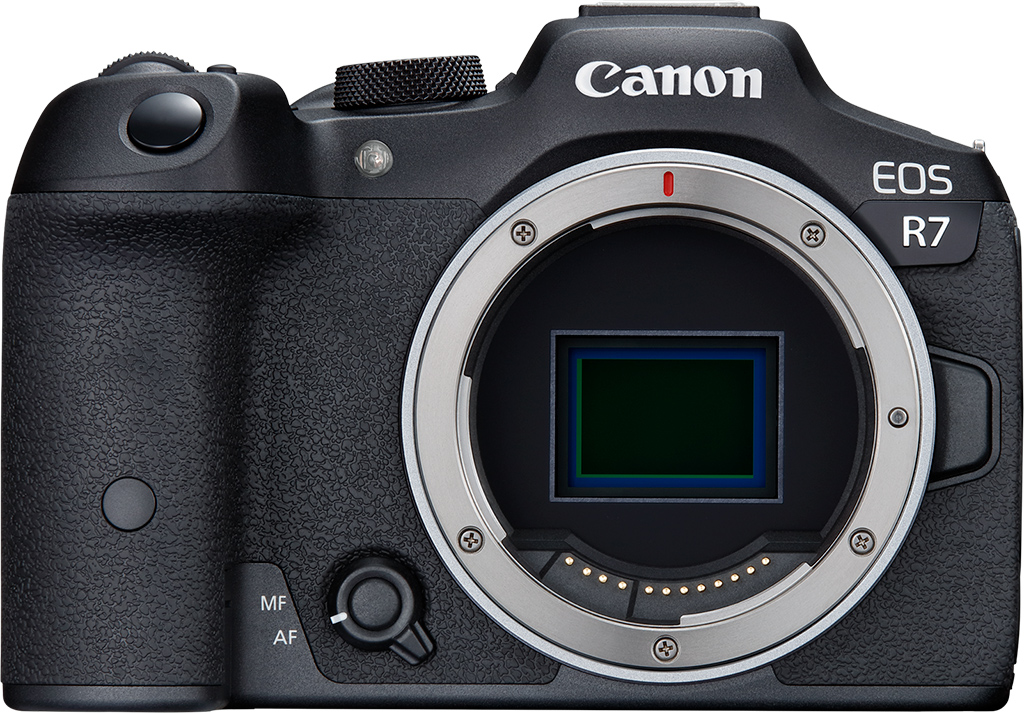
The R7 provides the highest resolution and fastest performance in Canon’s APS-C lineup, with 32.5MP resolution and professional features including dual card slots and extensive weather sealing. This is essentially the APS-C version of the R3, but without a vertical grip.
- Sensor: 32.5MP APS-C CMOS
- Processor: DIGIC X
- Autofocus: Dual Pixel CMOS AF II with subject detection
- Video: 4K 60p uncropped, 1080p 120p
- Image Stabilization: Electronic only
- Viewfinder: 2.36M-dot OLED EVF
- LCD: 3.0” fully articulating touchscreen
- Battery: LP-E6NH (660 shots)
The Canon EOS R7 is one of my favorite APS-C cameras in the market because it feels like a pro camera that’s been scaled down. It consistently delivers results that rival Canon’s full-frame models. APS-C suffers a bit in low-light conditions compared to full-frame, but that’s a small price to pay for the size and performance of APS-C.
The camera is fast, feels as rugged as most of Canon’s full-frame bodies, and compact. It has a nice mix of controls that you won’t find in entry-level bodies.
The 32.5-megapixel APS-C sensor gives you extra reach for telephoto work, which makes it great for birding or sports on a budget. The autofocus system is the same Dual Pixel CMOS AF II design found in Canon’s higher-end cameras, so subject tracking for people, animals, and birds feels confident and snappy. With 15 frames per second using the mechanical shutter or 30 fps electronically, it’s a genuinely capable action camera.
In-body image stabilization (IBIS) is a major advantage over the R10, keeping handheld shots sharp even with slower shutter speeds or longer lenses. Those lower shutter speeds help balance out the low-light performance hit of APS-C. Video performance is excellent too, with oversampled 4K60 footage and 10-bit recording. The R7 feels like a smaller, more affordable version of the R6 Mark II, and that’s exactly why I like it so much.
It’s not perfect–the smaller body can feel a little cramped with big lenses, and rolling shutter is visible at higher frame rates–but for anyone who wants speed, reach. Professional autofocus in a compact form, the R7 is an easy recommendation.
Canon Budget Cameras
Budget cameras prove you don’t need premium pricing for excellent image quality or high-resolution video. This category features some of my favorite Canon models, as today’s “budget” cameras significantly outpace previous DSLR cameras.
If you’re looking for a great entry-level APS-C camera, this is the one. I think this has some of the best ergonomics in the APS-C market, and it’s a features powerhouse in a body that’s smaller than full frame.
The R50 packs advanced subject detection, autofocus, and 4K video into a 328g body that’s Canon’s smallest interchangeable lens camera. Despite its budget positioning, the autofocus is as good as Canon’s full-frame bodies.
With its strong autofocus and color performance in a small, easy-to-use body, the Canon R50 simplifies mirrorless photography for newcomers. The R50’s 24-megapixel APS-C sensor produces clean results, and the fully articulating screen makes it easy to compose from any angle. The Dual Pixel AF II system is fast and accurate, helping new users achieve sharp results with minimal effort.
Designed as a first mirrorless camera, the R50 offers straightforward controls and a guided menu that helps users learn as they shoot. It’s light enough for daily carry and pairs well with compact RF-S lenses, making it a good companion for travel or content creation. While it lacks weather sealing and in-body stabilization, the R50’s combination of portability, image quality, and reliability make it one of Canon’s best budget options.
- Advanced subject detection autofocus rivals cameras costing $1,000 more
- Ultra-compact 328g body fits easily in small bags
- 4K video with oversampling provides sharp footage
- Flip-out touchscreen ideal for selfies and vlogging
- Compatible with RF and RF-S lens ecosystems
- Limited RF-S lens selection requires expensive RF lenses for variety
- Electronic-only stabilization is less effective than in-body systems
- The LP-E17 battery provides a modest 320-shot capacity
- Single command dial limits manual control efficiency
- Sensor: 24.2MP APS-C CMOS
- Processor: DIGIC X
- Autofocus: Dual Pixel CMOS AF II with subject detection
- Video: 4K 30p oversampled, uncropped
- Image Stabilization: Electronic only
- Viewfinder: 2.36M-dot OLED EVF
- LCD: 3.0” fully articulating touchscreen
- Battery: LP-E17 (320 shots)
- Burst Rate: 12fps mechanical, 15fps electronic
- Weight: 0.7 lb (328g) with battery
The Canon R50 is one of our picks for the best travel camera due to its small size and low price. See our thoughts on the R50, earlier in this guide.

Canon’s entry-level RF APS-C camera delivers basic mirrorless functionality at the lowest possible price point. While it lacks modern features like subject detection and 4K video, it provides access to Canon’s RF lens ecosystem and is often available for under $500.
The Canon EOS R100 is the easiest and most affordable way to start using Canon’s RF cameras. It has a 24MP APS-C sensor and a simple design that’s easy to learn, even for beginners. The controls are straightforward, and the image quality is a big step up from a phone.
It’s a minimalistic camera designed for learning photography basics and capturing moments without distractions. Autofocus is consistent, exposure metering is reliable, and Canon’s color science helps make images look natural straight out of camera. Though limited in video features, the R100 provides an affordable path into the RF ecosystem with upgrade potential as a user’s skills grow.
- Affordable
- Compact
- Excellent Canon color science
- No IBIS
- Limited 4K (24p only)
- Fixed screen
- Sensor: 24.1MP APS-C CMOS
- Lens mount: Canon RF
- Video: 4K/24p (cropped), Full HD 60p
- Screen: 3.0-inch fixed LCD
- Audio: No mic input, no headphone jack
- Stabilization: None
- Dimensions: 116 × 86 × 69 mm (4.6 × 3.4 × 2.7 in)
- Weight: 356 g (0.78 lbs) with battery and card
The Canon R100 is a great choice for travel if you’d rather put your budget into your hotel than you camera. It has a low price, a small body, and takes great photos, though the price introduces compromises. See our thoughts on this camera earlier in this guide.
Comparison Chart
| Product | Price Range | Sensor/Resolution | Key Features | Special Capabilities |
| Canon EOS R100 | $479-599 | 24.1MP APS-C | Basic mirrorless, RF mount | Most affordable RF entry |
| Canon EOS R50 | $679-799 | 24.2MP APS-C | Advanced AF, flip screen | Subject detection, 4K video |
| Canon EOS R10 | $979-1099 | 24.2MP APS-C | 23fps burst, weather sealing | Wildlife/sports-focused |
| Canon EOS R8 | $1499-1699 | 24.2MP Full-Frame | Full-frame AF, compact body | Budget full-frame option |
| Canon EOS R7 | $1499-1699 | 32.5MP APS-C | 30fps burst, dual cards | High-resolution APS-C |
| Canon EOS R6 Mark II | $2499-2799 | 24.2MP Full-Frame | 40fps, unlimited recording | Ultimate all-rounder |
| Canon EOS R5 | $3899-4299 | 45MP Full-Frame | 8K video, 20fps burst | High-resolution workhorse |
| Canon EOS R3 | $5999-6499 | 24MP Full-Frame | Eye control AF, 30fps | Professional sports camera |
| Canon EOS R5 Mark II | $4299-4599 | 45MP Full-Frame | Eye control, pre-shooting | Advanced technology flagship |
| Canon EOS R1 | $6299-6899 | 24MP Full-Frame | 40fps, pro networking | Ultimate professional camera |
| Canon PowerShot G7X III | $699-799 | 20.1MP 1-inch | 4K video, flip screen | Content creator compact |
| Canon PowerShot G5X II | $899-1099 | 20.1MP 1-inch | EVF, weather sealing | Enthusiast compact |
Full Frame or APS-C?
One of the biggest decisions when choosing a new camera is whether to go with a full-frame or APS-C sensor. I’ve shot extensively with both, and each has advantages depending on how and what you photograph.
Full-frame sensors are physically larger, which means they collect more light and produce cleaner images with less noise, especially at higher ISOs. You’ll get better dynamic range, shallower depth of field, and smoother tonal transitions than an APS-C sensor of the same resolution. The tradeoff is that full-frame bodies and lenses tend to be larger and more expensive.
APS-C sensors use a smaller imaging area with a 1.6x crop factor, which effectively gives your lenses more reach. That’s a major benefit for wildlife, sports, or any situation where you need to fill the frame from farther away. The smaller sensor also allows for lighter and more compact camera designs, which is why APS-C bodies are great travel companions. The downside is more noise in low light conditions and slightly less control over background blur.
Understanding Canon’s AF Systems
Canon’s autofocus technology has evolved since the company’s DSLR days, and different models have different level autofocus technologies. Confusingly, both use the Duel Pixel CMOS AF name.
The company’s Dual Pixel CMOS AF system gives every pixel on the image sensor the ability to perform both imaging and phase-detection focusing. That design allows for incredibly fast and smooth autofocus without the “hunting” you used to see in older systems. It’s especially useful for video, where autofocus transitions look natural and deliberate rather than mechanical.
In newer cameras, Dual Pixel CMOS AF II brings advanced subject detection powered by machine learning (often referred to as being AI-based, though technically it’s not.) It can recognize people, animals, birds, insects, and even vehicles, automatically locking onto and tracking them across the frame.
Dual Pixel CMOS AF is an excellent focusing system, and Dual Pixel CMOS AF II is more powerful, but only found on Canon’s higher-end cameras.
FAQs
https://www.instagram.com/reel/DKC3nsdpDGQ/?igsh=MTVpcWlxaHNmdG1vZw==
IBIS helps compensate for small hand movements when shooting handheld. It’s most noticeable when recording video or shooting at slower shutter speeds with unstabilized lenses. If you work mostly on a tripod, it’s not essential, but for handheld or low-light work, it can make a real difference in image sharpness. Cameras lacked IBIS until the mirrorless age began, so it’s defintelly not a requirement but the same can be said for autofocus.
Do more megapixels automatically mean better quality?
Not always. A higher megapixel count gives you more detail and flexibility for cropping, but it can also increase noise in low light. For most photographers, 24 megapixels is plenty, while those shooting commercial work or weddings, or are making large fine art prints, may benefit from 45 megapixels or more.
What does a stacked or backside-illuminated (BSI) sensor do?
These designs improve how quickly the camera reads image data and how efficiently it captures light. Stacked sensors are faster than a traditional image sensor. This speed allows higher frame rates and better video readout, while BSI sensors perform better in low light. You’ll find these technologies in Canon’s higher-end cameras because they improve performance.
Why does rolling shutter matter for video?
Rolling shutter distortion happens because almost all cameras read the image off the sensor from top to bottom, causing fast-moving subjects or pans to look slanted or warped. IGlobal-shutter sensors eliminate it by reading every pixel simultaneously, but global shutter systems are very expensive.
What’s the benefit of Canon’s “color science?
Canon cameras are known for producing natural-looking color right out of the camera, especially in skin tones. This comes down to how the sensor and processor interpret color data. It’s not about accuracy so much as a consistent, pleasing look that requires less correction in post-processing. You can make any two cameras have identical color reproduction through tweaking, it’s just that most people don’t want to fuss with their camera to get nice colors.
Is 8K video worth it if I only shoot in 4K?
Shooting in 8K allows you to crop, stabilize, or reframe your footage while still delivering in 4K. It also produces sharper 4K video when downsampled from 9K. The tradeoff is that 8K generates larger files, so it’s most useful for professional workflows.
Do I need a fast memory card for still photography?
If you shoot bursts or high-resolution video, yes. Fast cards clear the buffer more quickly and prevent dropped frames in high-bitrate recording. CFexpress and UHS-II SD cards are ideal for modern Canon bodies. For slower-paced shooting or travel photography, standard UHS-I cards are usually fine. See our Ultimate Memory Card guide for suggestions.
What’s the difference between mechanical and electronic shutters?
A mechanical shutter uses physical curtains (just like on your windows) to expose the sensor, while an electronic shutter reads the sensor digitally without any moving parts. Electronic shutters are silent and allow faster burst rates, but they can introduce rolling shutter effects. Mechanical shutters handle motion better and are often preferred for flash photography.
How long will mirrorless cameras last compared to DSLRs?
Mirrorless cameras have fewer moving parts, so they tend to be more durable over time. Shutter mechanisms still have rated lifespans, but electronic shutters have no wear. As long as the sensor stays clean and the firmware is maintained, most mirrorless bodies will last many years of regular use, much longer than most DSLRs.