
Best Fujifilm Cameras: The Complete Buyer’s Guide for Every Photographer

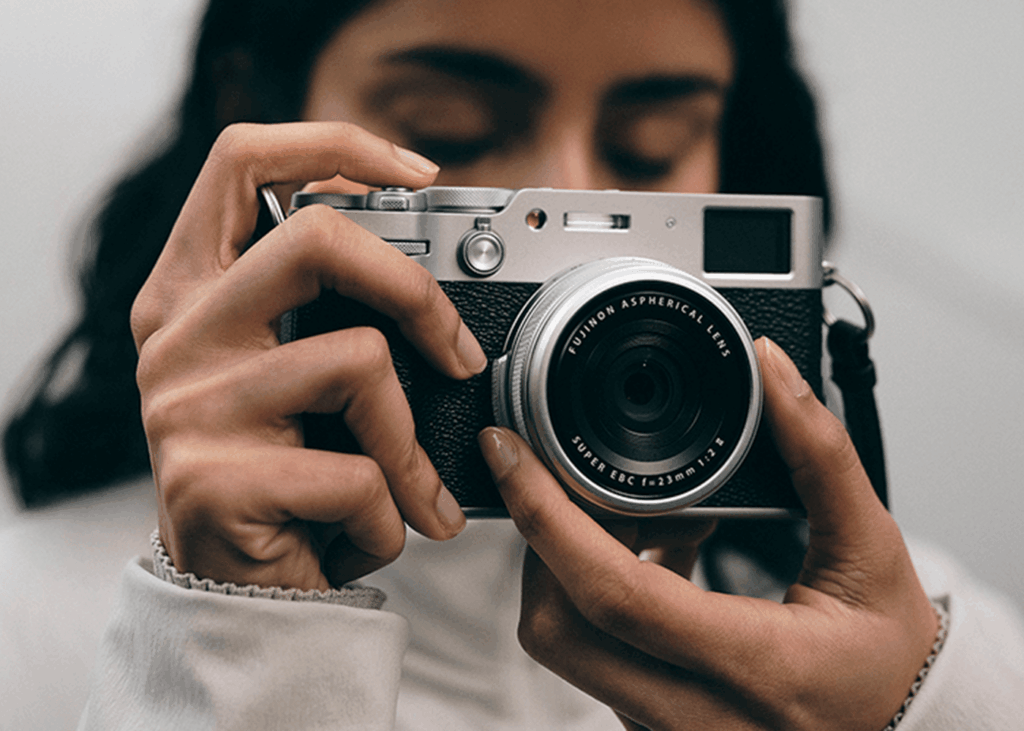
Table of Contents
 Our Picks at a Glance
Mirrorless cameras are a great, but the most of them have abandoned the look of traditoinal film cameras and look almost identical to the DSLR cousins that came before them.
Fujifilm’s X-series cameras are unique for a few reasons. The first is that Fujifilm has embraced an analog-era look and feel to its cameras. Dials and switches look like they came right off of 1970s film cameras, and the body matches that retro look.
The second reason Fujifilm cameras are unique is that the X-series is built entirely around the APS-C sensor size. This choice allows Fujifilm to make smaller, lighter cameras than full-frame cameras. The compact bodies and old-school design make them particularly good for times when you’d like your camera to blend in, like street and travel photography.
Fujifilm customers swear by the colors the sensor produces, and the simulation presets for older film-era Fujifilm film stocks like Provia, Ektachrome, and more.
In this guide, the Imaging Resource Staff and I bring you all of the best Fujifilm cameras, no matter your shooting style or need.
Fujifilm also makes the GFX medium-format camera linup, buit those models aren’t included in this guide as they’re for a specific type of photographer, and they’re a different category of product.
Our Picks at a Glance
Key Takeaways
Fujifilm’s mirrorless lineup continues to balance strong image quality with distinctive design and excellent color science that provide film simulation “looks” that make images resemble Fujifilm’s historic print and slide films of the analog era.
The X-S20 is built for hybrid creators who need dependable stills and video in a small body, while the X-T30 II keeps classic controls in an affordable, compact form. The X-T5 represents the core of Fujifilm’s APS-C system, pairing a 40-megapixel sensor with traditional dials and a well-rounded shooting experience. The X-H2S focuses on speed, offering advanced autofocus and high frame rates for sports and wildlife work.
Best Picks by Category
- Best Camera for Travel and Everyday Shooting: Fujifilm X-T30 II
- Best Hybrid Camera for Creators: Fujifilm X-S20
- Best All-Around APS-C Camera: Fujifilm X-T5
- Best Camera for Speed and Action: Fujifilm X-H2S
Why Trust Us
I’ve been testing and reviewing cameras since the early days of digital photography, watching the entire evolution from film to digital. As a working photographer and videographer, I’ve shot with all of these cameras in real-world scenarios, and I’ve tested each one, except the Leica camera lineup. Fortunately for customers shopping for Leica, the brand is known for the utmost in quality design and images, and the recommendations come down to body style preferences and some features.
For all of the cameras in this list, and especially for the Leica cameras, we consulted with our partner creators for their feedback and their take on today’s mirrorless cameras.
Our team has hands-on experience with every major camera manufacturer. It has covered the mirrorless revolution from its inception with the original Four Thirds cameras to today’s flagship full-frame models.
The cameras featured in this guide have been extensively tested by our team and validated by the broader photography community. Our recommendations are based on extensive testing, real-world performance, and feedback from working professionals across different photography disciplines.
We never take payment for placement, and even though our articles contain affiliate links, they never influence our editorial rankings.
Affiliate Disclaimer: We may earn a commission from purchases made through our links.

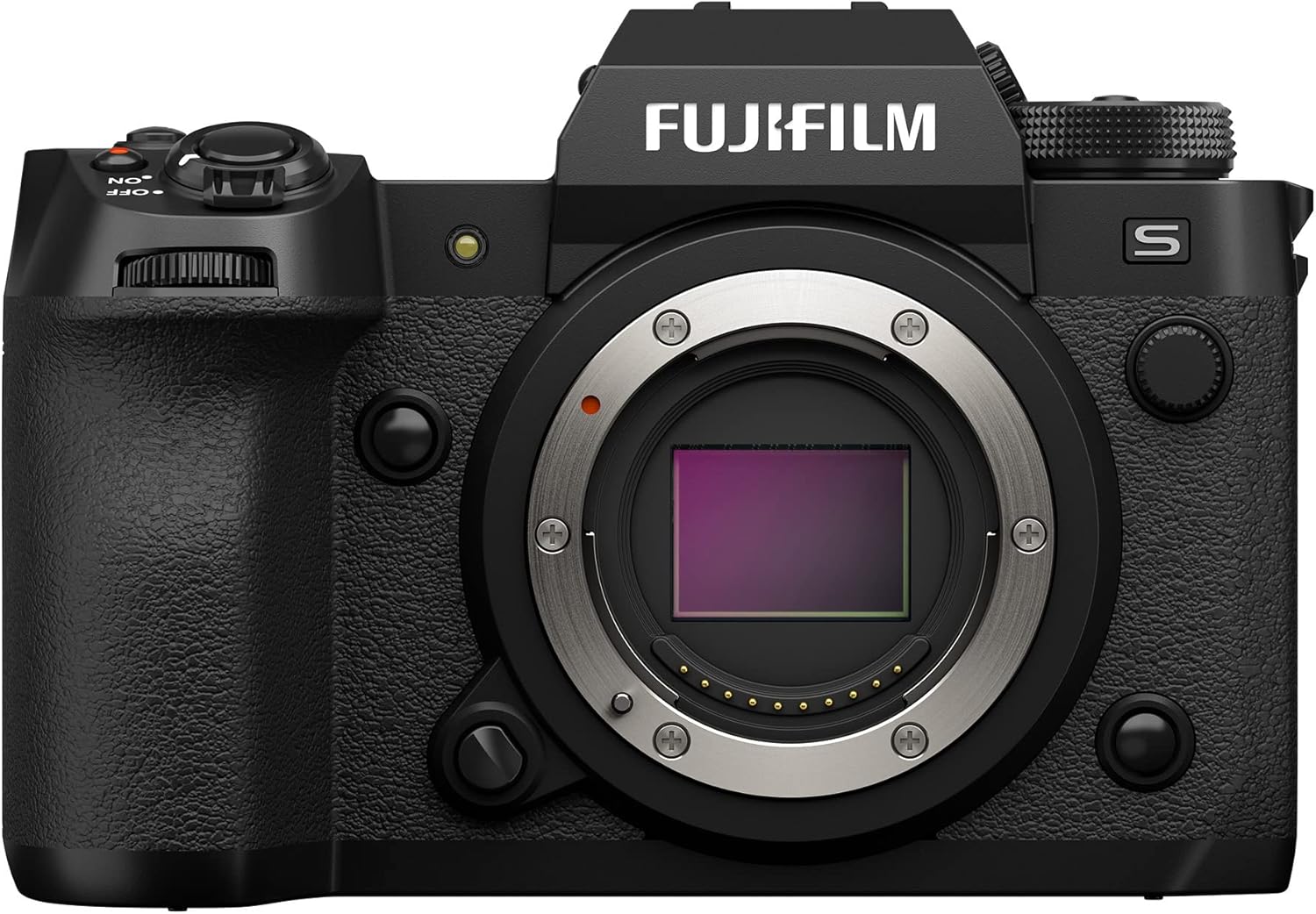
This camera is Fujifilm’s speed and video flagship, and I’ve been consistently impressed with its performance for fast-action photography. The stacked sensor eliminates rolling shutter issues, and the build quality matches anything in the professional camera market. For Fujifilm users who need maximum performance, this is the camera to pick.
Fujifilm’s flagship camera features advanced stacked sensor technology that virtually eliminates rolling shutter while also enabling fast burst shooting performance. Professional build quality and comprehensive video features make it suitable for demanding applications.
- Stacked sensor technology nearly eliminates rolling shutter artifacts while enabling exceptional burst shooting speeds for sports and wildlife photography.
- Professional-grade build quality with comprehensive weather sealing provides reliability for demanding commercial and outdoor applications.
- Advanced video features, including high frame rates and professional codecs, rival dedicated video cameras in a compact mirrorless package.
- Premium pricing for APS-C format may be difficult to justify when full-frame alternatives offer similar features at comparable costs.
- A complex feature set may overwhelm casual photographers who don’t require advanced professional capabilities and extensive customization options.
- APS-C sensor format limits low-light performance compared to full-frame alternatives in challenging shooting conditions.
- Sensor: 26.1MP APS-C X-Trans Stacked CMOS
- Processor: X-Processor 5
- Video Resolution: 6.2K 30p, 4K 120p
- Continuous Shooting: 15 fps (mechanical), 40 fps (electronic)
- Stabilization: 7-stop IBIS
- Viewfinder: 5.76m-Dot OLED EVF
- LCD: 3″ 1.62m-Dot vari-angle touchscreen
- Battery Life: Approx. 720 shots (CIPA)
This camera is Fujifilm’s speed and video flagship, and I’ve been consistently impressed with its performance for fast-action photography. The stacked sensor eliminates rolling shutter issues, and the build quality matches anything in the professional camera market. For Fujifilm users who need maximum performance, this is the camera to pick.
Fujifilm’s flagship camera features advanced stacked sensor technology that virtually eliminates rolling shutter while also enabling fast burst shooting performance. Professional build quality and comprehensive video features make it suitable for demanding applications.

The Fujifilm X100VI combines classic design with top performance, making it a great camera for street and travel photographers. Its 40.2MP X-Trans 5 sensor and fast X-Processor 5 deliver stunning detail and color straight out of camera, while in-body image stabilization keeps handheld shots razor-sharp.
The hybrid optical/electronic viewfinder gives a truly immersive shooting experience, and its fixed 23mm f/2 lens produces beautiful cinematic images. Despite its compact size, it captures 6.2K video and handles low-light scenes with surprising confidence, perfect for photographers who want top-tier image quality in a pocketable, all-in-one design.
- Distinctive fixed 35mm-equivalent f/2 lens delivers excellent optical quality with a unique character that enhances creative photography.
- Unique hybrid viewfinder combines optical and electronic viewing for versatile composition options and traditional shooting experience.
- Premium build quality and classic aesthetics provide operation that many Fujifilm users say inspires creative photography.
- Fixed lens limits focal length flexibility compared to interchangeable lens systems, requiring different shooting approaches for varying subjects.
- Extraordinary popularity creates supply shortages that make purchasing difficult without significant waiting periods or premium pricing.
- Single SD card slot provides no backup option, which may concern photographers shooting important events or commercial applications.
- Sensor: 40.2MP APS-C X-Trans CMOS 5 HR
- Lens: 23mm f/2 (35mm equivalent)
- Video Resolution: 6.2K 30p, 4K 60p
- Continuous Shooting: 11 fps (mechanical), 20 fps (electronic)
- Stabilization: 6-stop IBIS
- Viewfinder: Hybrid OVF/EVF
- LCD: 3″ 1.62m-Dot tilting touchscreen
- Battery Life: Approx. 450 shots (CIPA)
This camera has become a cult classic. I’ve owned three versions of this camera, and they’ve gone with me all over the world. The combination of premium build quality, a high-quality 35mm-equivalent lens, and Fujifilm’s colors and film simulation profiles creates an experience that’s different from other cameras.
The challenge is actually finding one in stock due to demand.

The Fujifilm X-T5 packs professional performance into a classic, lightweight body that feels great in hand. It’s a great rival to many much larger full-frame systems thanks to its 40.2MP APS-C X-Trans 5 sensor that delivers exceptional detail and color accuracy,.
With 7-stop in-body image stabilization and a powerful X-Processor 5, it handles everything from high-speed bursts to 6.2K video with ease. The traditional dials make it a joy to use, giving you full creative control without diving into menus. Ideal for travel, portrait, and landscape photographers, the X-T5 proves that you don’t need a heavy camera to capture world-class images.
- Exceptional 40MP resolution provides incredible detail for landscape photography and commercial shoots, and maintains good high-ISO performance.
- Fujifilm’s renowned color science and film simulation modes set Fujifilm apart from competitors with distinctive aesthetic options.
- Classic control layout with physical dials makes many photographers find it more intuitive than digital interfaces.
- The high-resolution sensor produces sharp images, but it has more noise in high ISO shooting than other Fujifilm cameras as a result of the increased pixel density.
- Video features, while capable, are not as advanced as dedicated hybrid cameras from other manufacturers in the same price range.
- Premium pricing reflects the advanced features and may be challenging for budget-conscious photographers to justify.
- Sensor: 40.2MP APS-C X-Trans CMOS 5 HR
- Processor: X-Processor 5
- Video Resolution: 6.2K 30p, 4K 60p
- Continuous Shooting: 15 fps (mechanical), 20 fps (electronic)
- Stabilization: 7-stop IBIS
- Viewfinder: 3.69m-Dot OLED EVF
- LCD: 3″ 1.84m-Dot tilting touchscreen
- Battery Life: Approx. 580 shots (CIPA)
This camera represents what I consider Fuji’s best balance of resolution, performance, and analog design. In my review at its launch, I said I liked how the 40MP sensor provides incredible detail with Fujifilm’s “color science,” and the analog control layout makes it genuinely enjoyable to use for both photography and video.
Fujifilm’s cameras include film simulations that make your images look like its film from the ’70s and ’80s, one of the biggest draws for Fujifilm cameras.
Advanced features like pixel-shift high resolution mode allow you to take super-high-resolution photos. This camera represents the pinnacle of APS-C technology.

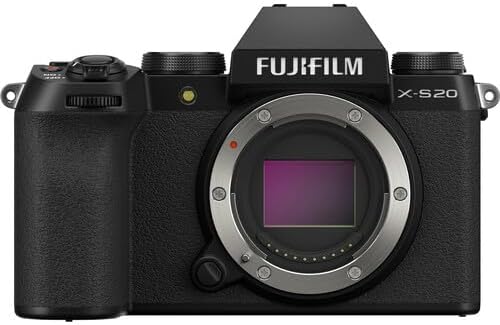
The Fujifilm X-S20 is a compact powerhouse built for creators who want pro-level performance without the bulk. It features a 26.1MP X-Trans CMOS 4 sensor and the fast X-Processor 5, delivering sharp images, rich colors, and impressive low-light results.
With advanced subject detection autofocus and 7-stop in-body stabilization, it’s equally capable for stills and 6.2K video. The intuitive grip and vari-angle touchscreen make it a perfect fit for vloggers, travelers, and hybrid shooters. Lightweight yet powerful, the X-S20 brings Fujifilm’s signature image quality and film simulations to a highly portable body that’s ready for anything.
- Conventional control layout appeals to photographers transitioning from other camera brands and offers familiar operation.
- Excellent battery life exceeds many mirrorless cameras and reduces the need for frequent battery swaps during extended sessions.
- Compact form factor with weather sealing provides durability and portability for travel and outdoor photography applications.
- A single SD card slot provides no backup option for critical shooting scenarios.
- Traditional control layout sacrifices some of Fujifilm’s distinctive tactile appeal that draws users to the brand.
- Limited to APS-C format, which may not satisfy photographers looking to upgrade to full-frame systems.
- Sensor: 26.1MP APS-C X-Trans CMOS 4
- Processor: X-Processor 5
- Video Resolution: 6.2K 30p, 4K 60p
- Continuous Shooting: 8 fps (mechanical), 20 fps (electronic)
- Stabilization: 7-stop IBIS
- Viewfinder: 2.36m-Dot OLED EVF
- LCD: 3″ 1.84m-Dot vari-angle touchscreen
- Battery Life: Approx. 800 shots (economy mode)
I think this is a great camera for photographers who want Fujifilm image quality and colors but prefer a more conventional control layout similar to other more “traditional” brands.
Our testing has shown it delivers the same excellent image quality as other X-series cameras while offering better ergonomics for some users.
Built around the same 26.1MP sensor as Fujifilm’s higher-end models, the X-S20 provides excellent performance for both photography and video. Battery life is also very good, making it a nice choice for all-day shooting.
The X-S20 can shoot up to 6.2K/30p and 4K/60p, making it one of the best video cameras in Fujifilm’s lineup.

The Fujifilm X-T30 II packs impressive performance into a small, stylish body that’s ideal for enthusiasts and travelers. It uses the same 26.1MP X-Trans CMOS 4 sensor and X-Processor 4 found in Fujifilm’s higher-end cameras, producing beautiful color, detail, and dynamic range.
Fast autofocus with face and eye detection makes it reliable for portraits and action, while 4K video recording adds versatility for creators. Despite its compact size, it handles like a classic camera with tactile dials and an intuitive layout. The X-T30 II is perfect for photographers who want Fujifilm’s film-like look and pro-level results in a travel-friendly package.
- Exceptional image quality with Fujifilm’s color science and film simulation modes provide distinctive images straight from the camera.
- Compact size and classic control layout make it portable and enjoyable to use for extended shooting sessions.
- The advanced autofocus system delivers reliable performance for both photography and video applications.
- A single SD card slot offers no backup option, which may be a problem for photographers shooting important events or professional applications.
- Limited weather sealing compared to higher-end Fujifilm models makes it more susceptible to damage in heavy rain or dusty, sandy environments.
- Battery life is not superb, so it requires carrying spare batteries for extended shooting sessions or intensive video recording.
- Sensor: 26.1MP APS-C X-Trans CMOS 4
- Processor: X-Processor 4
- Video Resolution: 4K 30p, Full HD 240p
- Continuous Shooting: 30 fps (electronic), 8 fps (mechanical)
- Stabilization: Digital (video only)
- LCD: 3″ 1.62m-Dot tilting touchscreen
- Battery Life: Approx. 390 shots (CIPA)
- Connectivity: Wi-Fi, Bluetooth
This is my pick for a Fujifilm camera for photographers who want its exceptional image quality in a compact, affordable package. It delivers performance that rivals more expensive cameras and has the same retro-styling as Fujifilm’s other bodies.
Built around a 26.1MP X-Trans sensor with advanced autofocus capabilities, the compact size makes it ideal for travel and street photography.

The Fujifilm X-M5 brings in-body stabilization and 6.2K open-gate video to the X-series’ compact form factor. It uses the same 26-megapixel X-Trans sensor as Fuji’s flagship models, capturing sharp, color-accurate images with impressive dynamic range. The addition of IBIS makes it more versatile for handheld shooting, especially in low light.
It’s small enough for everyday carry but capable of producing results suitable for professional projects. With access to Fuji’s wide lens lineup and signature Film Simulations, the X-M5 strikes a rare balance between creative flexibility and portability.
- Ultra-compact design makes it highly portable while maintaining access to Fujifilm’s large X-mount lens ecosystem.
- Same advanced sensor and image quality as more expensive Fujifilm models without the premium pricing.
- Simplified controls and smartphone-style operation make it accessible for users transitioning from phone cameras.
- No electronic viewfinder significantly limits usability in bright outdoor conditions and traditional photography applications.
- Limited manual controls may frustrate photographers who want to learn advanced techniques or prefer tactile operation.
- A single SD card slot provides no backup option for important shooting scenarios.
- Sensor: 26.1MP APS-C X-Trans CMOS 4
- Processor: X-Processor 5
- Video Resolution: 6.2K 30p, 4K 60p
- Continuous Shooting: 30 fps (electronic)
- Stabilization: Digital only
- LCD: 3″ 1.84m-Dot vari-angle touchscreen
- Battery Life: Approx. 450 shots (CIPA)
- Connectivity: Wi-Fi, Bluetooth
This camera serves as Fujifilm’s most compact interchangeable lens option, and I’ve found it good for users who want the flexibility of the X-mount system in the smallest possible package. Its design prioritizes portability, making it particularly suitable for casual photography and travel scenarios.
Fujifilm’s ultra-compact mirrorless camera is designed for casual users, but it still has Fujifilm’s color reproduction and image quality. The X-M5 ditches the electronic viewfinder to achieve its small size, but having only the LCD screen to compose and review images might be a limitation, especially since the screen isn’t always clearly visible in bright sunlight.
This is the interchangeable lens version of the fixed-lens X100 series, which we list above.
Comparision Chart
| Fujifilm X-T30 II | $850-950 | 26.1MP APS-C X-Trans | 4K/30p, 1080p/240p | Compact, film simulations |
| Fujifilm X-M5 | $750-850 | 26.1MP APS-C X-Trans | 4K/30p, 1080p/60p | Ultra-compact, no EVF |
| Fujifilm X-T5 | $1600-1800 | 40.2MP APS-C X-Trans | 6.2K/30p, 4K/60p | High resolution, classic controls |
| Fujifilm X-S20 | $1200-1400 | 26.1MP APS-C | 6.2K/30p, 4K/60p | Conventional controls, great battery |
| Fujifilm X-H2S | $2400-2600 | 26.1MP APS-C Stacked | 6.2K/30p, 4K/120p | Stacked sensor, speed flagship |
| Fujifilm X100VI | $1550-1650 | 40.2MP APS-C X-Trans | 6.2K/30p, 4K/60p | Fixed 23mm f/2, hybrid VF |
Frequently Asked Questions (FAQ)
What’s the difference between full-frame, APS-C, and Micro Four Thirds sensors?
Full-frame sensors (36mm x 24mm) provide the best low-light performance and shallowest depth of field, making them ideal for professional applications and challenging lighting conditions. APS-C sensors offer an excellent balance of image quality, portability, and cost, with a crop factor that provides extra reach for wildlife and sports. Micro Four Thirds sensors prioritize compact size and exceptional stabilization, with a 2x crop factor that makes telephoto lenses much smaller and more affordable than full-frame equivalents.
How important is weather sealing for mirrorless cameras?
Weather sealing provides crucial protection for photographers working in challenging conditions, from light rain to dusty environments. Cameras like the OM System models and professional Canon and Nikon bodies offer comprehensive protection that allows shooting in conditions that would damage unprotected cameras. However, casual photographers may not need extensive weather sealing, and basic splash resistance is often sufficient for most situations.
Do I need the highest resolution camera for professional work?
Resolution requirements depend on your specific applications. Portrait and commercial photographers often benefit from 45-61MP cameras for maximum detail and cropping flexibility. In contrast, sports and wildlife photographers may prefer lower resolution cameras with faster burst rates and better high-ISO performance. Most professional work can be accomplished excellently with 24-33MP cameras, which offer a better balance of file size, processing speed, and image quality.
What’s the advantage of mirrorless cameras over DSLRs?
Mirrorless cameras offer several key advantages: electronic viewfinders show exactly how your final image will appear, silent shooting modes enable discrete photography, advanced autofocus systems provide superior subject tracking, and compact size makes them more portable. Additionally, features like focus peaking, zebras for exposure, and real-time histogram display provide immediate feedback that DSLRs cannot match.
How do I choose between different camera manufacturer systems?
Consider lens ecosystem, color science preferences, and existing gear when choosing manufacturers. Sony offers the most comprehensive mirrorless camera lineup with excellent autofocus and the largest third-party lens selection. Canon provides outstanding color science, growing RF lens selection, and amazing professional support. Nikon delivers exceptional value with recent video-focused releases and reliable build quality. Panasonic leads in professional video features and unlimited recording capabilities. Fujifilm offers unique color science, premium build quality, and engaging tactile controls. OM System provides the best weather sealing and computational photography features in compact packages. Leica represents ultimate craftsmanship for users who prioritize premium materials and distinctive character over value.
What accessories are essential for mirrorless cameras?
Essential accessories include extra batteries (mirrorless cameras use more power than DSLRs), fast memory cards rated for your camera’s video capabilities, a sturdy tripod or travel tripod for stability, and lens filters for creative control. Consider a camera strap or grip for better handling, lens cleaning supplies for maintenance, and a camera bag or case for protection. External flash or LED panels improve lighting, while remote releases enable sharp long exposures and self-portraits.h
How much should I budget for lenses with a new mirrorless camera?
Budget at least as much for lenses as you spend on the camera body, and often more for serious photography. A basic lens kit (wide-angle zoom, standard zoom, telephoto) typically costs $1500-3000 for quality options, while professional lenses can cost $1000-3000 each. Third-party manufacturers like Sigma, Tamron, and Tokina offer excellent alternatives at lower prices. Consider starting with one versatile zoom lens and adding specialized lenses as your photography develops.
What’s the learning curve for switching from DSLR to mirrorless?
The transition is generally straightforward, with most controls and concepts remaining similar. Electronic viewfinders may require adjustment, but they provide immediate feedback that many photographers prefer once adapted. Battery life management becomes more important, menu systems vary between manufacturers, and some photographers need time to adapt to silent shooting modes. Most DSLR users find mirrorless cameras intuitive within a few weeks of regular use.i
Do mirrorless cameras work well for professional video production?
Many mirrorless cameras now offer professional video features, including 4K/8K recording, professional codecs, unlimited recording times, and advanced autofocus systems. Cameras like the Panasonic S1 II, Sony a7S III, and Canon R5 Mark II provide capabilities that rival dedicated video cameras. However, consider your specific workflow needs: professional productions may still require dedicated video cameras for features like built-in ND filters, advanced monitoring options, and specialized professional connectivity.s
Are expensive cameras always better than budget options?
Not necessarily. Expensive cameras offer advanced features like faster burst rates, better low-light performance, weather sealing, and professional build quality, but budget cameras often deliver excellent image quality for most uses. Consider your actual shooting needs: a $600 camera may produce results indistinguishable from a $6000 camera for casual photography. At the same time, professional work may require the reliability and features that only expensive cameras provide.