
Sigma 135mm F1.4 DG Art Hands-on: A Portrait Lens Sony Should Have Made


Table of Contents
-
 Sigma 135mm F1.4 DG Art Review
 -
Watch Our Hands-On Sigma 135mm f/1.4 DG Art Review Video
-
The L-Mount Alliance is Speeding Sigma Lens Development
-
The Drawbacks of Sigma’s Lenses on the Sony Platform
-
A 135mm Focal Length Lens is a Classic Portrait Choice
-
The Birds and the Bees
-
It’s All About the Bokeh
-
Sigma 135mm F1.4 Optical Design and Image Quality
-
Sigma 135mm F1.4 Autofocus Performance
-
Professional Features of the Sigma 135mm F1.4
-
Sigma 135mm F1.4 Practical Considerations
-
Market Position and Sony E-Mount Ecosystem
-
Sigma 135mm F1.4 DG ART Final Thoughts
-
Should You Buy This Lens
-
Sigma 135mm F1.4 Technical Specifications
-
Price and Availability of the Sigma 135mm F1.4 DG Art
The Sigma 135mm F1.4 DG Art delivers the widest aperture 135mm lens available for Sony E-mount, filling a gap Sony hasn’t addressed while offering exceptional portrait performance and low-light capabilities. This lens excels at subject isolation for portraits and handles challenging autofocus scenarios like hummingbirds in flight, though its weight, aperture, and size make it a specialized tool rather than an everyday lens.
 SCORE
SCORE
- Fastest 135mm lens available for Sony E-mount
- Exceptional sharpness and image quality
- 13-blade aperture creates smooth bokeh
- The dual HLA autofocus system works well with Sony’s subject detection
- Professional features, including a de-clickable aperture ring
- Removable tripod collar for versatility
- Heavy at 1,420g (Sony E-mount version)
- Large 105mm filter size adds to the cost
- Occasionally distracting bokeh highlights
- Limited to 15fps with third-party lens restrictions
- Substantial size is not ideal for travel
The Sigma 135mm F1.4 DG Art lens is available at B&H Photo.
Sigma 135mm F1.4 DG Art Review

With its new 135mm F1.4 DG Art lens, it’s clear that Sigma is actively trying to outdo Sony’s own lens development. This new lens, the widest aperture 135mm for the Sony platform, joins the impressive 300-600mm and 200mm telephoto lenses in a list of products that keep making me say that this is a lens Sony should have made.
To be clear, Sony makes fantastic lenses, optically some of the best lenses in the history of photography, and it has an impressive range of lenses that it released in a short period of time, considering it has only had eleven years since the original a7 was released.
But there are always gaps in a company’s lineup, and there are always products that can be improved. Sony’s GM II lenses are a good example; the GM lenses feature Sony’s best lens tech when those lenses were released, but there’s always room to improve.
Sigma is clearly targeting customers with features that aren’t found in Sony’s lenses. The 300-600mm F/4 is a fixed-aperture super-zoom, while Sony’s 200-600mm f/4.5-5.6 is a variable zoom and is a stop slower than the Sigma lens at its widest focal length.
The new Sigma 200mm F2 is a lens conspicuously missing in Sony’s lineup. Sports shooters love the 200mm focal length, and while Sony has a 300 mm, with a fixed aperture of f/2.8, it’s a full stop slower than the Sigma lens.
Since I started testing this Sigma 135mm a month before it launched, Sigma also released the 35mm f/1.2 DG II ART, an aperture that, again, is wider than Sony’s own 35mm.
That lens just arrived, and in my initial tests, it’s proving to be another amazing piece of glass. When Sony first started releasing lenses, they were coming just about every six to eight weeks. In addition to these pro-quality lenses, Sigma also released a new cinema lens and a consumer zoom lens.
That’s five lenses in three months, an impressive rate for a company that’s not the manufacturer of the cameras.
Watch Our Hands-On Sigma 135mm f/1.4 DG Art Review Video
The L-Mount Alliance is Speeding Sigma Lens Development
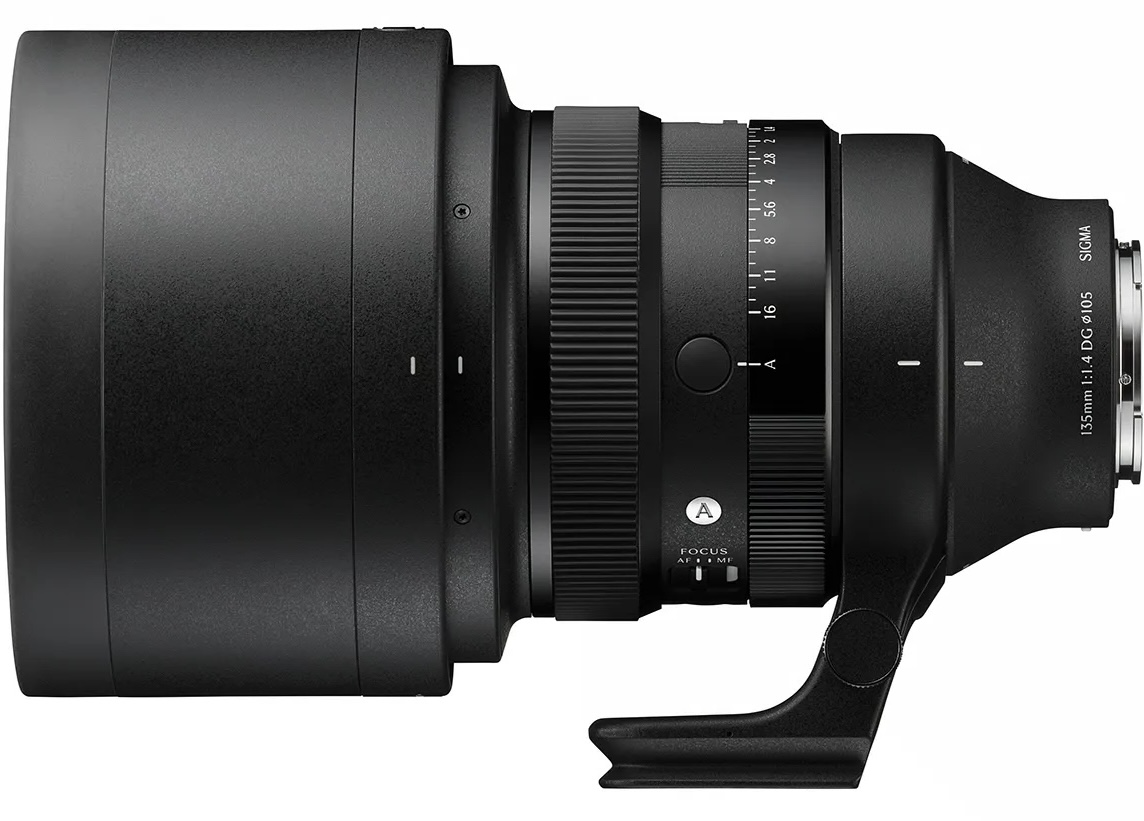
Sigma isn’t only producing this lens for the Sony E-mount system; their new lenses are also available for L-Mount, an open standard that Sigma helped launch. The L-Mount was a joint project with Leica and Panasonic, but now there are nine companies part of the standard.
Developing lenses for two platforms makes it easier for Sigam to recoup its R&D budget. With Sony, Sigma is competing directly, but with the L-Mount, Sigma is producing lenses for cameras that (I am assuming) pay a licensing fee to use.
This dual-purpose development, one for an existing market and one for its own market, is driving the pace of development. It’s a win-win for both platforms’ customers.
The Drawbacks of Sigma’s Lenses on the Sony Platform
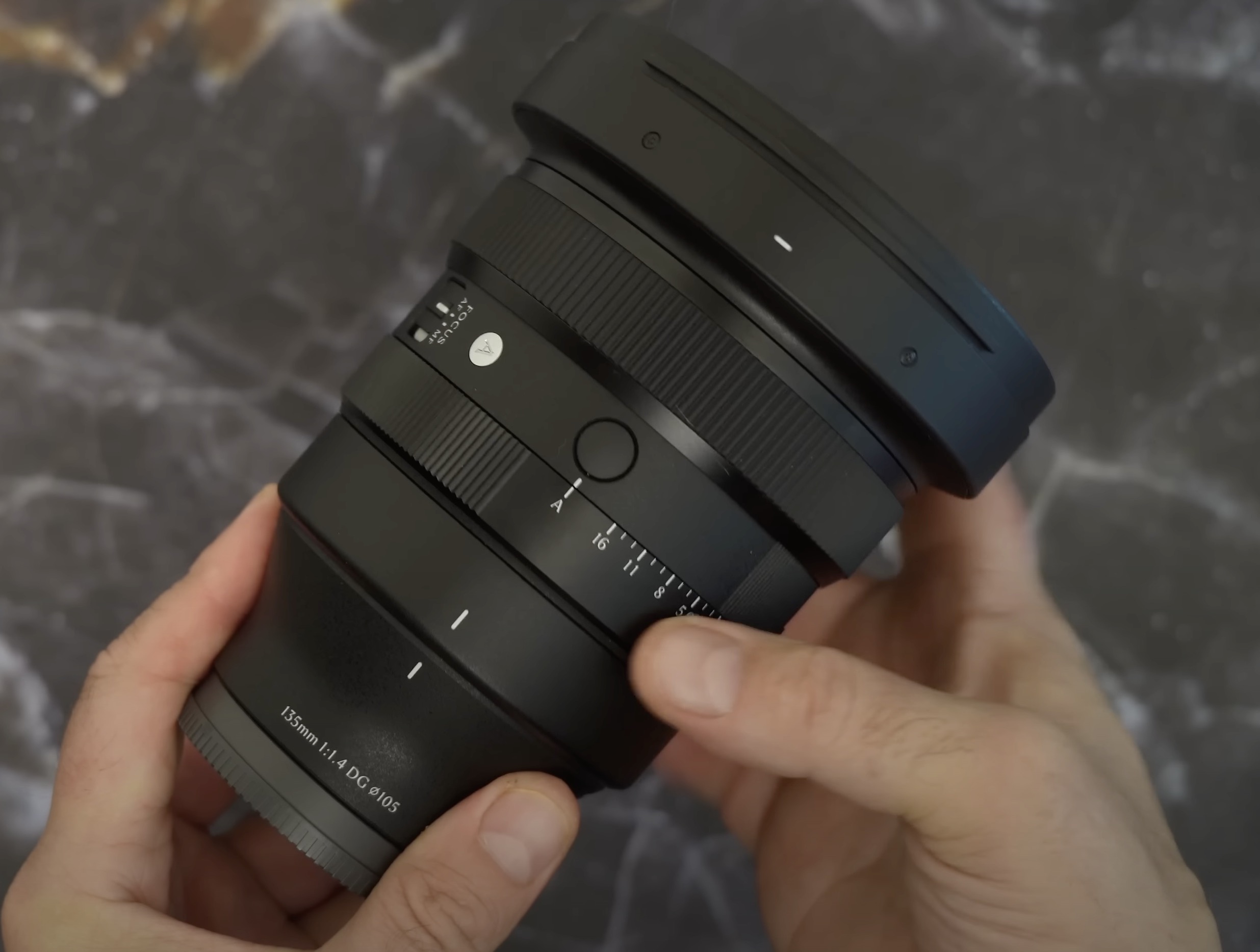
There are, of course, some downsides to these lenses, although the most significant one is due to Sony’s constraints on manufacturers. Third-party lenses are not able to achieve the full frame rates of Sony’s lenses. For portrait lenses, being capped at 15 frames per second is not a major concern, but for Sigma’s sports lenses, it’s a significant purchase decision.
Sony says that this limitation is due to its lens and camera engineers being able to work together to develop products that can communicate with each other to reach maximum speeds. This has always sounded like double speak. It’s been years since Sony released a camera with 20 frames per second speeds, and it’s nearly impossible to think that if they were able, companies like Sigma couldn’t have figured out how to get that speed or higher.
Sony lets companies make lenses for its lens mounts, but it does not open up the full communications standards for lens and body. This is almost certainly the reason third-party lenses can’t keep up, and it’s almost certainly a limitation imposed to prevent lenses from offering the performance of Sony’s lenses.
It’s Sony’s playground, so they get to make the decisions, but that playground is partially why the L-Mount Alliance was born.
A 135mm Focal Length Lens is a Classic Portrait Choice

The 135mm focal length is ideal for portrait work, offering natural perspective and compression that enhances subject separation from backgrounds. In simpler terms, a 135mm focal length produces a nice-looking portrait, especially when shot wide open for a blurred background.
The wider the aperture, the softer the background defocus is. This “bokeh” effect makes a subject pop thanks to the contrast between a hyper-sharp foreground and a blurry background.
An 85mm focal length is another go-to lens for the portrait photographer, but many shooters prefer the 135mm length because it provides greater compression effects compared to an 85mm, making subjects “pop.”


My portrait tests with the Sigma 135mm f/1.4 DG ART showed what I’ve come to expect from Sigma’s ART series of lenses: incredibly sharp details and excellent tonality.
The Birds and the Bees
A wide-open 135mm is a natural portrait lens, and at f/1.4, it’s not surprising it’s sharp. Even a good manual focus 135mm prime produces tack-sharp images.
The autofocus in Sony cameras, and the high-speed motors in the Sigma lens (more on that in a moment) make it a more versatile lens than just for portraits.
When Sony released their 135mm F1.8 GM lens, the system was fast enough to shoot indoor basketball and accurate enough to nail eye detection while players were moving, and the aperture was wide open.
While I didn’t get a chance to shoot a basketball game, I found some challenging conditions to test the focusing power of the lens, anyhow.
Around dusk, two hummingbirds come to a feeder we have on our kitchen porch. Hummingbirds are notoriously hard to focus on in general, and you need a high shutter speed to freeze their wings mid-flight.
I often photograph these adorable shiny birds with either my 24-70 GM II or the 70-200 GM, but even the f/2.8 aperture of those two lenses struggles with the low light at the end of the day. Pushing the shutter speed ot 1/4000th or higher on those lenses bumps up the ISO, which makes more noise. My main camera is the Sony a7R V, and the high-resolution sensor already has issues with low-light noise because of the high pixel count.
The f/1.4 aperture of the Sigma lens is two full stops faster than the f/2.8 of my Sony zooms. Even if I were still shooting the f/2 Sigma 200mm I tested, there would be a full stop more light with the Sigma 135mm f/1.4 DG ART.
With two full stops, I was able to shoot at 1/2000th of a second at f/1.4 at ISO 400 and 1/4000th at ISO 800, with the Sigma 200 F2 that would have been 1/2000 at ISO 800 and 1/4000th at ISO 1600. Going a stop further with the 70-200 f/2.8, I’d have been at ISO 1600 and 3200, respectively.
Sony’s bird autofocus was able to dial in on the eye of the hummingbird, even when it was darting back and forth.

The shutter speed was so fast that I was able to catch a feather falling from the hummingbird’s wing.

Another photo made possible by the telephoto focal length and wide aperture is of this bee (a honey bee?) resting one tiny foot on the wick of a candle. I think Sony’s insect subject AF might be unnecessary (at the size of a bee, what exactly is it looking for besides contrast from the background?), but it was active when I took this shot.

A striking example involved photographing a bee on a candle wick, shot handheld at f/1.4 using Sony’s insect detect autofocus. The resulting image showcased both the lens’s shallow depth of field capabilities and the effectiveness of its autofocus system.

I also used the shallow depth of field to create this studio shot to mock up a wedding reception image. Thanks ot the bokeh, you can’t even tell that’s a bottle of Martinelli’s Sparkling Cider, and not Champagne.
No portrait lens test would be complete without a shot of an adorable cat, so I used it to photograph one of our kittens, K-MEW-SO.
It’s All About the Bokeh

The background defocus on this lens is lovely, at least until it’s not. In shots like the one of my cat, it is smooth and creamy. (The bokeh, not the cat.) The father, the subject, gets from the background, and the more highlights in the background, the more the defocus resolves as “bokeh balls.”
The Sigma lens has a 13-bladed aperture, a particularly high number. The Sony 135mm F1.8 has an 11-blade aperture, which was already considered a high blade count, but Sigma turned it up to 13.
Generally, I like the look of these bokeh balls, but in a few instances, the resulting bright “balls” are distracting when mixed in with the darker bokeh areas.
I’m not sure what caused that highlight above the model’s head, as there weren’t any lights, though it’s possible that the sunlight that caused the hairlight was shimmering through a tree.

This shot has a similar effect, where the white areas are definitely sky. With one positioned just behind the beak of the hummingbird, I find these distracting as well. I’m sure some photographers prefer this type of bokeh, and I like it too, just not when it detracts from the subject.
Sigma 135mm F1.4 Optical Design and Image Quality
As a general rule, the more high-end elements a lens has, the better the image quality. Groups of lens elements are used to direct light to the sensor with as little distortion as possible. The Sigma 135mm f/1.4 DG ART has 17 elements in 13 groups. There are four FLD (Fluorite-like Dispersion) glass elements and two aspherical elements to control axial chromatic aberration, which typically affects large-aperture telephoto lenses.

Sigma 135mm F1.4 Autofocus Performance
Dual HLA Focusing System
Sigma’s Dual HLA (High-response Linear Actuator) system drives two focus groups independently. This floating focus configuration provides the force needed for precise focusing while maintaining speed comparable to Sony’s native lenses.
The system pairs nicely with Sony’s advanced subject detection modes, as the hummingbird photos showed. Even testing with insect detect autofocus showed off the reliable tracking and accurate focus acquisition.
Professional Features of the Sigma 135mm F1.4
Aperture Control and Video Functionality
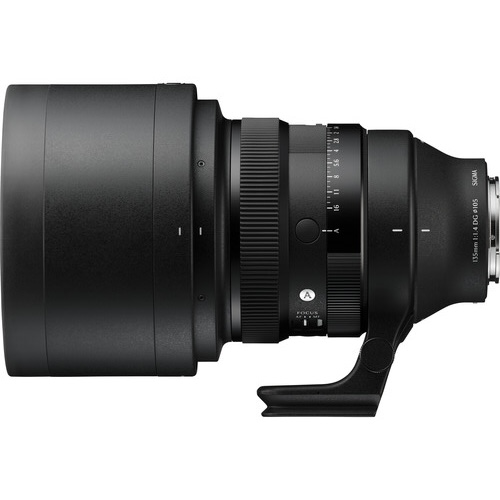
The Sigma 135mm has a manual aperture ring, something all pro-level lenses should have. The aperture ring offers both clicked and de-clicked operation. De-clicked operation enables smooth aperture changes suitable for video work, while the clicked operation provides tactile feedback for still photography.
Sigma 135mm F1.4 Tripod Collar System
The included tripod collar rotates 360 degrees when loosened, making it easy to quickly switch from horizontal to vertical shooting while on a tripod. The collar can be completely removed for handheld shooting, reducing weight and bulk during handheld shoots.
The collar features Arca-Swiss compatibility and includes safety stopper screws to prevent accidental release from clamps. Sigma recommends screw-type clamps over lever-style versions for secure mounting.
Focus and Control Layout
Two AFL (Auto Focus Lock) buttons provide access whether shooting horizontally or vertically. Sony cameras can customize these buttons for various functions besides basic AF lock operation.
A focus mode switch allows quick changes between autofocus and manual operation. Manual focus operates smoothly with appropriate resistance for precise adjustments.
Sigma 135mm F1.4 Practical Considerations
Size, Weight, and Handling
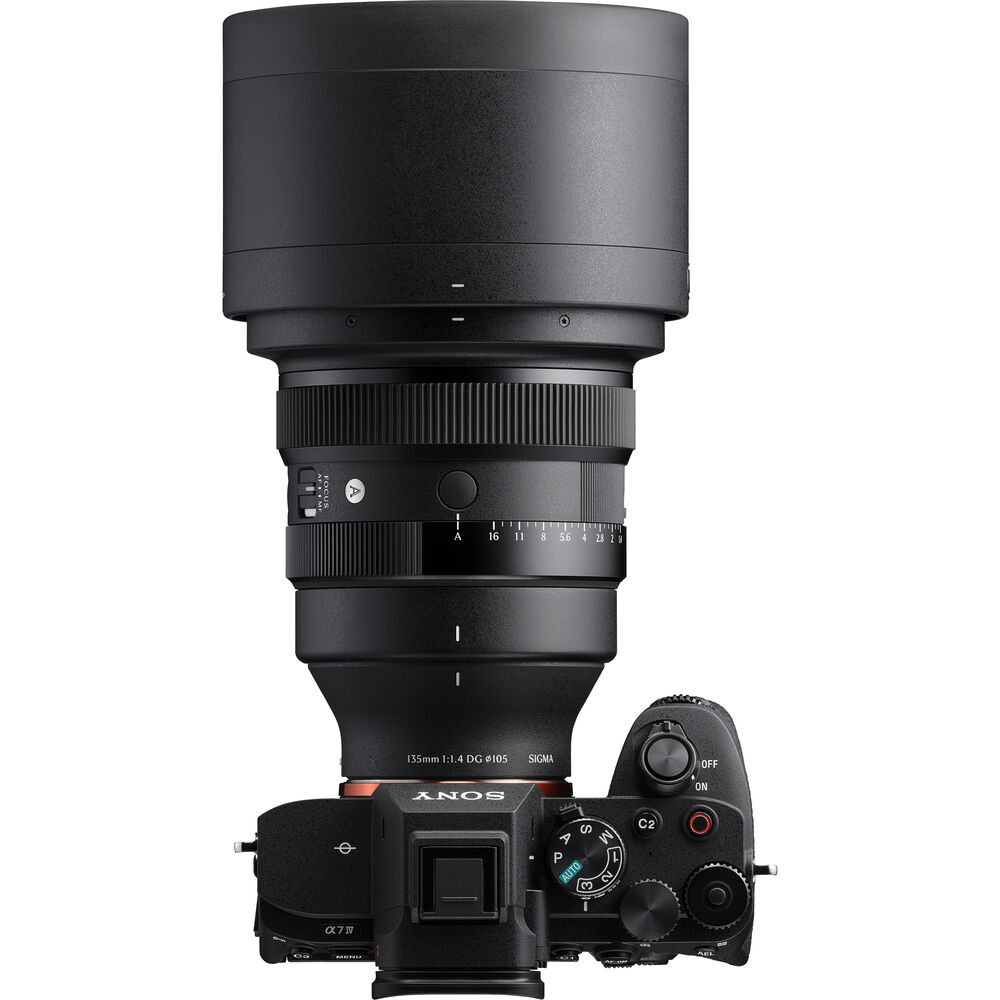
At 1,430g for the L-mount version and 1,420g for the Sony E-mount, this is a substantial lens. I used it on several travel tripods I own without any issues, but the balance is front-heavy, so a sturdier tripod is recommended. The weight distribution remains manageable for handheld shooting, it has a nice balance, and I often carried the camera around by the tripod mount.
Cinema cameras with base dual ISOstypicallyl around 800-1000 particularly benefit from neutral density filters when using this lens.
The 105mm front element will add slightly to the cost of this lens. Shooting wide-open in daylight for soft focus backgrounds requires a neutral density filter. Since very few lenses have a 105mm front element, most photographers will have to buy filters just for this lens.
Sigma 135mm F1.4 Focus Breathing and Video Suitability
There’s minimal focus breathing when racking focus from infinity to a close distance, and vice versa.
The de-clickable aperture ring, combined with quiet operation and manageable focus breathing, makes the lens an excellent choice for video applications. There is a manual focus ring, but it’s not a linear pull, so repeating focus pulls is more complicated than on a cinema lens and some Sony-branded primes.
Market Position and Sony E-Mount Ecosystem
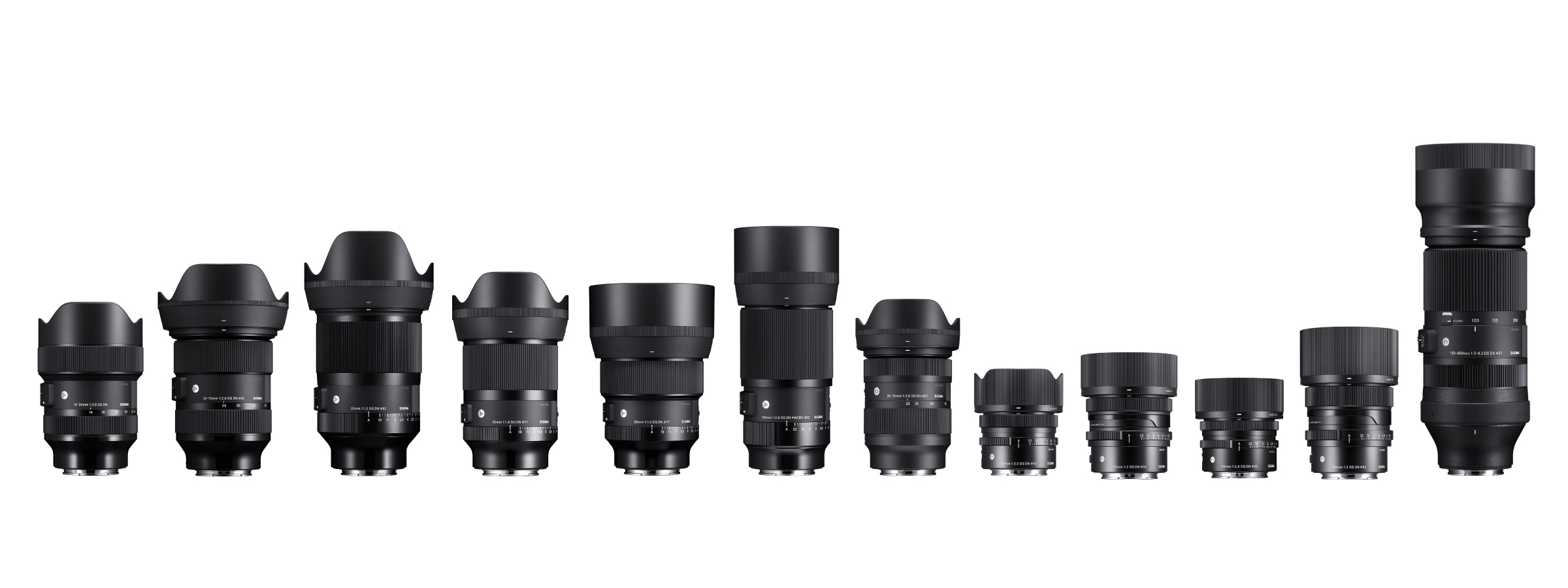
Sony’s reduced lens development pace compared to previous years creates opportunities for third-party manufacturers. While Sony offers an extensive lens selection, gaps remain that companies like Sigma can address effectively.
The more open Sony E-mount ecosystem contrasts noticeably with Canon and Nikon’s restrictive approaches to third-party development. Obviously, the more lenses are available for the E-Mount, the more useful Sony cameras become, and the lenses available for the system are now one of its chief selling points.
Sigma 135mm F1.4 DG ART Final Thoughts
The Sigma 135mm F1.4 DG Art addresses a need in the portrait lens market through its combination of focal length and maximum aperture, but it’s a need that’s very specific. Several 135mm lenses don’t have such a wide aperture, and they produce excellent images. What they don’t do is let in as much light as the f/1.4 aperture does, and they don’t deliver the same level of bokeh.
The build quality, image quality, and performance of this lens are exceptional. Aside from the occasionally irksome bokeh balls, the background defocus is second to none.
Should You Buy This Lens
Yes, if you want the fastest and widest aperture 135mm lens available for Sony E-mount or L-mount platforms. At $1,899.99, the price makes it a compelling choice. Wedding and event photographers will particularly appreciate the combination of subject isolation, fast focus speeds, and the removable tripod collar.
However, if you’re primarily shooting in good light or already own a 135mm f/1.8, the benefits may not outweigh the additional bulk and cost unless you specifically need that extra aperture. The 1,430g weight means this isn’t ideal for photographers who prioritize portability. Still, for Sony shooters looking to push their portrait work into new territory, this lens delivers capabilities that don’t exist elsewhere.
Sigma 135mm F1.4 Technical Specifications
- Lens Construction: 17 elements in 13 groups
- Special Elements: 4 FLD glass elements, two aspherical elements
- Aperture Range: f/1.4 to f/16
- Minimum Focus Distance: 110cm (43.4 inches)
- Maximum Magnification: 1:6.9
- Filter Size: 105mm
- Dimensions: 111.7mm x 135.5mm (L-mount), 111.7mm x 137.5mm (Sony E-mount)
- Weight: 1,430g (L-mount), 1,420g (Sony E-mount)
- Diaphragm Blades: 13 (rounded)
- Angle of View: 18.2°
Price and Availability of the Sigma 135mm F1.4 DG Art
The Sigma 135mm F1.4 DG Art can be ordered now, and is shipping.