
Nikon Budget Lenses Buyer’s Guide


Table of Contents
 Why Trust Us
David Schloss, Editor-in-Chief and the Imaging Resource Staff
Nikon’s Z-mount system has grown quickly, with a mix of high-end professional glass and more accessible budget options. While Nikon keeps tight control over its lens ecosystem, it has still released compact primes and lightweight zooms that balance cost with performance.
Whether you shoot portraits, travel, or wildlife, Nikon’s Z-mount budget lenses provide affordable ways to expand your kit without jumping into the premium S-line. These lenses prove you don’t need to spend thousands to get excellent results.
Why Trust Us
I’ve been shooting with Nikon cameras since 1979, and reviewing them since the late 1990’s. I’ve also been reviewing Nikon Z lenses since Nikon launched its mirrorless platform. I’ve shot with the majority of the lenses in this buyer’s guides.
At Imaging Resource, we test camera gear and studio setups for real-world workflows – in studio portraits, travel kits, and outdoor wildlife sessions – to see how different models perform where it matters most.
Our team has tested Nikon Z gear extensively since the mount’s introduction. For this guide, we’ve selected Nikon Z lenses available in 2025 that deliver strong value while keeping price and weight manageable.
Where we have not directly tested a lens in this guide, we have collaborated with our professional photographer and content creator partners.
We never take payment for placement, and even though our articles contain affiliate links, they never influence our editorial rankings.
Affiliate Disclosure: We may earn a commission from purchases made through our links.
Key Takeaways
Nikon’s Z-mount budget lens selection combines native performance with third-party value options. For wide-angle shooting, the Nikon Z 28mm f/2.8 delivers exceptional portability. Standard focal lengths are well-covered by the Nikon Z 50mm f/1.8 S for professional quality and the Nikon Z 40mm f/2 for compact everyday use. Portrait photographers benefit from both the Nikon Z 85mm f/1.8 S and the more affordable Viltrox 85mm f/1.8 Z AF. For telephoto reach, the Tamron 70-300mm f/4.5-6.3 Di III RXD offers lightweight travel convenience.
Best Picks by Category
Best Budget Wide Prime: Nikon Z 28mm f/2.8
Best Budget Standard Prime: Nikon Z 50 f/1.8 S
Best Budget General Zoom: Nikon Z 24-50mm f/4-6.3
Best Budget Telephoto Prime: Nikon Z 85mm f/1.8 S
Best Budget Telephoto Zoom: Tamron 70-300mm f/4.5-6.3 Di III RXD
Wide Prime Lenses
Nikon Z 28mm f/2.8
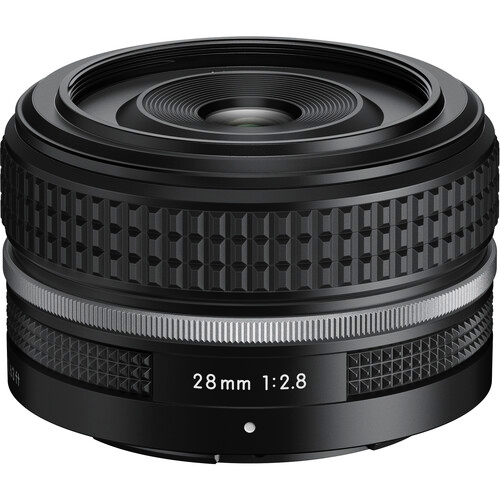
The Nikon Z 28mm f/2.8 is one of the smallest and lightest Z lenses, making it ideal for travel, street, and general photography. I’ve walked around with it on my camera and it’s barely noticeable, which I like when travelling. It delivers sharp results with good color rendition while remaining affordable compared to Nikon’s larger S-line primes.
Its compact size makes it a natural companion to Nikon’s smaller Z cameras, and while the f/2.8 aperture isn’t as good at light gathering as faster options, f/2.8 is perfect for most shoots. Autofocus is quick and quiet, making it a good match for video as well.
Rating: 4.4
Pros
- Small and lightweight design
- Sharp and reliable optics
- Affordable for full-frame users
Cons
- f/2.8 limits subject separation
- No image stabilization
- Plastic-heavy construction
Specs
- Focal Length: 28mm
- Maximum Aperture: f/2.8
- Minimum Aperture: f/22
- Lens Elements: 9 in 8 groups
- Aperture Blades: 7 rounded
- Minimum Focus Distance: 0.19m (7.5 in)
- Maximum Magnification: 0.2x
- Filter Size: 52mm
- Dimensions: 71.5 x 43 mm (2.8 x 1.7 in)
- Weight: 155 g (0.34 lb)
- Image Stabilization: None
- Weather Sealing: Basic
Who is this for?
Nikon Z shooters wanting a compact, affordable wide prime for travel and everyday use.
Wide-Angle Zoom Lenses
Venus Optics Laowa 8-15mm f/2.8 Fisheye Lens (Nikon Z)
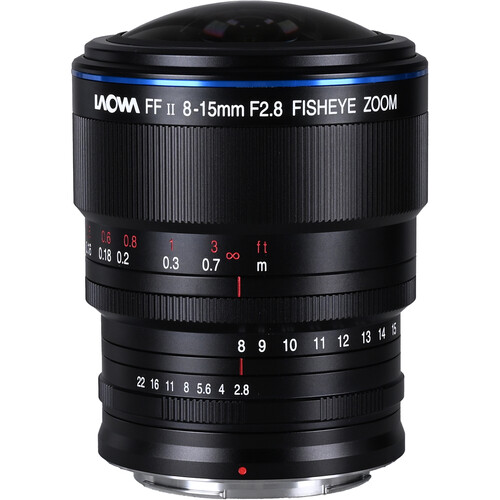
We haven’t tested this lens, but it’s one of the few wide-angle zoom lenses since Nikon doesn’t technically allow third party lenses.
It has an ultra-wide 8-15mm full-frame focal length range in a compact, lightweight package at just 550g. It’s one of the smallest full-frame fisheye zooms available, making it ideal for landscapes, astrophotography, and creative distortion where bold perspectives matter, and when you don’t want to carry bulky gear.
The constant f/2.8 aperture provides excellent low-light performance and shallow depth-of-field effects, while the manual focus design allows precise control for both stills and video. Build quality features robust metal construction with basic weather resistance, but it feels solid in hand and offers a dual fisheye effect-circular at 8mm and rectangular at 15mm-for versatile creative shots.
While it lacks autofocus and advanced electronics, this delivers sharp, dramatic images with pronounced distortion edge-to-edge, making it an excellent value for photographers who prioritize unique visual styles and affordability over convenience features.
Rating: 4.4
Pros
- Ultra-compact and lightweight design for a full-frame fisheye zoom enhances portability
- Constant f/2.8 aperture enables strong low-light performance and creative bokeh in fisheye shots
- Dual fisheye effect (circular to rectangular) provides bold, artistic distortion options
Cons
- Manual focus only limits speed for fast-moving subjects or run-and-gun video
- Basic weather resistance doesn’t match premium sealed lenses for extreme conditions
- Distortion requires post-correction for straight-line architecture or precise compositions
Specs
- Focal length: 8-15mm
- Aperture: f/2.8-f/22 (constant)
- Aperture blades: 5
- Image stabilization: None
- AF motor: None (manual focus)
- Weather sealing: Basic
- Weight: 550g (1.21 lbs)
- Dimensions: 82 x 84mm (3.23 x 3.31 in)
- Filter size: Rear gel filter holder (no front thread)
- Minimum focus distance: 0.16m (6.3 in)
Who is this for?
Nikon Z-mount users seeking an affordable, ultra-wide fisheye zoom for landscapes, astro, and creative photography with dramatic distortion.
Standard Prime Lenses (35-85mm)
Nikon Z 50mm f/1.8 S
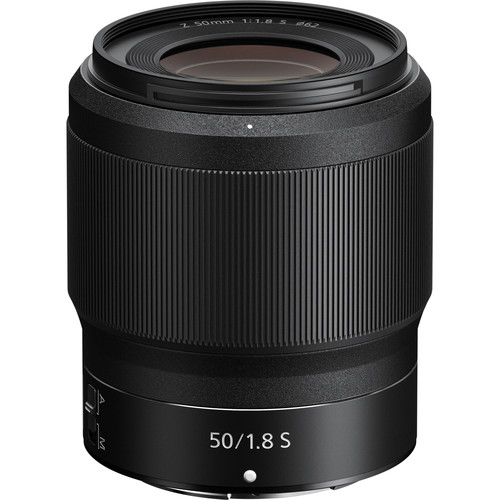
This is one of the Nikon lenses in our testing lab. Its performance is great at such a reasonable price point for Nikon’s S-line series. At close to $600, it just skirts the range of “affordable” for a prime lens, but the S-series lenses are excellent, and the f/1.8 aperture provides good low-light capability and really nice background blur., The optics are sharp, and image quality is very good from edge to edge.
Build quality is solid with weather sealing and durable construction. While more expensive than third-party alternatives, the image quality and the native Nikon build should justify the cost for users who want native lens quality.
Rating: 4.6
Pros
- Solid optical performance delivers sharp, high-contrast images with good bokeh quality.
- Weather sealing provides durability and weather protection.
- Good integration with Nikon Z cameras provides reliable autofocus and optimal image quality.
Cons
- Higher price point compared to third-party alternatives with similar specifications.
- Larger and heavier than some competing budget 50mm options.
- No optical image stabilization limits handheld shooting capabilities in low light.
Specs
- Focal length: 50mm
- Aperture: f/1.8
- Aperture blades: 9 (rounded)
- Image stabilization: None (relies on IBIS)
- AF motor: STM stepping motor
- Weather sealing: Yes
- Weight: 415 g (0.91 lbs)
- Dimensions: 76 mm x 86.5 mm (2.99 in x 3.41 in)
Who is this for?
Nikon Z users who want professional optical quality and weather protection in a standard prime lens.
Viltrox 85mm f/1.8 Z AF
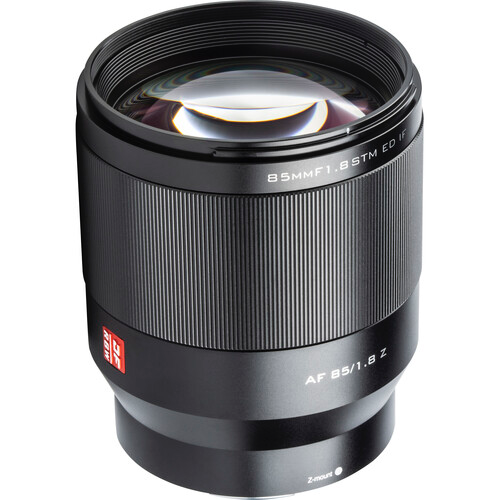
This third-party telephoto prime rides the line between standard and telephoto, and since 85mm is usually used for portraits, not sports or wildlife, we’re including it in the standard prime section.
The f/1.8 aperture creates very nice background blur, and it has nice low-light performance, while the 85mm focal length provides a suitable perspective for headshots and portraits. Build quality is adequate with solid construction and reliable autofocus that works well with Nikon Z cameras.
While weather sealing is lacking, the optical performance still competes with much more expensive lenses, making it a practical choice for budget-conscious portrait photographers.
Rating: 4.3
Pros
- Good value provides higher-end portrait lens performance at budget pricing.
- Solid optical quality delivers sharp images with smooth, creamy bokeh characteristics.
- Reliable autofocus performance integrates well with Nikon Z camera systems.
Cons
- Limited weather sealing may restrict use in challenging shooting conditions.
- Build quality, while good, doesn’t match the feel of Nikon’s S-line lenses.
- Third-party lenses may have limited long-term firmware support compared to native options.
Specs
- Focal length: 85mm
- Aperture: f/1.8
- Aperture blades: 9 (rounded)
- Image stabilization: None
- AF motor: STM stepping motor
- Weather sealing: Basic
- Weight: 485 g (1.07 lbs)
- Dimensions: 83 mm x 90 mm (3.27 in x 3.54 in)
Who is this for?
Budget-conscious Nikon Z users seeking a high-quality portrait lens at an affordable price.
Standard Zoom Lenses
Note: Nikon’s limited support for third-party lenses reduces the number of options in this and other categories. We are including the Z 24-120mm f/4 S, though it’s several hundred dollars more expensive than our budget lens ceiling.
Nikon Z 24-120mm f/4 S for Nikon Z Mount
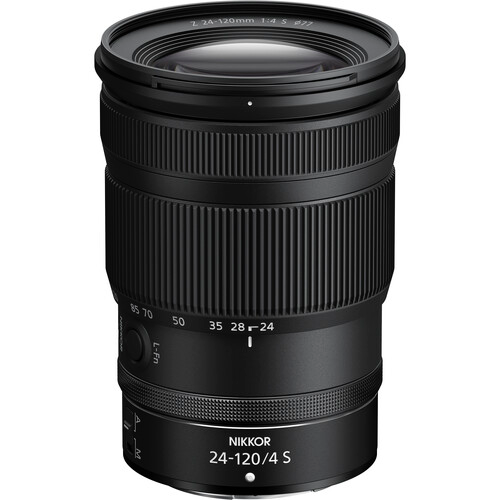
Nikon’s versatile S-line zoom extends the standard range to 120mm while maintaining constant f/4 performance and professional build quality. The 5x zoom ratio covers most photography needs from wide-angle to moderate telephoto, while advanced optical design delivers consistent sharpness throughout the range. VR image stabilization provides up to 5 stops of shake reduction, though the premium pricing reflects S-line professional positioning.
Rating: 3.9
(Note: Our normal rank for this lens is 4.5, but the high price makes it a lower rating for this budget lens guide.)
Pros
- The extended 120mm reach provides greater versatility than traditional 24-70mm alternatives.
- Excellent VR image stabilization enables handheld shooting in challenging conditions.
- Professional S-line optical quality delivers consistent performance across the zoom range.
Cons
- Larger size and weight compared to shorter focal length alternatives impact portability.
- Premium S-line pricing exceeds many competing standard zoom options.
- Constant f/4 aperture limits shallow depth of field compared to f/2.8 alternatives.
Specs
- Mount: Nikon Z
- Focal Length: 24-120mm
- Maximum Aperture: f/4 (constant)
- Minimum Aperture: f/22
- Lens Elements: 17 elements in 15 groups
- Aperture Blades: 9
- Minimum Focus Distance: 0.35m (13.8 inches)
- Maximum Magnification: 0.32x
- Filter Size: 77mm
- Dimensions: 84 x 118.5mm (3.3 x 4.7 inches)
- Weight: 630g (22.2 oz)
- Image Stabilization: Yes (VR, five stops)
- Weather Sealing: Yes
Who is this for?
Photographers who need an extended zoom range with professional build quality and image stabilization for versatile shooting applications.
Nikon Z 24-50mm f/4-6.3
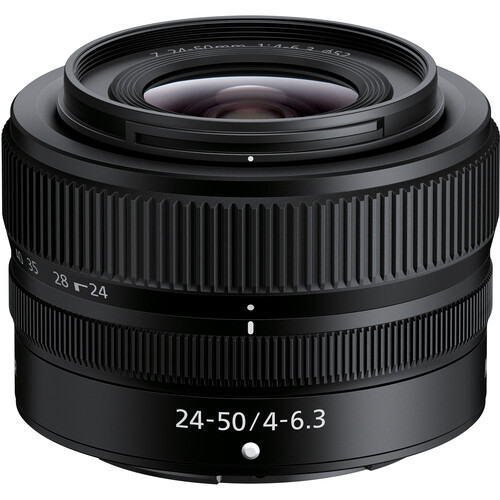
Although this is a budget lens, it’s one of the great starter lenses for the Nikon Z-System. It has a 24-50mm full-frame focal length range in a tiny, lightweight package at just 195g. It’s the shortest and lightest full-frame standard zoom in its class, making it ideal for travel and everyday photography where portability matters, and when you don’t want to look like you have high-end camera gear.
The variable f/4-6.3 aperture provides decent performance for bright conditions, while the stepping motor autofocus is quick, near-silent, and reliable for both stills and video. Build quality is simple with plastic construction and no weather sealing, but it feels solid in hand and collapses to a pocketable 51mm length for easy storage.
While it lacks the premium optics and constant aperture of higher-end zooms, this delivers sharp, crisp images edge-to-edge when stopped down slightly, making it an excellent value for photographers who prioritize size and affordability over advanced features.
Rating: 4.2
Pros
- Ultra-compact and lightweight design makes it nearly invisible on camera
- Sharp optical performance with three aspherical and two ED elements for reduced aberrations
- Affordable pricing provides high-quality zoom results at an entry-level cost
Cons
- Variable f/4-6.3 aperture limits low-light performance and subject separation compared to constant-aperture lenses
- No weather sealing restricts use in dusty or wet conditions
- Short zoom range may feel limiting for versatile shooting scenarios
Specs
- Focal length: 24-50mm
- Aperture: f/4-6.3 (variable)-f/22-36
- Aperture blades: 7 (rounded)
- Image stabilization: None
- AF motor: Stepping motor
- Weather sealing: No
- Weight: 195g (6.9 lbs)
- Dimensions: 74.5 x 51mm (2.9 x 2.0 in) (collapsed)
- Filter size: 52mm
- Minimum focus distance: 0.35m (13.8 in)
Who is this for?
Nikon Z-mount users seeking an affordable, ultra-portable standard zoom for travel, street, and everyday photography.
Telephoto Prime Lenses
Nikon Z 85mm f/1.8 S
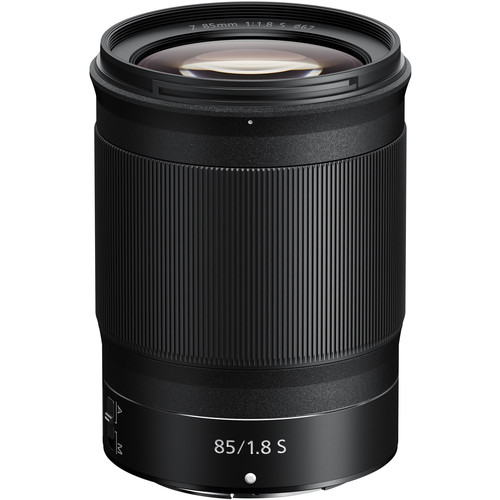
I’ve been impressed with Nikon’s native lenses for their new Z-Mount, and this is a particular favorite thanks to the price and wide aperture. It produces images with excellent sharpness and clarity across the frame, while the optical design minimizes chromatic aberrations and flare, two common image problems in budget lenses.
The 85mm focal length provides natural compression for portraits, and the fast f/1.8 aperture creates smooth background blur. Nikon’s S-line build quality also means weather sealing and solid handling, making this a reliable option for both studio and outdoor use.
Rating: 4.6
Pros
- Exceptional native Z-mount performance
- Weather-sealed professional build
- Outstanding image quality across the aperture range
Cons
- More expensive than third-party alternatives
- Heavier than some competitors
- Limited to 85mm focal length only
Who is this for?
Nikon Z users who want guaranteed compatibility and exceptional image quality for portrait work.
Viltrox AF 85mm f/1.8 Z
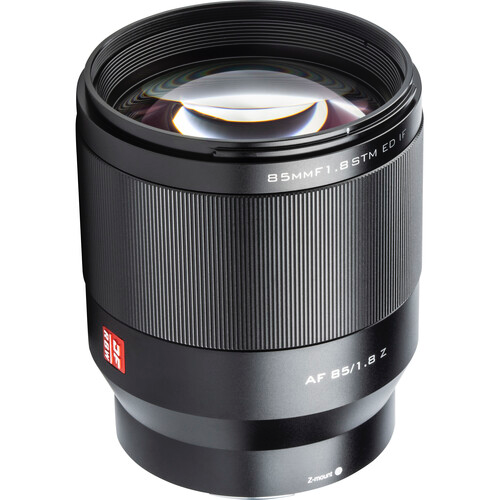
The first third-party autofocus lens for the Nikon Z mount, this budget option provides excellent value. Its solid metal construction feels more premium than it should at this price. The STM motor delivers quiet, accurate autofocus that works smoothly with Nikon’s AF system. Image quality had good sharpness and a nice-looking background blur, though it’s not as polished as Nikon’s “S” lenses. Still, for portrait shooters looking to save money without sacrificing autofocus or overall performance, it’s an excellent alternative to Nikon’s own 85mm f/1.8.
Rating: 4.4
Pros
- Excellent value at half the price of Nikon’s lens
- Solid metal construction and build quality
- Compatible with Nikon’s eye detection AF
Cons
- Firmware updates can be problematic
- Slight performance gap compared to a native Nikon lens
- No weather sealing
Specs
- Mount: Nikon Z (full-frame/FX)
- Focal Length: 85mm
- Maximum Aperture: f/1.8
- Minimum Aperture: f/16
- Lens Construction: 10 elements in 7 groups (1 aspherical, 1 ED, 4 HD elements)
- Diaphragm Blades: 9 (rounded)
- Minimum Focus Distance: 0.8m (2.62 ft)
- Maximum Magnification: 0.11x
- Filter Size: 72mm
- Dimensions: 80.7mm (diameter) × 92mm (length)
- Weight: 548g (1.21 lb)
- Autofocus: STM stepping motor
Who is this for?
Budget-conscious photographers who want 85mm portrait capabilities without the premium price of native Nikon glass.
Telephoto Zoom Lenses
This is an area without other budget choices besides the Tamron because of Nikon’s limited third-party support.
Tamron 70-300mm f/4.5-6.3 Di III RXD (Nikon Z)
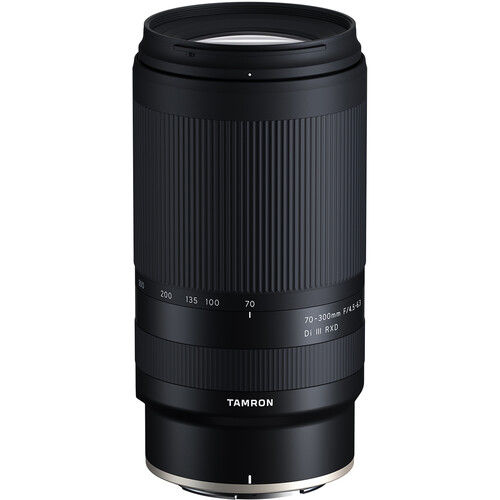
This lens comes in L-Mount, Sony E-Mount, and Nikon Z-Mount versions. We’ve included it in all three sections because it’s hands-down one of our favorite travel zoom lenses. This is another lens I’ve taken on trips in Sony’s E-Mount version, and it’s performed exceptionally well considering the price, weight, and size.
This affordable zoom focuses on portability without sacrificing too much optical performance, making it a practical travel lens or intro sports lens for L-mount users. The focal length range covers most telephoto needs, and the image quality throughout the zoom range is very good for such an affordable lens.
While it lacks optical stabilization, modern L-mount cameras with in-body stabilization help compensate for that omission. It only has basic weather sealing, so this isn’t a lens to take out into a rainstorm.
Rating: 4.6
Pros
- Good value providing decent telephoto performance at budget pricing.
- Ultra-lightweight design makes it suitable for travel and extended shooting sessions.
- Adequate optical quality delivers reasonably sharp images throughout the telephoto zoom range.
Cons
- No optical image stabilization requires reliance on camera body stabilization.
- Variable f/4.5-6.3 aperture limits low-light performance compared to constant-aperture alternatives.
- Build quality, while adequate, feels less premium than Nikon’s native S-line lenses.
Specs
- Focal length: 70-300mm
- Aperture: f/4.5-6.3 variable
- Aperture blades: 7 (rounded)
- Image stabilization: None (relies on IBIS)
- AF motor: RXD stepping motor
- Weather sealing: Basic
- Weight: 545 g (1.20 lbs)
- Dimensions: 148 mm x 77 mm (5.83 in x 3.03 in)
Who is this for?
Nikon Z users seeking an ultra-portable, affordable telephoto zoom for travel photography.
Comparison Chart
| Product | Dimensions / Weight | Key Specs | Special Features |
| Nikon Z 28mm f/2.8 | 71.5 x 43mm / 155g | 28mm, f/2.8, 7 blades | Ultra-compact wide prime |
| Nikon Z 40mm f/2 | 70 x 45.5mm / 170g | 40mm, f/2, 9 blades | Compact everyday prime |
| Nikon Z 14-30mm f/4 S | 89 x 85mm / 485g | 14-30mm, f/4 constant | S-line quality, filter-friendly |
| Nikon Z 50mm f/1.8 S | 76 x 86.5mm / 415g | 50mm, f/1.8, 9 blades | Weather-sealed S-line performance |
| Viltrox 85mm f/1.8 Z AF | 83 x 90mm / 485g | 85mm, f/1.8, 9 blades | Third-party value, solid build |
| Nikon Z 24-50mm f/4-6.3 | 73.5 x 51mm / 195g | 24-50mm, f/4-6.3, 7 blades | Lightweight travel zoom |
| Nikon Z 24-120mm f/4 S | 84 x 118.5mm / 630g | 24-120mm, f/4 constant | Extended reach, VR stabilization |
| Nikon Z 85mm f/1.8 S | 75 x 99mm / 470g | 85mm, f/1.8, 9 blades | S-line portrait quality |
| Nikon Z 50-250mm f/4.5-6.3 VR | 74 x 110mm / 405g | 50-250mm, f/4.5-6.3, 7 blades | DX telephoto zoom with VR |
| Tamron 70-300mm f/4.5-6.3 Di III RXD | 148 x 77mm / 545g | 70-300mm, f/4.5-6.3 | Ultra-lightweight telephoto |
FAQs
Do I really need both a prime and a zoom lens?
Not always. Primes tend to offer sharper optics and wider apertures at lower prices, while zooms provide more flexibility. Many photographers start with one versatile zoom, then add primes for specific needs.
What’s the most important factor in choosing a budget lens?
It depends on your shooting style. Portrait shooters value aperture and bokeh, while travel photographers need portability and zoom range. Decide which matters most before buying.
Are budget lenses sharp enough for professional work?
Yes. Many budget lenses are optically excellent, especially at common apertures like f/4 to f/8. The compromises usually come in build quality, autofocus speed, or maximum aperture.
Do I need image stabilization in my budget lens?
That depends on your camera. If your body has IBIS (in-body image stabilization), lens-based stabilization is less critical. But for long telephotos, stabilization is always useful.
What’s the best first budget lens to buy?
For most shooters, a general-purpose zoom like Nikon’s Z 24–50mm or Panasonic’s 20–60mm covers the widest range of needs at a reasonable price.
Are third-party budget lenses worth considering?
Yes, but Nikon’s Z-mount has limited third-party AF support. Most Nikon budget users stick with native Z lenses for now.
Will a budget lens limit my creativity?
Not at all. Budget lenses may have slower apertures or simpler construction, but they still allow you to explore composition, lighting, and perspective creatively.
Do budget lenses work for video?
Yes, though some may have noisier autofocus motors. Nikon’s STM-equipped budget lenses work well for hybrid shooters.
Are budget lenses weather-sealed?
Some are, but most cut costs by leaving sealing out. If you shoot outdoors frequently, consider affordable lenses that include weather resistance.
Is it better to buy new or used budget lenses?
Used can save money, but check for dust, scratches, and AF issues. Because budget lenses are already inexpensive, many photographers buy new ones for peace of mind and warranty coverage.