
Micro Four Thirds Budget Lenses Buyer’s Guide

Table of Contents
 Why Trust Us
By David Schloss, Editor-in-Chief and the Imaging Resource Staff
Micro Four Thirds is unique in offering a huge selection of budget lenses from multiple manufacturers, all of which are fully cross-compatible across Panasonic and OM System bodies. This format allows photographers to choose from compact primes, versatile kit zooms, and long telephoto lenses without breaking the bank.
Because of the smaller sensor size, even budget Micro Four Thirds lenses can provide impressive reach or wide coverage in a compact body. This makes the system particularly appealing for travel, wildlife, and beginners looking to build a lens collection affordably.
Why Trust Us
At Imaging Resource, we test camera gear and studio setups for real-world workflows – in travel photography, street shooting, and sports in order to see how different models perform where it matters most.
I’ve been testing Olympus (now OM Systems) cameras since the first Micro Four Thirds system hit the market, and I’ve tested most of the lenses in this guide.
We’ve tested Micro Four Thirds since its earliest days and know how budget-friendly lenses from Panasonic, Olympus, and Sigma compare. For this guide, we’ve selected options available in 2025 that combine portability, affordability, and strong performance.
For lenses we have not tested, we have consulted with our trusted photographer and creator partners to ensure accurate coverage and recommendations.
We never take payment for placement, and even though our articles contain affiliate links, they never influence our editorial rankings.
Affiliate Disclaimer: We may earn a commission from purchases made through our links.
Our Picks at a Glance
Key Takeaways
Micro Four Thirds shooters enjoy the widest selection of budget lenses of any system. The Olympus M.Zuiko 17mm f/1.8 is a compact and fast wide prime, while the Panasonic Lumix 12-32mm f/3.5-5.6 is a lightweight and portable wide zoom. The Sigma 30mm f/1.4 DC DN Contemporary offers excellent value as a standard prime, while the Olympus M.Zuiko 12-45mm f/4 PRO provides sharp results as a general-purpose zoom. Portrait fans should consider the Olympus M.Zuiko 45mm f/1.8, and telephoto needs are covered by the Panasonic Lumix 45-150mm f/4-5.6 OIS and Olympus M.Zuiko 75-300mm f/4.8-6.7 II.
Best Picks by Category
- Best Budget Wide Prime: Olympus M.Zuiko 17mm f/1.8
- Best Budget Wide Zoom: Panasonic Lumix 12-32mm f/3.5-5.6
- Best Budget Standard Prime: Sigma 30mm f/1.4 DC DN Contemporary
- Best Budget General Zoom: Olympus M.Zuiko 12-45mm f/4 PRO
- Best Budget Telephoto Prime: Olympus M.Zuiko 45mm f/1.8
- Best Budget Telephoto Zoom: Olympus M.Zuiko 75-300mm f/4.8-6.7 II
Wide-Angle Zoom Lenses
Olympus M.Zuiko 17mm f/1.8
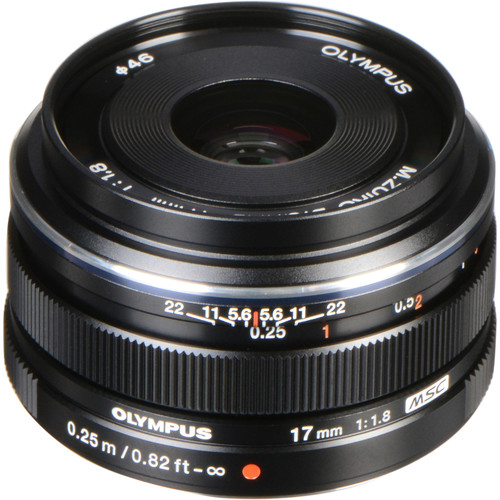
A compact and stylish wide-angle prime, the Olympus 17mm f/1.8 offers a 34mm equivalent field of view that’s perfect for street, travel, and everyday shooting. Its bright f/1.8 aperture handles low-light scenes well while also delivering smooth subject separation. The metal build feels premium, and the manual focus clutch gives photographers more control when they want to fine-tune focus quickly.
Rating: 4.7
Pros
- Versatile 34mm equivalent focal length ideal for everyday and street photography
- Bright f/1.8 aperture for low light and shallow depth of field
- Compact, lightweight metal design with manual focus clutch
Cons
- No weather sealing limits outdoor durability
- Some edge softness when shot wide open
- Relies on IBIS since there’s no built-in stabilization
Specs
- Mount: Micro Four Thirds
- Focal Length: 17mm (34mm equivalent)
- Maximum Aperture: f/1.8
- Minimum Aperture: f/22
- Lens Elements: 9 elements in 6 groups
- Aperture Blades: 7 rounded
- Minimum Focus Distance: 0.25 m (9.8 in)
- Maximum Magnification: 0.08x
- Filter Size: 46mm
- Dimensions: 57.5 x 35.5 mm (2.3 x 1.4 in)
- Weight: 120 g (0.26 lb)
- Image Stabilization: None
- Weather Sealing: No
Who is this for?
Micro Four Thirds photographers looking for a portable, fast wide-angle prime that balances quality, speed, and affordability.
OM System M.Zuiko Digital ED 8-25mm f/4.0 PRO for Micro Four Thirds Mount
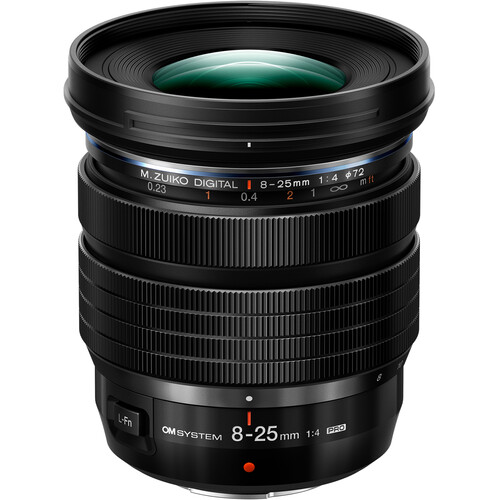
This professional ultra-wide to standard zoom covers a few more traditional lenses with its 16-50mm equivalent range. Weather-sealed construction and a constant f/4 aperture make it ideal for shooting in bad weather. Its close-focusing capability adds macro-style functionality, though it’s not a true macro lens.
This lens is at the top of our budget cutoff, but with the weatherproofing and pro build, it’s worth it.
Rating: 4.6
Pros
- Exceptional focal range versatility covers ultra-wide through normal perspectives in one lens.
- Professional weather sealing and build quality ensure reliable performance in harsh conditions.
- Close focusing capability enables macro-style photography with impressive magnification ratios.
Cons
- Premium pricing approaches the upper limit of the budget category, though justified by features.
- Constant f/4 aperture limits low-light performance compared to faster alternatives.
- Larger size challenges the compact philosophy of the Micro Four Thirds system.
Specs
- Mount: Micro Four Thirds
- Focal Length: 8-25mm (16-50mm equivalent)
- Maximum Aperture: f/4.0 (constant)
- Minimum Aperture: f/22
- Lens Elements: 16 elements in 10 groups
- Aperture Blades: 7
- Minimum Focus Distance: 0.23m (9.1 inches)
- Maximum Magnification: 0.42x (0.84x equivalent)
- Filter Size: 72mm
- Dimensions: 77 x 89mm (3.0 x 3.5 inches)
- Weight: 411g (14.5 oz)
- Image Stabilization: No
- Weather Sealing: Yes (IPX1)
Who is this for?
Serious Micro Four Thirds users who want professional versatility and weather sealing while staying within reasonable budget constraints.
Standard Zoom Lenses
Olympus M.Zuiko 12-45mm f/4 PRO
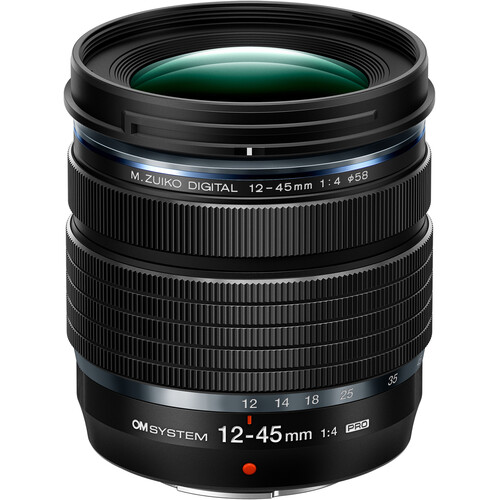
A compact, “Pro” grade standard zoom with a constant f/4 aperture, the Olympus 12-45mm f/4 Pro offers a versatile 24-90mm full-frame equivalent range. It strikes an excellent balance between performance, portability, and build quality, making it an ideal choice for enthusiasts seeking a high-quality, all-purpose zoom without the bulk of faster pro lenses.
Rating: 4.5
Pros
- Constant f/4 aperture ensures consistent exposure across the zoom range
- Very compact and lightweight for a Pro zoom (~254 g)
- Fully weather-sealed body (dust, splash, and freeze-proof)
- Excellent sharpness across focal lengths, with good control over aberrations and distortion
- Strong macro/close-focus capability (minimum focus distance of 12 cm at the wide end)
Cons
- Slower f/4 aperture limits low-light performance and depth-of-field control compared to f/2.8 zooms.
- No focus clutch; uses a smooth electronic focus ring
- Some barrel distortion at the wide end (correctable in post-processing)
- Bokeh is decent, but not as creamy as prime lenses
Specs
- Mount: Micro Four Thirds
- Focal Length: 12-45mm (≈24-90mm equivalent)
- Maximum Aperture: f/4 (constant)
- Minimum Aperture: f/22
- Optical Construction: 12 elements in 9 groups
- Aperture Blades: 7 (rounded)
- Minimum Focus Distance: 0.12m (12 cm at wide end)
- Maximum Magnification: ~0.5x (Micro Four Thirds terms)
- Filter Size: 58mm
- Dimensions: ~63.4mm (diameter) x 70mm (length)
- Weight: ~254g
- Image Stabilization: None (relies on in-body image stabilization, IBIS)
- Weather Sealing: Yes (dust, splash, and freeze-proof with Pro build)
Who Is This For?
The Olympus 12-45mm f/4 Pro is perfect for photographers who need a high-quality, weather-sealed zoom for daily, travel, and portrait photography. It’s especially well-suited for users of lightweight Olympus or OM System bodies who prioritize portability without compromising performance.
OM System M.Zuiko Digital ED 12-40mm f/2.8 PRO II for Micro Four Thirds Mount
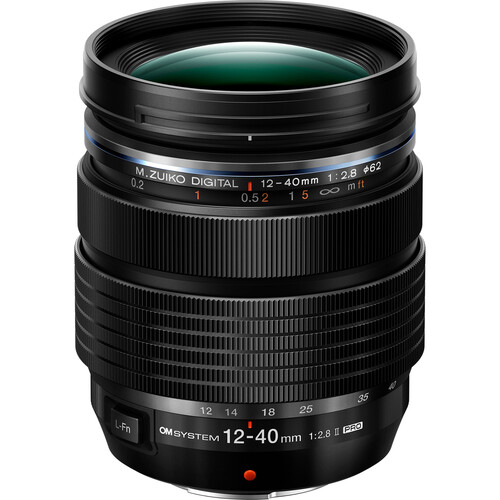
The updated version of Olympus’s professional standard zoom maintains identical optical performance while adding enhanced IP53 weather sealing. This 24-80mm equivalent lens delivers professional-grade sharpness and durability in a compact body that weighs just 382 grams. The constant f/2.8 aperture and manual focus clutch make it ideal for both stills and video work.
This lens goes over our cutoff for budget lenses, but there are limited options on the Micro Four Thirds standard.
Rating: 4.5
Pros
- Exceptional IP53 weather sealing surpasses most competing lenses in harsh conditions.
- Outstanding optical performance with coast-to-coast sharpness even at f/2.8.
- Compact professional build quality with a smooth manual focus clutch system.
Cons
- No optical image stabilization requires reliance on camera body stabilization.
- Premium pricing reflects professional positioning above kit lens alternatives.
- Limited telephoto reach compared to variable aperture competitors.
Specs
- Mount: Micro Four Thirds
- Focal Length: 12-40mm (24-80mm equivalent)
- Maximum Aperture: f/2.8 (constant)
- Minimum Aperture: f/22
- Lens Elements: 14 elements in 9 groups
- Aperture Blades: 7
- Minimum Focus Distance: 0.2m (7.9 inches)
- Maximum Magnification: 0.3x (0.6x equivalent)
- Filter Size: 62mm
- Dimensions: 69.9 x 84mm (2.8 x 3.3 inches)
- Weight: 382g (13.5 oz)
- Image Stabilization: No
- Weather Sealing: Yes (IP53)
Who is this for?
Professional photographers and serious enthusiasts who need weather-sealed optics with consistent f/2.8 performance for demanding shooting conditions.
Panasonic Lumix G Vario 12-60mm f/3.5-5.6 ASPH Power O.I.S. for Micro Four Thirds Mount
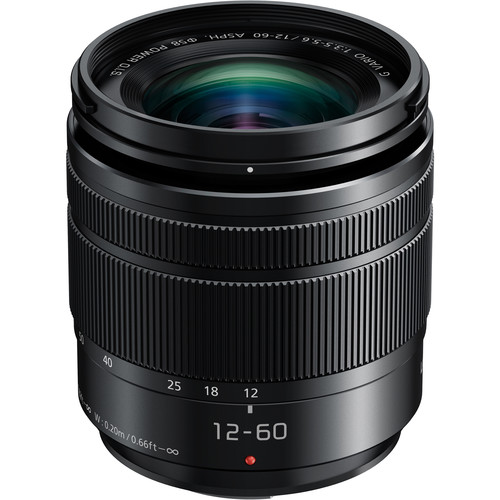
Panasonic’s affordable standard zoom is a good value with a wide-ranging 24-120mm equivalent in full frame. The variable aperture design keeps cost and size reasonable, while Power O.I.S. stabilization helps with handheld shooting. The optical image stabilization makes up for the f/5.6 aperture at the longest focal length. Panasonic uses plastic construction to get its low price point, but image quality is good for everyday photography.
Rating: 3.9
Pros
- Exceptional value proposition delivers a versatile 5x zoom range at very reasonable pricing.
- Power O.I.S. stabilization enables handheld shooting despite variable aperture limitations.
- Compact and lightweight design enhances portability for travel and everyday photography.
Cons
- Variable f/3.5-5.6 aperture provides limited low-light performance throughout the zoom range.
- Plastic construction throughout feels basic compared to premium Leica alternatives.
- No weather sealing restricts usage in challenging environmental conditions.
Specs
- Mount: Micro Four Thirds
- Focal Length: 12-60mm (24-120mm equivalent)
- Maximum Aperture: f/3.5-5.6 (variable)
- Minimum Aperture: f/22-32
- Lens Elements: 12 elements in 9 groups
- Aperture Blades: 7
- Minimum Focus Distance: 0.2m (7.9 inches)
- Maximum Magnification: 0.26x (0.52x equivalent)
- Filter Size: 58mm
- Dimensions: 66 x 71mm (2.6 x 2.8 inches)
- Weight: 210g (7.4 oz)
- Image Stabilization: Yes (Power O.I.S.)
- Weather Sealing: No
Who is this for?
Budget-conscious Micro Four Thirds users who want an affordable everyday zoom with excellent reach for travel and general photography.
Panasonic Lumix 12-32mm f/3.5-5.6
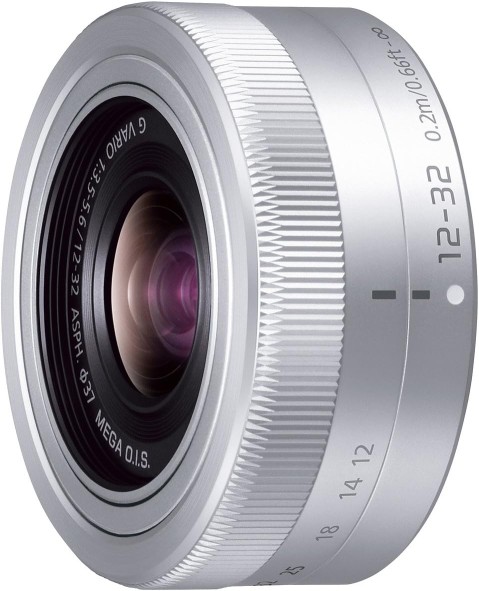
A compact, retractable “pancake” zoom lens designed for portability, the Lumix 12-32mm f/3.5-5.6 (24-64mm equivalent) is an excellent walkaround lens that balances size, convenience, and optical quality. When collapsed, its ultra-thin profile makes it ideal for travel or everyday carry.
Rating: 4.2
Pros
- Ultra-lightweight (~70 g) and collapsible design for exceptional portability
- Good optical quality for its class, delivering sharp results across the focal range, even wide open
- Optical Image Stabilization (Mega O.I.S.) enhances handheld shooting
- Low distortion, minimal chromatic aberration, and effective vignetting control
Cons
- Modest maximum aperture (f/3.5-5.6) limits low-light performance
- No manual focus ring; manual focus relies on camera controls
- Basic build quality with mostly plastic construction and a plastic mount
- Slight barrel distortion at the wide end; corner sharpness drops slightly
Specs
- Mount: Micro Four Thirds
- Focal Length: 12-32mm (≈24-64mm equivalent)
- Maximum Aperture: f/3.5 (wide) – f/5.6 (tele)
- Minimum Aperture: f/22
- Lens Elements: 8 elements in 7 groups (including aspheric elements)
- Aperture Blades: 7 (rounded)
- Minimum Focus Distance: 0.20m (12-20mm zone) 0.30m (beyond 20mm)
- Maximum Magnification: ~0.13x
- Filter Size: 37mm
- Dimensions: 56mm x 24mm (collapsed)
- Weight: ~70g
- Image Stabilization: Yes (Mega O.I.S.)
- Weather Sealing: No
Who Is This For?
The Lumix 12-32mm f/3.5-5.6 is perfect for photographers seeking a compact, lightweight zoom lens that serves as a versatile everyday or travel companion. It’s ideal for those who prioritize portability without sacrificing multi-purpose functionality.
Telephoto Prime Lenses
Olympus M.Zuiko 75mm f/1.8
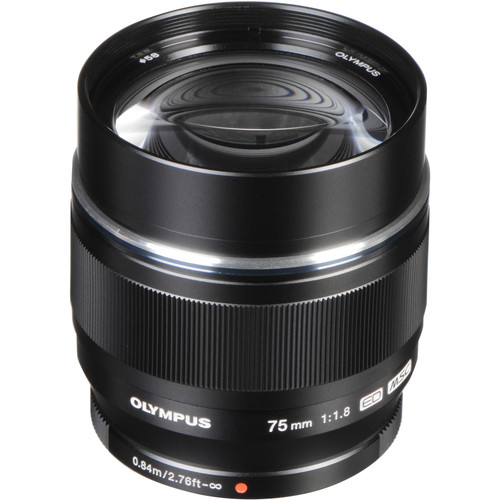
This is one of the most respected lenses in the Micro Four Thirds system. It has a 150mm equivalent field of view with exceptional image quality and beautiful background defocus. Despite being one of the older designs in the MFT system, it remains a favorite for its compact size, fast aperture, outstanding image quality, and price.
Rating: 4.6
Pros
- Compact and lightweight design
- Exceptional image quality and bokeh
- Fast f/1.8 aperture for MFT system
Cons
- No image stabilization
- Higher price than third-party options
- Limited availability as it’s been discontinued
Who is this for?
MFT users who want the best possible image quality in a compact portrait lens.
Sigma 56mm f/1.4 DC DN Contemporary
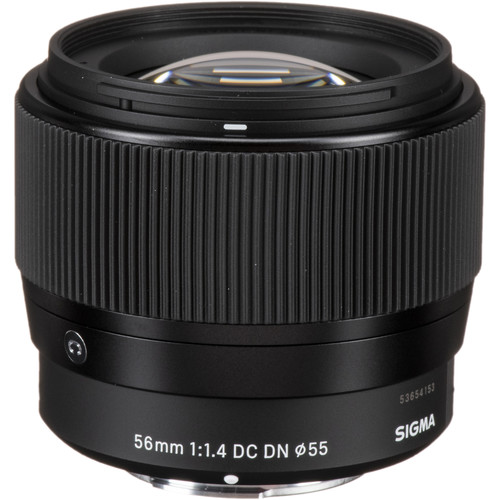
This compact prime lens provides a 112mm equivalent field of view on Micro Four Thirds cameras with a wide f/1.4 aperture, making it great for portrait photography and semi-long reach for things like close-up sports.
Rating: 4.5
Pros
- Fast f/1.4 maximum aperture for excellent low-light performance
- Weather-sealed construction with rubber sealing
- Sharp optical quality with pleasing bokeh
Cons
- A longer 112mm equivalent focal length may require more working distance
- No optical stabilization
- Larger than some MFT alternatives
Who is this for?
MFT photographers who want professional-grade portrait performance with fast aperture capability at a reasonable price.
Sigma 30mm f/1.4 DC DN Contemporary
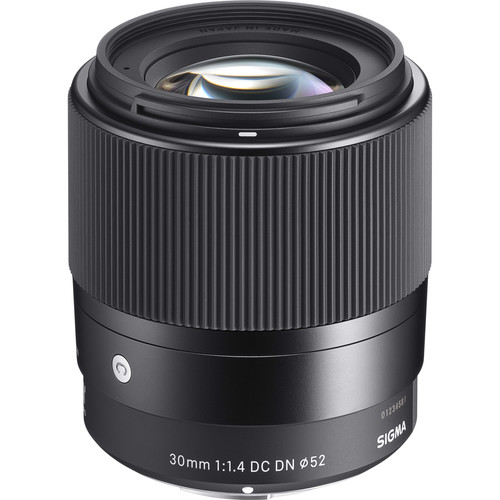
A fast standard prime, the Sigma 30mm f/1.4 DC DN offers a 60mm equivalent field of view on Micro Four Thirds, making it a versatile choice for portraits, low-light shooting, and everyday photography. Its bright f/1.4 aperture delivers excellent subject separation and smooth background blur, while the optical design ensures sharp, contrasty results across the frame. Compact yet powerful, this lens is a strong alternative to slower zooms for many scenarios.
Rating: 4.4
Pros
- Bright f/1.4 aperture enables excellent low-light performance and shallow depth of field.
- Strong central sharpness, even at f/1.4
- Rounded 9-blade diaphragm produces smooth, pleasing bokeh
- Quiet stepping motor autofocus, suitable for both stills and video
- Great value compared to more expensive prime lenses
Cons
- No image stabilization (relies on in-body image stabilization, IBIS)
- Slight vignetting and chromatic aberration at f/1.4
- Larger and heavier than slower Micro Four Thirds primes
- No weather sealing
Specs
- Mount: Micro Four Thirds
- Focal Length: 30mm (≈60mm equivalent)
- Maximum Aperture: f/1.4
- Minimum Aperture: f/16
- Lens Elements: 9 elements in 7 groups
- Aperture Blades: 9 (rounded)
- Minimum Focus Distance: 0.30m (11.8 in)
- Maximum Magnification: 0.14x
- Filter Size: 52mm
- Dimensions: 64.8mm x 73.3mm (2.6 x 2.9 in)
- Weight: 265g (0.58 lb)
- Image Stabilization: None
- Weather Sealing: No
Who Is This For?
The Sigma 30mm f/1.4 DC DN is ideal for Micro Four Thirds photographers seeking an affordable, high-quality prime lens that excels in portraits, low-light shooting, and creative shallow depth-of-field photography. It’s perfect for those who want a fast, versatile lens without breaking the bank.
Olympus M.Zuiko 45mm f/1.8
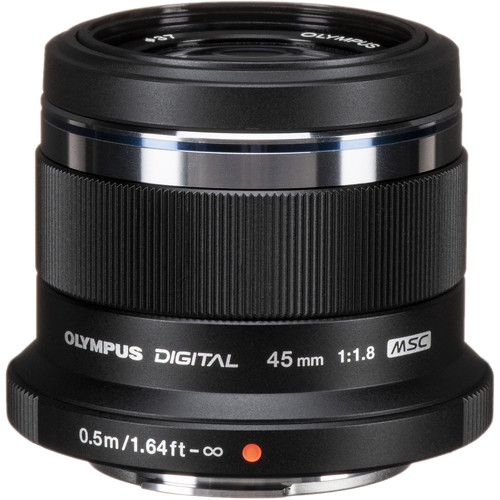
The Olympus 45mm f/1.8 is a classic budget portrait lens in the Micro Four Thirds system. With a 90mm equivalent field of view, it produces flattering portraits with excellent subject separation and smooth background blur.
It’s lightweight, sharp, and affordable, making it one of the most popular lenses for new Micro Four Thirds shooters. Though it lacks weather sealing, it remains a must-have lens in this system.
Rating: 4.8
Pros
- Excellent portrait focal length
- Bright f/1.8 aperture
- Lightweight and affordable
Cons
- No weather sealing
- Plastic-heavy build
- Chromatic aberration in high-contrast scenes
Specs
- Focal Length: 45mm (90mm equivalent)
- Maximum Aperture: f/1.8
- Minimum Aperture: f/22
- Lens Elements: 9 in 8 groups
- Aperture Blades: 7 rounded
- Minimum Focus Distance: 0.5m (19.7 in)
- Maximum Magnification: 0.11x
- Filter Size: 37mm
- Dimensions: 56 x 46 mm (2.2 x 1.8 in)
- Weight: 116 g (0.26 lb)
- Image Stabilization: None
- Weather Sealing: No
Who is this for?
Portrait photographers seeking an affordable, lightweight prime with flattering compression and bokeh.
Telephoto Zoom Lenses
Olympus M.Zuiko 75-300mm f/4.8-6.7 II
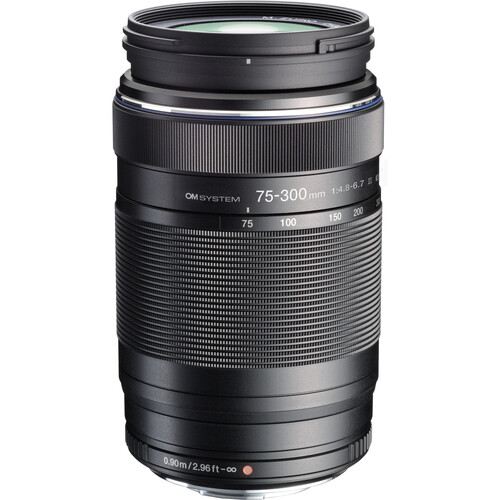
An affordable super-telephoto zoom, the 75-300mm f/4.8-6.7 II offers an equivalent focal length of 150-600mm on a full-frame camera, providing excellent reach for wildlife, birds, sports, or distant subjects. It balances long focal length performance with portability, though good lighting and steady handling are essential to maximize its potential.
Rating: 4.0
Pros
- Excellent reach for the price: Provides a 150-600mm equivalent in a relatively compact package.
- Lightweight: At approximately 423g, it’s easier to carry than many super-telephoto lenses.
- Decent sharpness: Performs well through much of the zoom range, especially up to ~200-250mm; usable at the long end with careful technique.
- Strong optical design: Features multiple ED/Super ED elements, HR, and ZERO coatings to reduce aberrations and control flare.
Cons
- Modest aperture: f/4.8 at the wide end and f/6.7 at the telephoto end limits low-light and fast-action performance.
- No image stabilization: Relies on camera body IBIS or fast shutter speeds for sharp images.
- Edge/corner softness: Noticeable at 300mm/f/6.7, especially in less-than-ideal lighting, with reduced contrast.
- Build quality: Mostly plastic construction (except the mount), not weather-sealed; long zoom extension affects handling and balance.
Specs
- Mount: Micro Four Thirds
- Focal Length: 75-300mm (≈150-600mm equivalent on full-frame)
- Maximum Aperture: f/4.8 (at 75mm) to f/6.7 (at 300mm)
- Minimum Aperture: f/22
- Lens Construction: 18 elements in 13 groups (1 Super ED, 2 ED, 3 HR, 1 E-HR; ZERO coating)
- Diaphragm Blades: 7 (rounded)
- Minimum Focus Distance: 0.90m at 75mm; 1.5m beyond 75mm
- Maximum Magnification: ~0.18x
- Filter Size: 58mm
- Dimensions: 69mm (diameter) x 116.5mm (length)
- Weight: ≈423g
- Image Stabilization: None (relies on camera body stabilization)
- Weather Sealing: No
Who Is This For?
Photographers seeking super-telephoto reach without the cost or weight of professional-grade lenses. Ideal for wildlife or birding in good lighting conditions, especially when using a tripod or a camera with strong in-body image stabilization (IBIS). Not recommended for indoor or low-light shooting unless paired with high ISO settings or robust IBIS.
Panasonic Lumix 45-150mm f/4-5.6 MEGA O.I.S.
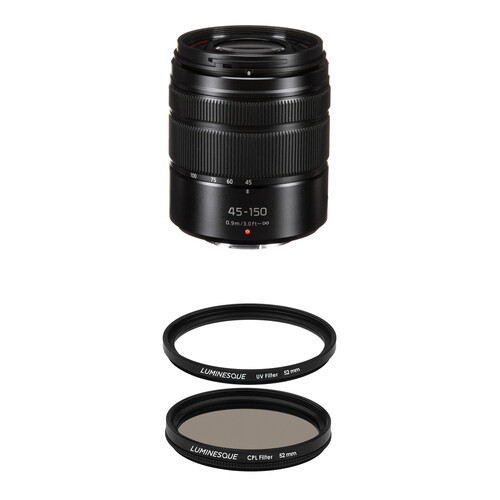
A lightweight and affordable telephoto zoom, the 45-150mm offers the equivalent of ~90-300mm on full-frame. It’s ideal for extending reach without adding too much bulk – good for wildlife, sports, or distant subjects. The MEGA O.I.S. stabilization helps with handheld shots, and Panasonic’s use of UHR and aspherical elements keeps image quality respectable for the price.
Rating: 4.1
Pros
- Very lightweight and compact for its zoom range (~200 g)
- Optical stabilization (MEGA O.I.S.) helps reduce blur when shooting handheld
- Metal mount, quality optical coatings, UHR/aspherical elements help with flare control and distortion
- Good value for users who want focal reach without a premium price
Cons
- Modest aperture (f/4-5.6) limits low-light performance, especially at the long end.
- Corner sharpness and contrast drop off toward 150mm, particularly wide open.n
- No weather sealing
Specs
- Mount: Micro Four Thirds
- Focal Length: 45-150 mm (≈ 90-300 mm equivalent)
- Maximum Aperture: f/4.0 (wide) – f/5.6 (tele)
- Minimum Aperture: f/22
- Elements / Groups: 12 elements in 9 groups (1 UHR, two aspherical)
- Aperture Blades: 7 (rounded)
- Minimum Focus Distance: 0.9 m (≈ 3.0 ft)
- Maximum Magnification: 0.17x
- Filter Size: 52 mm
- Dimensions: 62 x 73 mm (ø x length)
- Weight: ~200 g (≈ 7.1 oz)
- Image Stabilization: Yes (MEGA O.I.S.)
- Weather Sealing: No
Who is this for?
Perfect for Micro Four Thirds shooters who want an affordable telephoto reach without carrying heavy gear. Great for travel, animal watching, and events. Less ideal in dim lighting or for fast action unless paired with high ISO or extra stabilization.
Comparison Chart
| Product | Price Range | Dimensions / Weight | Key Specs | Special Features |
| Olympus 17mm f/1.8 | ~$450 | 57.5 x 35.5 mm / 120 g | 17mm, f/1.8, 7 blades | Compact, bright, wide prime |
| Panasonic 12-32mm f/3.5-5.6 | ~$350 | 55.5 x 24 mm / 70 g | 12-32mm, f/3.5-5.6, 7 blades | Pancake-style collapsible zoom |
| Sigma 30mm f/1.4 DC DN C | ~$300 | 64.8 x 73.3 mm / 265 g | 30mm, f/1.4, 9 blades | Fast portrait prime |
| Olympus 12-45mm f/4 PRO | ~$650 | 63.4 x 70 mm / 254 g | 12-45mm, f/4, 7 blades | Weather-sealed constant f/4 zoom |
| Olympus 45mm f/1.8 | ~$300 | 56 x 46 mm / 116 g | 45mm, f/1.8, 7 blades | Classic portrait prime |
| Panasonic 45-150mm f/4-5.6 OIS | ~$250 | 62 x 73 mm / 200 g | 45-150mm, f/4-5.6, 7 blades | Compact tele zoom with OIS |
| Olympus 75-300mm f/4.8-6.7 II | ~$550 | 69 x 116.5 mm / 423 g | 75-300mm, f/4.8-6.7, 7 blades | Long telephoto reach |
FAQs
Do I really need both a prime and a zoom lens?
Not always. Primes tend to offer sharper optics and wider apertures at lower prices, while zooms provide more flexibility. Many photographers start with one versatile zoom, then add primes for specific needs.
What’s the most important factor in choosing a budget lens?
It depends on your shooting style. Portrait shooters value aperture and bokeh, while travel photographers need portability and zoom range. Decide which matters most before buying.
Are budget lenses sharp enough for professional work?
Yes. Many budget lenses are optically excellent, especially at common apertures like f/4 to f/8. The compromises usually come in build quality, autofocus speed, or maximum aperture.
Do I need image stabilization in my budget lens?
That depends on your camera. If your body has IBIS (in-body image stabilization), lens-based stabilization is less critical. But for long telephotos, stabilization is always useful.
What’s the best first budget lens to buy?
For most shooters, a general-purpose zoom like Olympus’s 12-45mm or Panasonic’s 12-32mm covers the widest range of needs at a reasonable price.
Are third-party budget lenses worth considering?
Absolutely. Sigma offers excellent Micro Four Thirds primes like the 30mm f/1.4 that rival or outperform native lenses in value.
Will a budget lens limit my creativity?
Not at all. Budget lenses may have slower apertures or simpler construction, but they still allow you to explore composition, lighting, and perspective creatively.
Do budget lenses work for video?
Yes, though some may have noisier autofocus motors. Panasonic and Olympus STM-equipped lenses are especially good for hybrid shooters.
Are budget lenses weather-sealed?
Some are, but most cut costs by leaving sealing out. Olympus’s 12-45mm f/4 PRO is an affordable example that includes weather resistance.
Is it better to buy new or used budget lenses?
Used can save money, but check for dust, scratches, de-centered elements, and AF/IS noise. If the savings are small, buying new often makes sense for warranty coverage and easy returns.