
Ultimate Waterproof Cameras Guide For Action and Underwater Photography 2025

Table of Contents
 David Schloss, Editor-in-Chief and The Imaging Resource Staff
David Schloss, Editor-in-Chief and The Imaging Resource Staff
More than a decade ago, I was on a trip to Hawaii and went on a night snorkel with manta rays. The lights of the ships attract the plankton, which in turn attract the rays. (This really is bating, and I wouldn’t do this trip again, for the record.)
I brought an Olympus waterproof camera to photograph the rays. It was one of the best waterproof cameras of its era, but it still produced the legendary awful video from that point on, in digital video cameras. The manta rays are barely recognizable in the video, but at least I have the memories.
From snorkeling expeditions to extreme action sports, waterproof cameras have evolved from basic point-and-shoot models into sophisticated imaging tools capable of stunning underwater photography and videography, with rugged outdoor performance. Today’s waterproof cameras can handle depths around fifty feet without housings, shoot in 4K resolution, and deliver cinematic stabilization that rivals professional equipment. Some of the cameras in this list have been discontinued as the quality of action cameras has improved, but most can still be found online
Why Trust Us
Our team has tested waterproof cameras in real-world conditions from tropical reefs to mountain snowfields. We evaluate depth ratings, image quality, durability, and usability across different water and weather conditions. Our reviews include extensive underwater testing, drop tests, and long-term reliability assessments.
We have shot all of the cameras in this guide, except the SeaLife model, which comes highly recommended by our scuba photographer friends, but is more advanced than most travel and adventure photographers want to spend.
Our recommendations reflect hands-on experience with each camera’s strengths and limitations in challenging environments.
We never take payment for placement, and even though our articles contain affiliate links, they never influence our editorial rankings.
Our Picks at a Glance
Best Waterproof Cameras: Our Top Picks
-
 Best Action Camera
DJI Osmo Action 5 Pro
- Maximum Focal Length: 24 mm
- Photo Sensor Technology: CMOS
- Maximum Aperture: f/2.8
- Image Stabilization: Advanced Optical Stabilization
-
 Best Waterproof Compact:
OM System Tough TG-7
- Maximum Focal Length: 100 Millimeters
- Photo Sensor Technology: CMOS
- Maximum Aperture: f/2
- Image Stabilization: Digital
-
 Best for Content Creators
GoPro Hero 13 Black
- Maximum Focal Length: 34mm
- Photo Sensor Technology: CMOS
- Maximum Aperture: f 2.8
- Image Stabilization: Digital
-
 Best Extreme Conditions
Ricoh WG-90
- Maximum Focal Length: 25 Millimeters
- Photo Sensor Technology: CMOS
- Maximum Aperture: f/2.8
- Supported File Format: MP4
-
 Best Premium Option
Sony RX0 II
- Maximum Focal Length: 24mm
- Photo Sensor Technology: CMOS
- Maximum Aperture: F/4
- Image Stabilization: Digital
Traditional waterproof compact cameras offer zoom lenses, manual controls, and often superior still photography compared to action cameras. These cameras typically feature larger grips, physical control buttons, and are designed for general photography rather than just action sports.
Our Guide to Taking Better Underwater Images
Check out our guide to taking underwater photos, where we talk about the many things to consider to get the best images in the down deep.
Waterproof Compacts

Outdoor enthusiasts who can make do with a reliable, affordable camera that can withstand abuse, but who don’t require cutting-edge features.
- Extremely rugged construction for the price
- Built-in LED ring lights for macro work
- Simple, intuitive controls
- Good value for basic underwater photography
- Limited image quality compared to premium models
- Small sensor affects low-light performance
- Basic video capabilities
- Older interface design
- Maximum Focal Length: 25 Millimeters
- Photo Sensor Technology: CMOS
- Maximum Aperture: f/2.8
- Supported File Format: MP4
The WG-90 is a rugged workhorse that withstands extreme conditions, offering practical durability at an accessible price point. I like that it has built-in LED lights for macro photography, which give a bit of a boost when you’re snorkeling a reef.
The WG-90 has a large, easy to use shutter release button, where a lot of underwater and action cameras make them nearly flush with the top housing.
The lens is an optical zoom with the equivalent of 28mm to 140mm, a big difference compared to some of the fixed focal length waterproof cameras.
This camera is freeze-proof, shatterproof, crush-proof, and waterproof to 45 feet (14 meters). The elongated shape makes it easier to hold underwater with two hands than some smaller cameras, but more awkwardly with one hand.

This camera will interest casual photographers seeking an affordable, waterproof camera with zoom capabilities for capturing vacation and pool moments.
- Affordable pricing for a waterproof zoom camera
- 5x optical zoom provides versatility
- Simple automatic underwater modes
- Lightweight and portable design
- Discontinued model with limited support
- Basic image quality by current standards
- Limited depth rating compared to competitors
- No advanced video features
- Maximum Focal Length: 25 Millimeters
- Photo Sensor Technology: CMOS
- Maximum Aperture: f/3.9
- Image Stabilization: Optical
A compact waterproof point-and-shoot with 5x optical zoom and simple to use underwater modes. I have used this camera, and I’m sad it’s discontinued. The 5x optical zoom sets it apart from most waterproof cameras, which only have fixed focal length lenses and digital zoom. Optical zoom is always preferred to digital zoom, which is simply a crop of the captured image.
The size of this camera makes it small enough to stick in your pocket, and durable enough to take to 25m (82 feet.) A Backside-Illuminated sensor (BSI) and image stabilization make it one of my favorite underwater cameras. The stabilization is especially useful during adventure sports in the water, where camera blur combines with the blur of shooting underwater.
The 16MP sensor isn’t the highest on the market, but it’s enough for above-average image and video quality.
While discontinued, it’s still listed on FujiFilm’s U.S. website, and can be found on some retailers and auction sites.

Adventure photographers need a reliable waterproof camera with superior macro capabilities and comprehensive environmental data recording.
- -Excellent build quality and durability
- 5x optical zoom with image stabilization
- 4K video recording capability
- Good underwater color correction
9
- Discontinued model with limited availability
- A smaller sensor limits image quality
- No modern connectivity features
- Limited app ecosystem compared to current models
- Maximum Focal Length: 100 Millimeters
- Photo Sensor Technology: CMOS
- Maximum Aperture: f/2
- Image Stabilization: Digital
The TG-7 sets the standard for waterproof compacts with a 50-foot depth rating, advanced macro capabilities, and comprehensive underwater shooting modes. Features a 12MP BSI CMOS sensor, 4x optical zoom, and an extensive accessory ecosystem.
The TG-7 is an update on the legendary TG-6 camera, which I used on many trips. Even though it’s been six years since the TG-6 was released, it’s still one of the most-searched reviews on our site.
It’s waterproof, shatterproof, crushproof, and freezeproof. Unlike its predecessor, it can shoot vertical video. While the 12 megapixel sensor isn’t the highest resolution, it’s more than enough for underwater work.
A “microscope” macro mode allows for super close-up photography.
It can also go deeper than its predecessor, able to withstand around 15 yards of depth without any issues.

This Camera is for photographers seeking a traditional waterproof compact with zoom capability who are willing to purchase a discontinued model
- Excellent build quality and durability
- 5x optical zoom with image stabilization
- 4K video recording capability
- Good underwater color correction
- Discontinued model with limited availability
- A smaller sensor limits image quality
- No modern connectivity features
- Limited app ecosystem compared to current models
- Maximum Focal Length: 4.3 Millimeters
- Photo Sensor Technology: CMOS
- Maximum Aperture: f/2.8-f/4.9
- Image Stabilization: Digital, Optical
Sadly, the Nikon Coolpix W300 is discontinued, as it was one of my favorite waterproof cameras. It is still available at some retailers and camera stores. It is an excellent waterproof compact with 5x zoom, 4K video, and solid construction. Some waterproof cameras feel awkward in the hand, but this camera feels like a small point-and-shoot that just happens to be able to go on a snorkel adventure or whitewater rafting.

This camera is for serious underwater photographers who require a complete system optimized explicitly for diving, with no need for surface photography capabilities.
- Complete underwater photography kit with light, tray, and grip included
- Optimized specifically for underwater use
- Professional underwater color correction
- Comprehensive accessory ecosystem
- Premium pricing at $599 for the complete system
- Limited capability for surface photography
- Specialized design may not suit general use
- Learning curve for underwater-specific features
- Maximum Focal Length: 35 Millimeters
- Photo Sensor Technology: CMOS
- Maximum Aperture: f/2
- Image Stabilization: Digital
The SeaLife Micro 3.0 underwater camera is the only one in this list I have gotten my wet hands on, but SeaLife is known for durable underwater gear. The Micro 300 is tiny and can be used as part of a specialized underwater camera system that includes lens adapters, selfie sticks, and LED video lights. It has no ports to transfer images, which helps keep the water out at its maximum depths up to 200 feet.
64GB of in-camera storage houses images, which WiFi can then transfer. SeaLife has easy-configure underwater modes, burst shooting of up to 10 frames in JPEG, and can capture in RAW, great for post-processing underwater shots. It also features a specialized lens to correct for issues caused by the quality of light underwater, it can focus down to 15 inches (38cm), and, for snorkeling and scuba, when the camera is held upside down, images are still recorded right-side up.
If you’re going to the Great Barrier Reef, this is the camera you want to bring with you. How do I know? I snorkeled the Great Barrier Reef and wished I had bought this.

This camera will be appreciated by outdoor professionals and adventure photographers who need a rugged camera with superior macro capabilities and GPS tracking for scientific or research applications.
- 65.6 feet waterproof rating, deeper than most competitors
- Built-in LED ring light for superior macro photography
- 4K video recording with image stabilization
- GPS and compass functionality for location tracking
- Customizable controls and user modes
- No RAW file support limits post-processing flexibility
- Higher ISO settings produce noticeable noise
- No Wi-Fi connectivity (requires a separate Wi-Fi SD card)
- Limited autofocus performance in challenging conditions
- Maximum Focal Length: 1.4E+2 Millimeters
- Photo Sensor Technology: CMOS
- Maximum Aperture: f/2.8
- Image Stabilization: Digital
The WG-8 is Pentax’s flagship waterproof compact camera, and it’s an all-time favorite camera with active sports and underwater shooters. It can submerge to 65-feet (20m), can be dropped, frozen, and crushed without damage. The 20.8MP sensor creates surprisingly good underwater shots, especially when the built-in LED ring light is on. The 5x optical zoom (an equivalent of 28-140mm in full frame) gives it really unique flexibility in a waterproof camera.
Our staff has taken it on white water trips, snorkeling, and on long bike rides.

The Panasonic Lumix FT7 is a (sadly) discontinued waterproof camera, but it can be found at some retailers and auction sites. It has features like GPS data and WiFi transfer that some newer cameras still don’t have. If you can find this, it’s a great choice.
- Robust environmental sealing and protection
- Integrated GPS and altimeter functions
- Good optical zoom range for a waterproof compact
- Advanced underwater shooting modes
- Discontinued with no direct successor
- Image quality is limited by a small sensor
- Battery life could be better
- Limited modern connectivity features
- Maximum Focal Length: 22.8mm
- Photo Sensor Technology: BSI-CMOS
- Maximum Aperture: f/3.3
- Image Stabilization: optical
The Panasonic Lumix FT7 is another casualty of the adventure camera market, which is a shame considering how good it is. While discontinued, this can still be found at some retailers, and on eBay and other auction sites.
It has a five-frames-per-second burst shooting mode (10 with focus locked), full camera controls for aperture, shutter speed, and manual settings, and can capture up to 4K 30. To me, it’s more comfortable to hold than most action cameras, thanks to a decent grip and a button layout that’s more “camera-like.” The lens is designed to correct for underwater shooting conditions, and built-in image stabilization helps with handheld and underwater shots alike.
Action Cameras
Action cameras prioritize video quality, compact size, and extreme durability. These cameras excel at capturing footage with excellent stabilization and are perfect for mounting on helmets, boats, or underwater housings. Most offer 4K recording and advanced features like slow motion and time-lapse modes.k
For underwater video, we generally recommend action cameras over “tough” waterproof cameras, thanks to the wide range of shooting modes. As good as their image quality may be, they lack the zoom lenses found on many of the waterproof cameras, which make them more limited if you want to shoot stills, or if still photo image quality is most important to you.

- Maximum Focal Length: 30mm
- Photo Sensor Technology: CCD
- Maximum Aperture: f/2.6
- Image Stabilization: Digital
I’m currently shooting the Ace Pro 2 as my action camera, though partially because of the excellent microphones, which are not particularly helpful underwater.
The Ace Pro 2 has gone on all of my camera gear testing trips and gets submerged both on purpose and accidentally all the time. Thanks to the excellent image quality and super-sharp 8K video recording, it’s become my go-to for on-location b-roll footage.
Although, like with most action cameras, the footage suffers in low light. Good for users who prioritize maximum video quality, a great set of subject detection tools, and a solid, easy-to-use interface.

This camera is for divers and water sports enthusiasts who want the deepest no-case waterproofing and longest battery life available.
- Waterproof to 66 feet without additional housing
- Up to 4 hours of battery life in optimal conditions
- Built-in storage prevents missed shots from card failures
- Automatic underwater recording start/stop
- Video can appear over-saturated underwater
- Limited to 4K maximum resolution
- The depth sensor doesn’t work with a waterproof case
- Maximum Focal Length: 24 mm
- Photo Sensor Technology: CMOS
- Maximum Aperture: f/2.8
- Image Stabilization: Advanced Optical Stabilization
The Osmo Action 5 Pro has all the features you could want in an action camera. It has a front and rear screen, with the front screen used for selfie framing. The screens are OLED and are still usable in bright sunlight.
DJI says the battery life is up to four hours on a four-hour charge, though I don’t record enough footage at one time to have burned through the battery.
The new 1/1.3″ sensor has a claimed 13.5 stops of dynamic range. While that’s hard to evaluate using precision testing equipment, we’ve found that the tonality and detail in the highlights are excellent in the action camera space.
A “SuperNight” mode using computational photography to reduce noise in much the same way that the iPhone and Android devices do when capturing low-light scenes. We don’t see a lot of computational photography features in cameras as they take up a lot of power and battery life, but DJI is doing very efficient nighttime image processing.
Without housing, the Osmo Action 5 can work down to 20 meters.
If you’re doing high-end video work, the Osmo Action 5 Pro shoots in DJI’s 10-bit format, so you can match footage between your Action 5 Pro and any DJI drones you might have.
This is really one of the standout action cameras on the market today.

This camera will be appreciated by content creators who need maximum versatility, the highest video resolution, and access to the largest accessory ecosystem.
- 5.3K60 video recording with excellent detail
- Massive ecosystem of accessories and mounts
- Best-in-class stabilization technology
- Modular lens system for creative flexibility
- Limited to 33 feet of waterproofing without housing
- Mediocre low-light performance compared to DJI
- Higher price point than competitors
- olor correction needed beyond 33 feet underwater
- Maximum Focal Length: 34mm
- Photo Sensor Technology: CMOS
- Maximum Aperture: f 2.8
- Image Stabilization: Digital
The GoPro Hero 13 Black is the company’s highest-end action camera, and it has several features that I think make it one of the easiest choices for the newcomer to action cameras.
When switching between the built-in lens and the optional macro or wide-angle lens, the camera changes settings automatically to match.
The Hero 13 Black has a magnetic mount that can be used to attach it to selfie sticks, suction cup mounts, tripods, and even clipped onto a backpack strap.
It is waterproof to 33 feet (10 meters), which isn’t the deepest of any camera in our tests, but more than enough for jet skiing, snorkeling, or whitewater rafting.
Image stabilization is industry-leading, and the camera can create HDR video to maximize colors and tones in video.

This camera will interest professional photographers and filmmakers who need the highest image quality in an ultra-compact waterproof package and don’t require extreme depth ratings.
- 1-inch sensor delivers superior image quality
- Professional-grade Zeiss optics
- One of the only “acction” cameras on this list with a tilting display
- Compact form factor despite a large sensor
- Less waterproof than others at 33 feet
- Premium pricing at $700
- A fixed ultra-wide lens may not suit all scenarios
- Limited battery life compared to dedicated action cameras
- Maximum Focal Length: 24mm
- Photo Sensor Technology: CMOS
- Maximum Aperture: F/4
- Image Stabilization: Digital
The Sony RX0 II is an odd camera, and I’m including it here partially because of how odd it is. It has the same sensor in some of Sony’s larger RX and ZV cameras, but it’s packed into the smallest body possible.
It uses a high-quality Zeiss lens and creates good image quality, at least in optimal conditions.
I’ve seen multiple units used at the same time, as multiple units can be synchronized to capture at the same time.
It’s an interesting camera to clip onto you when capturing images is secondary and the activity is primary.
However, it’s particlarrly expesnive, making it more of a pricy toy than a true underwater solution.
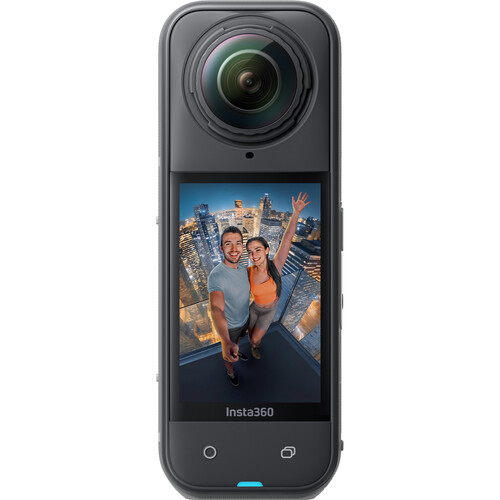
Creative professionals and action sports enthusiasts seeking maximum flexibility to capture every angle, who are also willing to accept the added complexity of a 360º camera.
The Insta360 X5 is a 360-degree action camera with dual 1/1.28-inch sensors capable of recording in 8K at 30 fps, 5.7K at 60 fps, and 4K at 120 fps. It features replaceable lenses, advanced stabilization, and a PureVideo AI mode for low-light capture. The camera has an IPX8 rating, allowing it to be used underwater to a depth of 15 meters (49 feet) without additional housing. When paired with the optional Invisible Dive Case, it can operate underwater down to 60 meters (197 feet) with improved image stitching and clarity.
- Records in multiple high-resolution formats up to 8K for flexible editing options
- Dual sensors provide wide dynamic range and good performance in varied lighting
- IPX8 waterproofing allows direct use underwater without a housing
- Modular design with replaceable lenses simplifies maintenance and upgrades
- Larger file sizes require significant storage and processing power
- Battery life shortens noticeably during high-resolution underwater use
- Low-light performance, while improved, still shows visible noise compared to larger-sensor cameras
- Resolution: 8K 30 fps
- Still Image: 72 MP
- Sensor : Dual 1/1.28″ CMOS
- Battery: 2400 mAh
- Stabilization: FlowState with 360° Horizon Lock
- Waterproof: 15m without housing
If you need 360º field of view while underwater, it wouold be hard to beat this camera. In fact, if you need a 360º camera it would be hard to beat this camera.
While not as easy to use as a non-360º action camera, it’s still simple enough to get started with a very short learning curve.
While I haven’t played with the Insta360 X5 extensivly, I’ve used the X4 and this model improves on key features.
Wihtout a dive case it can go down to 15 meters (50 feet), and with the Invisible Dive Case it can go all the way down to 60 meters (about 200 feet.) That’s deep enough for 360º selife videos with any number of bizarre ocean creatures.
Comparison Chart
| Product | Price Range | Waterproof Depth | Video Resolution | Key Features |
| Insta360 Ace Pro 2 | $399-449 | 33 feet | 8K/24fps | High-resolution video |
| DJI Osmo Action 5 Pro | $349-399 | 66 feet (20m) | 4K/120fps | Built-in storage, pressure sensor |
| GoPro Hero 13 Black | $379-429 | 33 feet | 5.3K/60fps | HB-series lenses, massive ecosystem |
| Sony RX0 II | $650-700 | 33 feet | 4K/30fps | 1-inch sensor, Zeiss lens |
| Insta360 X5 | $549-640 | 33 feet | 8K/30fps (360) | 360-degree capture, reframeable |
| Ricoh WG-90 | $349-399 | 46 feet | 4K/30fps | Built-in LED lights, extreme durability |
| Fujifilm FinePix XP140 | $199-249 | 82 feet | 4K/15fps | 5x zoom, budget-friendly |
| OM System Tough TG-7 | $499-549 | 50 feet | 4K/30fps | Advanced macro, field sensors |
| Nikon Coolpix W300 | $299-399 | 100 feet | 4K/30fps | 5x zoom (discontinued) |
| SeaLife Micro 3.0 | $599-649 | 200 feet | 2.7K/30fps | Complete underwater system |
| Panasonic Lumix FT7 | $399-449 | 102 feet | 4K/30fps | Advanced GPS (discontinued) |
FAQs
What’s the difference between action cameras and waterproof compacts?
Action cameras prioritize video quality, compact size, and mounting versatility, making them ideal for sports and action, but they’re mostly video-focused. Waterproof compacts offer traditional camera controls, often come with optical zoom lenses, and usually offer better still photography, but are typically larger and less mountable.
Do I need special settings for underwater photography?
Yes, most waterproof cameras include dedicated underwater modes that adjust color balance and white balance for different depths. All of the cameras in our guide have underwater modes.
Can these cameras handle saltwater?
ll cameras mentioned can handle saltwater, but you should rinse with fresh water after saltwater use and dry thoroughly before storage. Avoid hot springs or extreme underwater environments, as they can damage seals.
How important is image stabilization for underwater video?
Even when the water feels calm, there’s a lot of motion going on while recording images or stills. Cameras with image stabilization are a lot more helpful under the water than above it, because lower light levels make footage grainy if the ISO is too low. Good stabilization allows for shooting with lower ISOs
What memory card do I need for 4K video? Use V30 or UHS-3 rated microSD cards for 4K recording. Professional models may require V60 or V90 cards for higher frame rates.
Use V30 or UHS-3 rated microSD cards for 4K recording. Professional models may require V60 or V90 cards for higher frame rates.
Can I use these cameras for regular photography when not underwater?
Absolutely. These cameras excel at travel, adventure, and outdoor photography.
Do I need dive insurance for these cameras?
GoPro offers “no questions asked” replacement for subscribers, and many manufacturers provide care plans. For expensive cameras used in challenging conditions, consider additional protection. Check if your homeowner’s or dive insurance covers camera equipment before purchasing separate coverage.