Olympus 50mm f/2 Zuiko Digital Macro

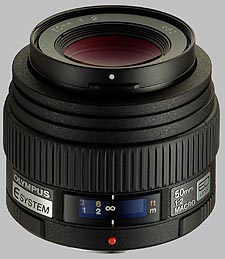
(From Olympus lens literature) This compact and affordable medium telephoto Zuiko Digital Lens is ideal for not only macro photography but also as a portrait lens. The high performance digital specific design includes an ED glass element for impressive color accuracy and offers a magnification of 1:2 (half life size), which has an image magnification size equivalent to life size (1:1) in a 35mm film photo. A large f/2 maximum aperture makes it excellent for lower-light photography as well.
Introduction
The Olympus lens lineup has two macro lenses: the 35mm and the 50mm. The 50mm Æ’/2 is listed in the ”High Quality” lineup, developed for high performance in sharpness, brightness and close-up shooting capability. It’s also listed as being dust and splash-proof, to allow usage in harsh conditions. Available for $425.
Since Olympus digital SLR cameras employ the four-thirds imaging sensor, any lens attached to the body will have an effective focal length (in 35mm terms) of double the listed length. Thus, for this particular lens, it will exhibit an effective focal length of 100mm. The lens takes 52mm filters, and comes with a bowl-style lens hood.
Chromatic Aberration
Some chromatic aberration is evident between Æ’/2 and Æ’/4, but it only ranks 3/100ths of a percent; still well-above average performance, and you’d really have to look very hard to find any evidence of chromatic aberration on most large prints.
Shading (”Vignetting”)
Our vignetting chart shows a quarter-stop of light fall-off in the corners when shooting the 50mm at Æ’/2, but I had a hard time finding any practical evidence of it. At other apertures, there is no statistically signficant shading.
Distortion
Because the lens is fixed at 50mm, the distortion is also fixed. The maximum distortion is 0.2% (in the corners) where the minimum is distortion less than 0.1%. You would be hard-pressed to even notice this level of distortion when taking photographs of straight lines, and if it was a crucial issue, the image could be corrected in post-processing.
Autofocus Operation
The 50mm Æ’/2 Zuiko is designed for macro work, and not quick autofocusing. Racking through its entire focus range in just over two seconds, it makes a substantial amount of noise, and the lens barrel extends to almost double its length in the process; this is not a subtle lens. With its fast Æ’/2 aperture, the 50mm macro performs excellently well in low-light.
Macro
With a close-focusing distance of just under 24 centimetres (9 1/2 inches) from the image sensor, the 50mm Æ’/2 focuses on objects literally millimetres away from the end of the lens. At this range the lens achieves 104% image magnification when considered in 35mm film terms. An extension tube (EX-25) is available which extends this maximum image magnification to 196% (in 35mm film terms).
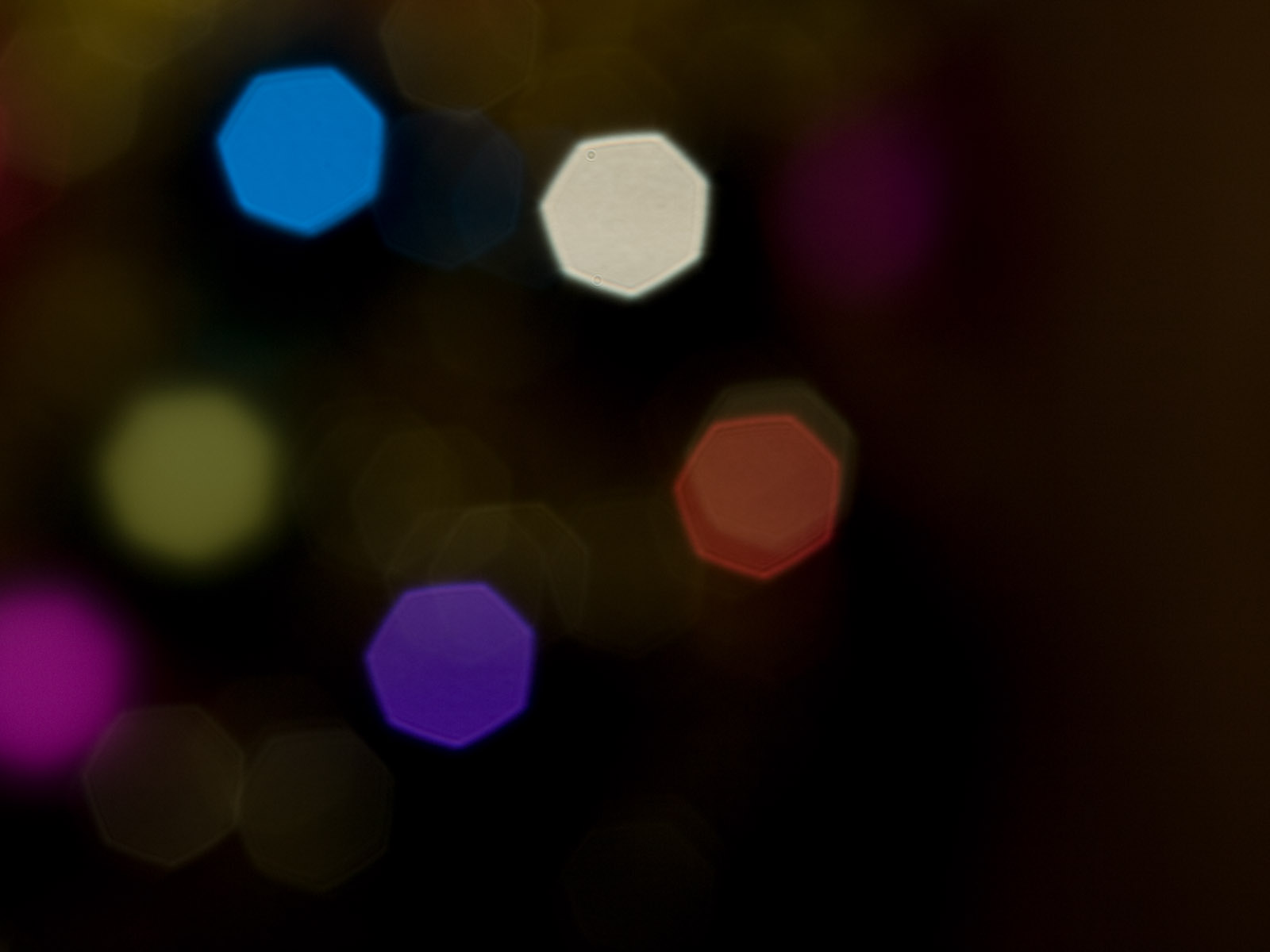
Bokeh
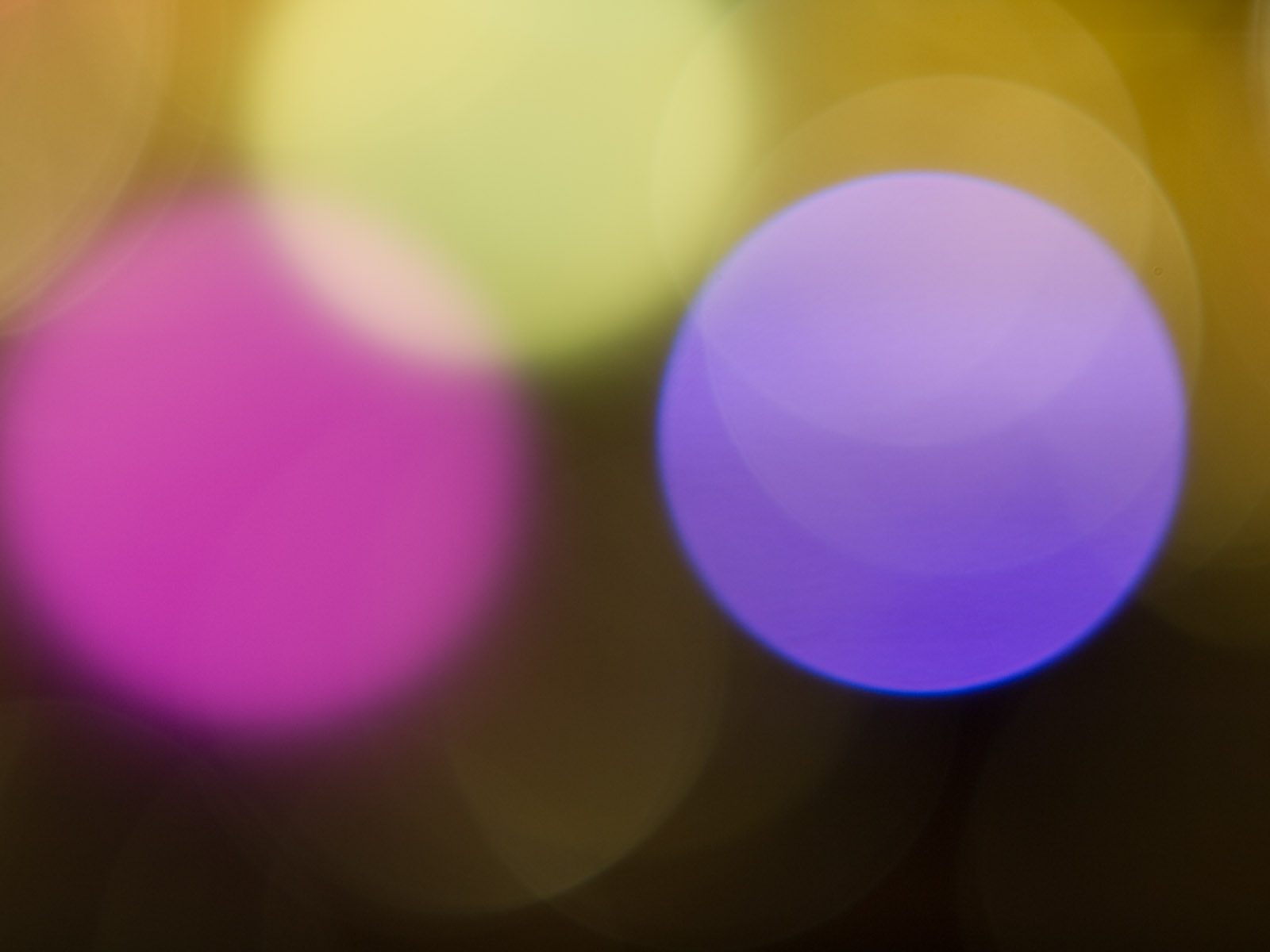 |
| 50mm, Æ’/2 |
 |
| 50mm, Æ’/8 |
 |
| 50mm, Æ’/22 |
Build Quality and Handling
The 50mm Æ’/2 weighs 300 grams (10.5 oz), making it a fairly hefty lens, but produces a comfortable balance to the overall camera package. It’s put together well, with a combination of metal and plastic parts; the parts that see the most wear are metal, such as the filter ring and lens mount, while textured items such as the barrel and lens ring are a comfortable plastic. The focus ring turns with a silky smoothness, though it gets obscured when the lens hood is reversed for storage, making it obligatory to remove the hood for manual focus work (which you’ll be doing with live view activated). As with all Olympus ”High Grade” lenses there is a focus range display, and the lens hood looks to be particularly effective given its size. Oddly though, the less-expensive 35mm Æ’/3.5 offers a magnification scale embossed on the lens barrel, which the 50mm Æ’/2 lacks.
Alternatives
Olympus 35mm f/3.5 Zuiko Digital Macro ~$200
A slightly less expensive Olympus macro option, the 35mm gives the same excellent results for resistance to chromatic aberration, distortion and vignetting, but is slightly less sharp at smaller apertures (Æ’/16-22). The 35mm has a much higher magnification ratio, but the larger maximum aperture of the 50mm will bring in a lot more light.
Sigma 24mm f/1.8 EX DG Aspherical Macro ~$340
Available in the four-thirds mount, this lens offering from Sigma doesn’t give you a comparable focal length, but it does offer a faster nine-bladed aperture. We haven’t reviewed this lens as of the date of this review, but the one user review we have does praise its image quality, while commenting negatively on its large size and weight.
Sigma 105mm f/2.8 EX DG Macro ~$350
Another Sigma offering in the four-thirds camp, the 105mm f/2.8 uses an eight-bladed aperture, offering respectable sharpness results that match the Olympus 50mm from f/5.6 and up. Chromatic aberration, Distortion and Vignetting are excellently handled, and in macro use, the 150mm offers 1:1 magnification. It’s a heavier lens though, weighing in at 457 grams (16 oz).
Sigma 150mm f/2.8 EX DG HSM APO Macro ~$540
The sharpness results for this lens tell the whole story; tack sharp almost all the way across from f/2.8 to f/22. Excellent results for chromatic aberration and distortion-free images; some slight vignetting at f/2.8. It’s quite heavy for macro use at 895 grams (almost 32 oz) and you’ll be mounting the lens on a tripod, but if you’re in the market for a 300mm-equivalent macro lens, this is your option. Close-focusing to 38 cm (16 inches), the lens can achieve 1:1 magnification.
Conclusion
The question for many macro enthusiasts could be whether to buy this lens or the 35mm Æ’/3.5. Optically, the 50mm Æ’/2 is a real treat: images are tack-sharp all the way to Æ’/16, there’s terrific resistance to chromatic aberration, distortion and vignetting, and you get a well-designed, hardy lens made with metal components where you’d need them. The fit and finish, as well as the excellent optical characteristics justify the price, but if you don’t specifically need the 50mm focal length, the 35mm has a higher magnification rating and is just as good optically, so it is a much better value. That said, anyone who buys the 50mm won’t be disappointed.
Sample Photos!
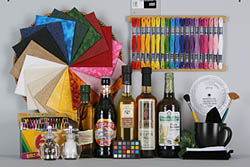
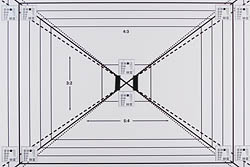
Sample photos are available of two laboratory test targets to help in our readers’ evaluation of the lenses we test. The VFA target should give you a good idea of sharpness in the center and corners, as well as some idea of the extent of barrel or pincushion distortion and chromatic aberration, while the Still Life subject may help in judging contrast and color. We shoot both images using the default JPEG settings and manual white balance of our test bodies, so the images should be quite consistent from lens to lens.
As appropriate, we shoot these with both full-frame and sub-frame bodies, at a range of focal lengths, and at both maximum aperture and f/8. For the “VFA” target (the viewfinder accuracy target from Imaging Resource), we also provide sample crops from the center and upper-left corner of each shot, so you can quickly get a sense of relative sharpness, without having to download and inspect the full-res images. To avoid space limitations with the layout of our review pages, indexes to the test shots launch in separate windows.
To see the sample shots from this lens captured with this lens on our test body, just click on either of the thumbnails below, and scroll as needed in the window that appears.