
Nikon D7200 Review

Updates:
04/02/2015: Image Quality Comparison & Print Quality Analysis
07/10/2015: Field Test Part I: It’s time to beat the heatwave with one mighty cool camera!
08/28/2015: Field Test Part II: High ISO, long exposure and a smorgasbord of movie goodness!
08/31/2015: Conclusion posted!
Last edited: 02/08/2017
—
UPDATE: 02/08/2017:
Want some added proof that the Nikon D7200 belongs in your camera bag? Well you’ll certainly want to know that the D7200 was named the Best Enthusiast DSLR Camera in our 2015 Camera of the Year awards, then!
Ready to buy now? Be sure to read our recent article entitled “11 great lenses for your new Nikon DSLR“, and we’ll give you some handy tips on which lenses you’ll want to consider adding to your cart at the same time.
—
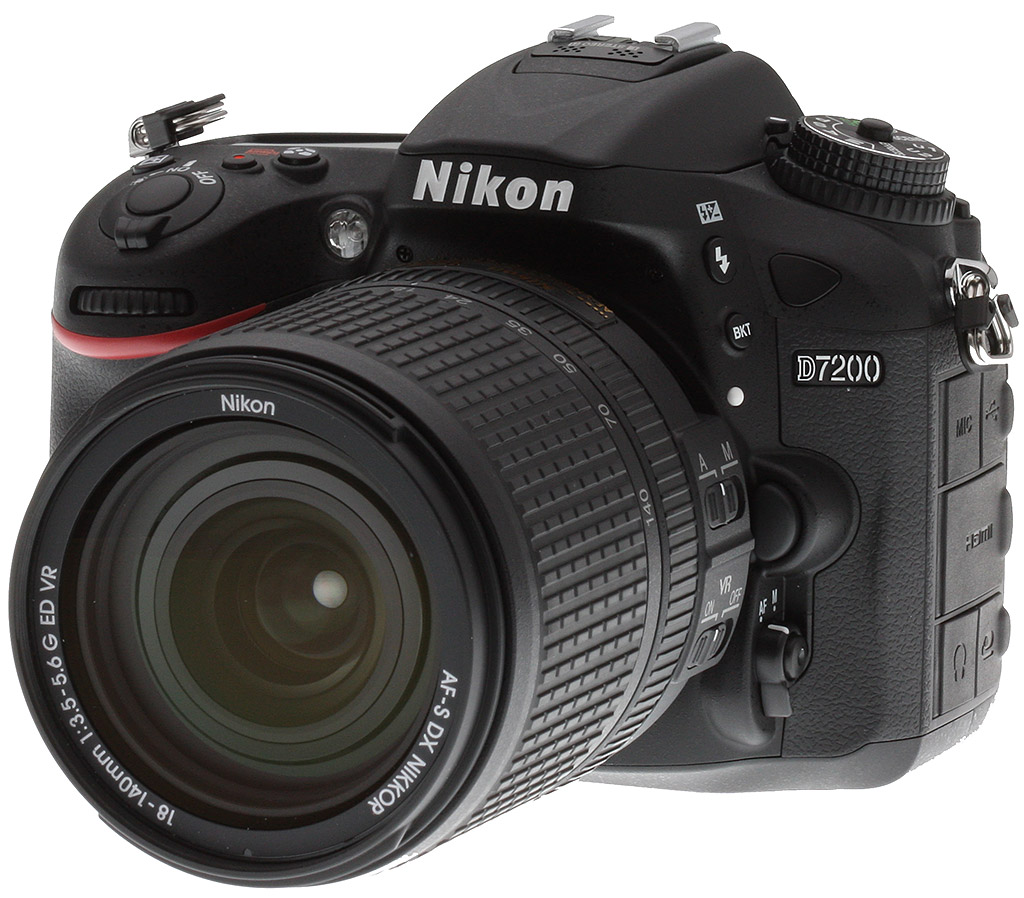
Since early 2013, if you were a Nikon shooter looking for an enthusiast-grade camera body with an APS-C sized sensor — DX format in Nikon parlance — then the camera you’d turn to was the Nikon D7100. Now, with the followup Nikon D7200, that camera has a successor — and while it looks very similar to the previous model on the outside, there are a fair few worthwhile improvements beneath the skin.
For our money, the most important change in the Nikon D7200 is a significant increase in buffer depths, meaning that it can capture around two to three times as many shots in a continuous burst. That answers perhaps our biggest concern about the earlier model, a camera which we nonetheless loved and awarded a Dave’s Pick.
As well as its near-identical dust-and-weather sealed body, the Nikon D7200 retains much the same image sensor as featured in the D7100, although its pixel counts do differ ever so slightly thanks to slight adjustments in sensor masking. But while the sensor is unchanged, the processor isn’t — it’s now an EXPEED 4-class chip, rather than the previous-generation EXPEED 3.
Note, though, that EXPEED 4 is, as we just said, a class of processors — the actual chip used in the D7200 is not identical to that in other EXPEED 4-based Nikon DSLRs to date. Nikon tells us that it has tailored the EXPEED 4 processor in the D7200 to this individual camera model.
And although it’s a new processor, performance in terms of frame rate is unchanged from the earlier camera — a manufacturer-rated six frames per second in the full DX-format, or seven frames per second with a 1.3x focal length crop beyond that already applied in an APS-C camera body. One area in which the next-gen processor looks to have paid dividends, though, is power consumption: CIPA-compliant battery life figures have improved by around 17% since the D7100, for a total of around 1,110 shots on a charge with the exact same battery as used previously.
Another handy change in the Nikon D7200 is a newer Multi-CAM 3500II DX phase-detection autofocus module that now focuses even better in low light. Where Nikon rated the earlier Multi-CAM 3500 DX module in the D7100 as good down to -2EV, it says that the D7200 is capable of focusing all the way down to -3EV. In terms of AF point layout and type, though, the new module is unchanged from its predecessor, with 51 points including 15 cross-types, the centermost being an f/8-compatible point.
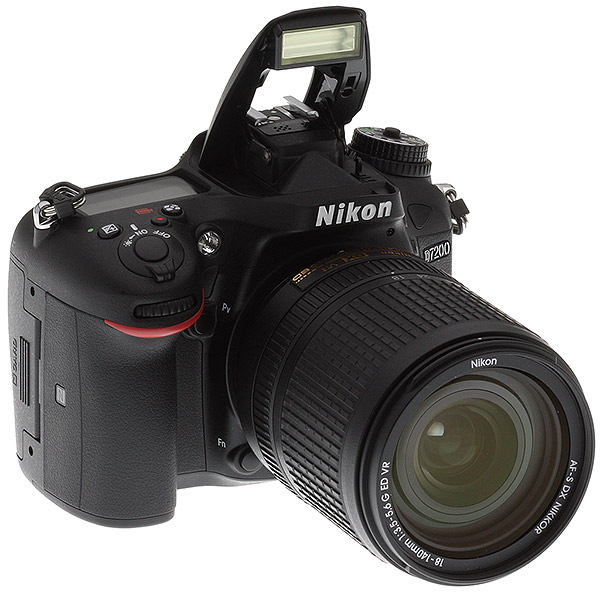
The Nikon D7200 is also the company’s first DSLR with both Wi-Fi wireless networking and Near-Field Communications support for easy pairing with Android devices, removing the need to rely on clumsy external solutions or Wi-Fi capable SD cards. And there have been various firmware tweaks, too. No longer do you need to enable ISO expansion to access the highest sensitivities, for example, and the D7200 also sports the flat picture control and clarity options found on other recent Nikon DSLRs.
The company has also improved exposure bracketing with both a larger possible step size and a greater number of shots in a bracketed burst, added exposure smoothing for time-lapses, and shown videographers some love with both zebra-striping support and an Auto ISO function in movie capture mode.
And alongside the D7200, Nikon has also launched a replacement for its earlier View NX software package, now called View NX-i, and available free of charge. With support for .NEF raw, JPEG and TIFF images as well as .MOV movies, it lets Nikon D7200 owners manage their artworks, share them on social networks, and even perform basic movie-editing tasks, all free of charge. There’s also a new Bluetooth-based wireless lav mic, the ME-W1, that’s compatible with the D7200 and allows you to record mono or stereo audio at a distance of 164 feet from the camera body.
In the Box
The Nikon D7200 bundle contains the following items:
- Nikon D7200 camera
- Nikon AF-S DX Nikkor 18-140mm f/3.5-5.6G ED VR lens (kit version only)
- Front and rear lens caps (kit version only)
- EN-EL15 lithium-ion battery (7.0V, 1,900mAh)
- Battery terminal cover
- MH-25A Battery charger
- AC wall adapter or power cable (varies by region)
- DK-23 rubber eyecup
- DK-5 eyepiece cap
- UC-E17 USB cable
- BF-1B body cap
- AN-DC1 neck strap
- User’s manual
- Warranty card
Recommended Accessories
- Large capacity SDHC/SDXC memory card. Cards with a Class 6 or greater rating are required for movie recording.
- Additional lenses
- Extra EN-EL15 battery pack
- MB-D15 multi-power battery pack (adds portrait grip with duplicate controls)
- Speedlite external flash strobe such as the SB-700 or SB-910
- MC-DC2 remote cord and/or WR-1 or WR-T10/R10 wireless remote
- GP-1A GPS unit
- Camera bag