
Phase One XF 100MP Review

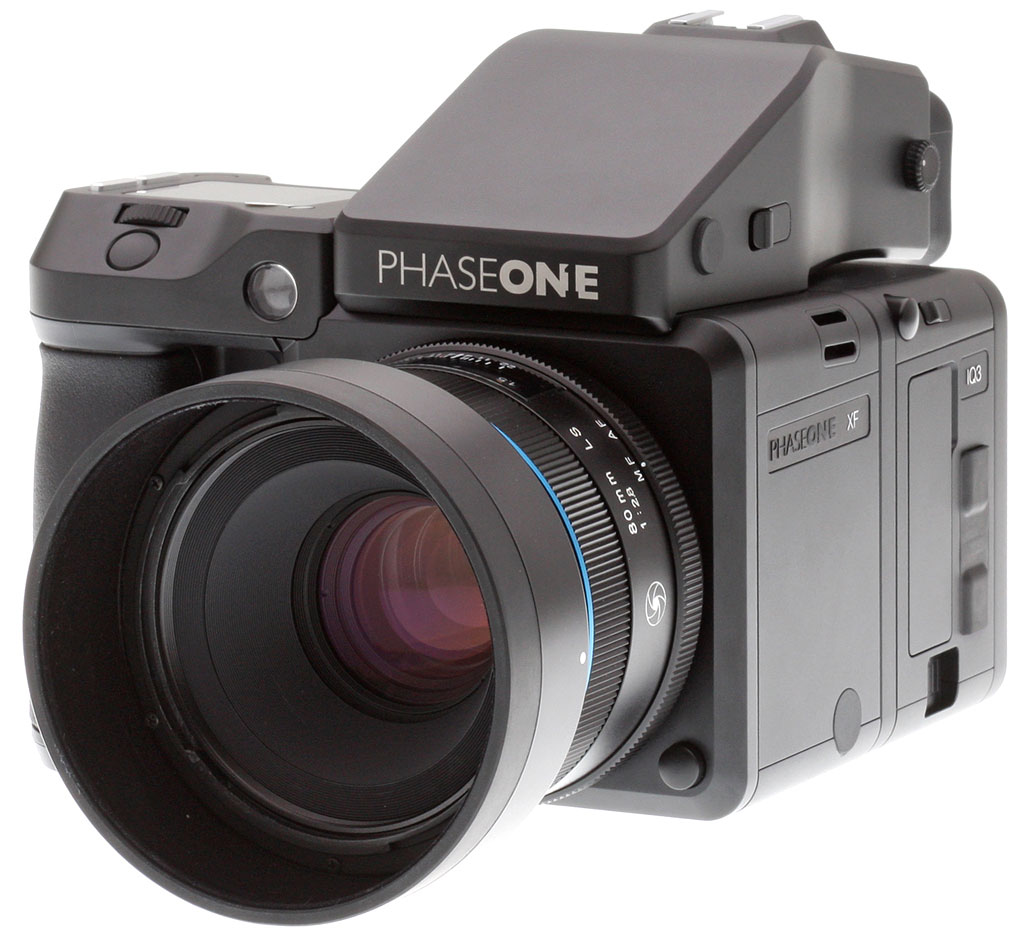
Table of Contents
 Phase One IQ4 150MP Field Test
Phase One XF Review — Now Shooting!
Updates:
07/25/2016: First Shots posted
10/03/2016: Gallery & IQ3 100MP Field Test posted
10/05/2016: Performance test results posted
07/23/2018: IQ3 100MP Trichromatic Field Test posted
05/29/2019: IQ4 150MP Field Test posted
For those looking for our Overview of the camera’s features and specs, please click here.
Phase One IQ4 150MP Field Test
Is this the new standard-bearer in image quality?
by Jeremy Gray | Posted 05/29/2019
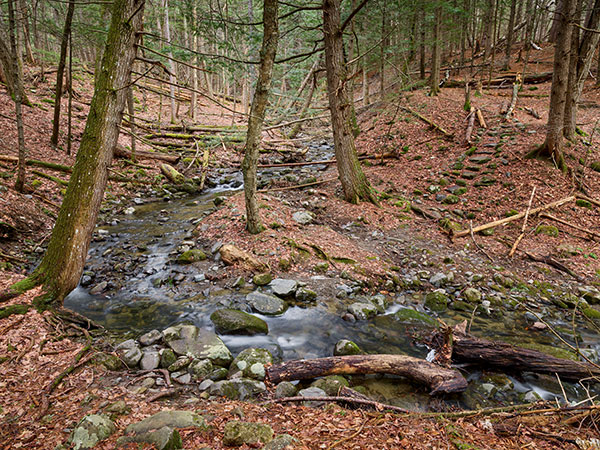
Schneider Kreuznach 35mm LS f/3.5 lens (22mm eq.), f/16, 2s, ISO 50.
Last summer, I went hands on with the Phase One XF medium format camera and the IQ3 100MP Trichromatic digital back. Later in the year, Phase One introduced their new IQ4 series of digital backs, including the 150MP digital back. This new back is the Danish company’s highest-resolution back ever and the world’s first 151-megapixel camera. I recently had the opportunity to test the new back alongside the existing XF camera body.

Schneider Kreuznach 35mm LS f/3.5 lens (22mm eq.), f/16, 0.8s, ISO 50.
During my time with the camera, I was particularly impressed by the improved user experience of the IQ4 digital back and Infinity Platform, but the real star of the show is the image sensor. The 16-bit 151-megapixel raw files look absolutely stunning. Let’s take a deeper dive into my hands-on experience with the Phase One XF IQ4 150MP.

Schneider Kreuznach 80mm LS f/2.8 lens (50mm eq.), f/16, 1/8s, ISO 50.
Key Features and Specs
- XF camera body
- IQ4 150MP digital back delivers 151 megapixels
- Backside-illuminated CMOS image sensor
- Native ISO range of 50-25,600
- 15-stop dynamic range
- 16-bit raw files
- Touchscreen user interface
- Around $52,000 for the camera, digital back, viewfinder and a prime lens

The IQ4 150MP digital back goes on the existing Phase One XF camera body.
XF Camera Body and the new IQ4 150MP Digital Back
In our first Field Test for the Phase One XF camera, which was tested alongside the IQ3 100MP digital back, we discussed the camera body and design some, although I do want to revisit it after having spent more time with the XF camera alongside the IQ4 150MP digital back.
The camera body when paired with a back is very large. This is basically a given for a “full-frame” medium-format camera system. Despite being large, the excellent grip design of the XF camera means that it is easy to get a solid hold of the camera. It’s very comfortable thanks to the deep front grip and pronounced rear grip. Even when using a heavy lens, the camera balances quite nicely in the hand thanks to the grip design.

The front grip is deep and very comfortable.
The camera body itself features a variety of buttons and dials. There are three buttons next to the top display and a couple on the front of the camera. As for dials, there are three of them, two on the rear of the camera and one near the shutter release. By default, the rightmost rear dial controls aperture and the front dial handles shutter speed. The leftmost rear dial controls ISO speed.
The top display looks nice, with sharp, detailed text and logos. It is also a touchscreen, which proves to be very useful. You can tap on basically any element on the display to access settings and make adjustments. For example, you can tap on the ISO and then set minimum and maximum limits for auto ISO. You can also navigate a wide array of camera settings just through the top display.

The top of the camera features a touchscreen display and numerous buttons.
Unlike most cameras, the sensor is not built into the camera with the Phase One XF system. Rather, you attach a digital back to the camera. The IQ4 150MP digital back, in this case, has its own large 3.2-inch multi-touch display, four buttons and ports, including USB-C, Ethernet, HDMI and more, along with XQD and SD card slots. The touchscreen on the back is very responsive and works well.

New to the IQ4 digital backs are XQD and USB-C ports, which are accessible alongside SD, Ethernet and HDMI ports on the left side of the digital back.
The detachable viewfinder, which was the 90 degree prism viewfinder in my kit, offers 97 percent frame coverage. 100 percent coverage would be a welcome improvement, but the viewfinder is quite large and clear. The information display at the bottom is nice as well, similar to what you’d expect from a high-end DSLR viewfinder.

The IQ4 digital back features a large 3.2-inch touchscreen display, which offers nice control of the camera’s settings.
Overall, there’s a lot to like about the design of the Phase One XF camera system and the IQ4 digital back. The combination is large and heavy, but comfortable and functional.
Image Quality
While the design of the camera and its resulting user interface are good, where the Phase One XF system really shines is with the incredible image quality of its digital backs. The new IQ4 150MP digital back is an impressive feat of engineering, and the raw files it produces are top-notch.

Schneider Kreuznach 35mm LS f/3.5 lens (22mm eq.), f/16, 1/6s, ISO 50.
Looking at the specs, the sensor is a 151-megapixel backside-illuminated CMOS image sensor with a physical size of 53.4 x 40 millimeters, which results in a 3.76-micron pixel size. The image sensor is 2.5 times larger than a 35mm full-frame image sensor. The sensor’s ISO range is 50-25,600, and it promises a 15-stop dynamic range. In case you’re wondering what such a high megapixel sensor produces in terms of prints, if you printed a file at full-size with a 300 dpi resolution, the print would be 47.3 x 35.5 inches (120.3 x 90.2 centimeters)!
Sharpness
It is no surprise that the IQ4 150MP back produces images with an incredible level of detail. At base ISO in particular, the sharpness is superb.

Schneider Kreuznach 80mm LS f/2.8 lens (50mm eq.), f/11, 0.8s, ISO 50.

Schneider Kreuznach 80mm LS f/2.8 lens (50mm eq.), f/11, 0.8s, ISO 50.
In fact, shooting across the river, I was able to pick out numerous fine details in the scene, including a company logo on an AC unit and an advertisement featuring a dog on the side of a truck. With the Phase One IQ4 150MP, you can find details in a scene you would never be able to see with the naked eye.

Schneider Kreuznach 150mm LS f/2.8 lens (96mm eq.), f/11, 1/80s, ISO 50.

Schneider Kreuznach 150mm LS f/2.8 lens (96mm eq.), f/11, 1/80s, ISO 50.

Schneider Kreuznach 150mm LS f/2.8 lens (96mm eq.), f/11, 1/80s, ISO 50.

Schneider Kreuznach 150mm LS f/2.8 lens (96mm eq.), f/11, 1/80s, ISO 50.
High ISO
As you increase the ISO, performance remains generally good. However, even at ISO 800, some of the finer details of the image are lost to noise and resulting noise reduction algorithms. If you are spending the money for the ultimate in sharpness and image quality, it’s a shame to lose some of that detail to noise. At ISO 6400, image quality dips quite significantly, and at ISO 25,600, image quality is poor.

Schneider Kreuznach 80mm LS f/2.8 lens (50mm eq.), f/11, 1/20s, ISO 800.

Schneider Kreuznach 80mm LS f/2.8 lens (50mm eq.), f/11, 1/160s, ISO 6400.

Schneider Kreuznach 80mm LS f/2.8 lens (50mm eq.), f/11, 1/640s, ISO 25,600.
You can download and view shots at each full stop of ISO by heading to the gallery. You will need Capture One to view the .IIQ files, but a free trial is available from Phase One.
File flexibility
When shooting any high-end camera, file flexibility is of utmost importance. The IQ4 150MP digital back does an amazing job here. The files, even when highlights are blown or shadows are clipped while shooting, are very flexible and most detail is easily recovered. The camera offers a level of security while shooting in difficult conditions that very few other cameras can match. Further, the dynamic range of the sensor is such that some scenes which normally would pose a significant challenge to most cameras are handled easily. I’ve spent a lot of time shooting around sunrise, and no sensor has ever performed as well for me as the IQ4 150MP.

Schneider Kreuznach 35mm LS f/3.5 lens (22mm eq.), f/16, 1/3s, ISO 50.
It is not just about the flexibility of a file, it is also about being able to maintain high fidelity and quality while making adjustments. Pushing detail in the shadows, especially when shooting at low ISOs, never resulted in the addition of unwelcome noise. Recovering detail in the highlights, particularly with the sky, didn’t result in ugly banding either. Of course, that is not to say that you can’t push the files from the IQ4 150MP past their limit, because you can, but I never reached that point during my standard editing workflow.

Schneider Kreuznach 80mm LS f/2.8 lens (50mm eq.), f/11, 0.5s, ISO 50.
Shooting Experience
Autofocus
The Phase One XF system, as I will discuss further in the next section, is not one built for speed. The autofocus system is sluggish and features only a single central autofocus point. There are a couple of nice aspects of the autofocus performance, including impressive accuracy and a built-in autofocus and recompose feature, but by and large, it is not an action camera. The camera offers spot, average and hyperfocal focus modes. I found spot to be the best bet with respect to speed and accuracy, although hyperfocal can be useful when shooting landscapes.

Schneider Kreuznach 150mm LS f/2.8 lens (96mm eq.), f/11, 1/160s, ISO 50.
Beyond autofocus, it’s worth discussing manual focus since it’s going to be an important part of the workflow for many Phase One users. The manual focus experience through the viewfinder is fine, and the camera can tell you when something in the center of the frame is in focus. The IQ4 150MP offers live view shooting as well, which is much better overall. You can zoom in easily to evaluate focus and utilize focus peaking as well, although you cannot currently adjust the threshold of focus peaking, which is disappointing and hopefully will be improved in a future firmware update.

Schneider Kreuznach 150mm LS f/2.8 lens (96mm eq.), f/2.8, 1/1250s, ISO 200.
Ultimately, there’s not a lot to say about the autofocus on the XF camera and IQ4 digital back. The combination results in somewhat simple, but effective autofocus. There aren’t any bells and whistles here, but I’m not sure that there is really much call for fancy autofocus with a system like this.

Schneider Kreuznach 150mm LS f/2.8 lens (96mm eq.), f/2.8, 1/1250s, ISO 250.
Speed
The startup time of the XF IQ4 camera system is very slow at around 17 seconds. It is not a camera designed to be routinely turned it off and on again. The slow speed can be quite frustrating while out in the field. Further, I went through batteries pretty quickly, which disincentivized leaving the camera on while moving from location to location.

Schneider Kreuznach 80mm LS f/2.8 lens (50mm eq.), f/2.8, 1/200s, ISO 400.
Once booted up, the camera does feel quite snappy during use. While it doesn’t shoot very quickly, it can capture 16-bit files continuously at a little under a frame per second. You can shoot at 1.2-1.4 fps at 14-bit depending upon the shutter type being used, but I always opted for the 16-bit file quality. Navigating menus is pretty quick and considering the sheer size of the files, playback and zooming in on shot images is pretty responsive, too.
Modes
A feature of the IQ4 which doesn’t particularly impact my own workflow is its really interesting Capture One integration and the use of the new Infinity Platform. Basically, the Infinity Platform is the new underpinning of the IQ4 camera system. It is not only designed for today, but also around the idea of openness and flexibility such that Phase One can readily update and improve the overall camera system and the user experience. This is generally a good thing, but even more important when considering the cost of the Phase One XF camera system. It’s not simply a matter of buying a tool for today, a cutting-edge camera like the Phase One XF and IQ4 150MP is a long-term investment.

Schneider Kreuznach 150mm LS f/2.8 lens (96mm eq.), f/16, 1/8s, ISO 50.
Thanks to the new Infinity Platform, the IQ4 incorporates the core of the Capture One software platform into the Infinity Platform. As of now, this includes JPEG processing in-camera, improved image quality and preview performance, improved Live View, faster frame rates and new tools. Having worked some with an IQ3 digital back, I can confirm that overall preview performance, live view and shooting speeds have been improved. I would like to see a bit more Capture One integration in the camera itself, including fuller IIQ “Style” integration, but the Infinity Platform shows promise.

Schneider Kreuznach 35mm LS f/3.5 lens (22mm eq.), f/18, 1.6s, ISO 50.
Further, while not something I’d use for landscape or nature work, the tethering functionality of the IQ4 is excellent. You have a very high level of control of the tethered camera when working inside Capture One, including batch processing tools, live view, adjustments to camera settings and control over focus. For a studio photographer, the IQ4 and Capture One is a very powerful combination.

Schneider Kreuznach 150mm LS f/2.8 lens (96mm eq.), f/16, 0.5s, ISO 50.
In the Field: Landscapes
During the course of this Field Test, I have mentioned how excellent the image sensor is but the camera can be limiting in other ways. For landscape photography, the IQ4 150MP with the XF camera is an interesting photographic tool. In some ways, it’s excellent. In other ways, it’s frustrating.

Schneider Kreuznach 35mm LS f/3.5 lens (22mm eq.), f/16, 1.6s, ISO 50.
Some strong aspects of the experience come down to some nice, distinct features. The camera has a built-in seismograph, which allows you to set the camera to capture an image only when the camera is very stable. This is great when working on tricky terrain or when capturing long exposure images. Granted, a simple self-timer works in most cases, but the vibration delay mode is an excellent touch. The camera also offers built-in 60-minute exposure times, which can be very useful in certain scenarios.

Schneider Kreuznach 35mm LS f/3.5 lens (22mm eq.), f/11, 6s, ISO 50.
Image quality from the IQ4 150MP digital back is incredible. There is just something special about the image files when they are viewed large. There’s a level of detail and depth that I don’t see in images from smaller sensors. It is not merely the sharpness that impresses, but also the dynamic range and the flexibility of the camera’s raw files.

Schneider Kreuznach 150mm LS f/2.8 lens (96mm eq.), f/11, 0.8s, ISO 50.
The autofocus system offers a less positive experience. As I have mentioned, the single autofocus point is tricky to work with. When shooting landscapes, manually focusing is a solid option, but the live view functionality on the 150MP, while improved when compared to the IQ3 digital back, can still feel a bit sluggish. Further, exposure and white balance metering proved somewhat inconsistent. It’s not a big deal because I intended to process every file, but there is often quite a bit of tinkering required with exposure and white balance.

Schneider Kreuznach 80mm LS f/2.8 lens (50mm eq.), f/11, 1/3s, ISO 50.
An aspect of the camera which proved problematic for me but would not impact a studio photographer or someone with an assistant is the sheer size and weight of the Phase One XF camera system. The camera and digital back are large and the lenses are heavy. Carrying them around in their included (excellent) hard case requires a lot of effort. Setting up the gear takes time and you must use a very good tripod while shooting, which can negatively impact one’s ability to capture a shot. It’s the price you pay for 151 megapixels and true medium-format image quality, however.

Schneider Kreuznach 35mm LS f/3.5 lens (22mm eq.), f/3.5, 1/200s, ISO 50.
At the end of the day, the Phase One XF system is very capable, but for my own workflow, its pros don’t quite outweigh the cons. With that said, the 151-megapixel image sensor captures the best image quality I have ever seen and that is certainly an important and valuable aspect of a medium-format camera.

Schneider Kreuznach 80mm LS f/2.8 lens (50mm eq.), f/11, 1/25s, ISO 50.
Phase One XF IQ4 150MP Field Test Summary
A special photographic experience
What I liked:
- Incredible image quality
- Great dynamic range
- Improved user interface
- Good camera design

Schneider Kreuznach 150mm LS f/2.8 lens (96mm eq.), f/16, 0.5s, ISO 50.
What I didn’t like:
- Sluggish and limited autofocus performance
- While faster than the IQ3, IQ4 back is still slow
- Bulky and heavy camera system
- Very expensive

Schneider Kreuznach 35mm LS f/3.5 lens (22mm eq.), f/16, 1.3s, ISO 50.
Much like the IQ3 before it, the IQ4 150MP digital back produces outstanding image quality. Images are incredibly sharp and detailed with fantastic colors, dynamic range and depth. As is often the case with technology, the cutting edge comes at an immense cost, and the XF camera system and IQ4 digital back are no exception. The image quality is superb and for the photographers who demand the best, the price and noted shortcomings of the XF camera system will likely prove insignificant in light of what the system can accomplish.

Schneider Kreuznach 80mm LS f/2.8 lens (50mm eq.), f/11, 15s, ISO 50.
Phase One XF 100MP Review — Overview
by Jeremy Gray
Preview posted: 01/04/2016
Just before CES 2016 kicked off in Las Vegas, Phase One announced the result of a collaborative development effort with Sony, a 100-megapixel full-frame CMOS sensor back for Phase One’s medium-format XF camera system.
Unlike some digital medium-format camera sensors, such as the IQ250 sensor, this new IQ3 100MP sensor has no lens crop factor; it is a true full-frame medium format digital sensor. This isn’t Phase One and Sony’s first collaborative effort, they also worked together on the IQ250.
The 53.7 x 40.4 millimeter sensor offers 16-bit color output, a 15-stop dynamic range, and an ISO range from 50 to 12,800. With this incredibly high-resolution sensor, Phase One’s hardware and software teams have created a new, exclusive file format to bring the most out of the XF 100MP camera system, which ”œwill offer unprecedented image quality.”
Capable of 60 minute exposures, the XF 100 MP system is very versatile for its class. The XF camera system also utilizes Phase One’s Electronic First Curtain Shutter technology. EFCS reduces the effects of vibration on high-resolution images by allowing ”œless mechanical dependency.” EFCS activates automatically when using Vibration Delay or Mirror Up modes.
The Phase One XF Camera System, which was introduced in June of 2015, was built around the concept of optimal 100-megapixel performance. The system utilizes features such as Honeybee Auto Focus, Vibration Tracking, and Vibration Detection technologies in addition to the EFCS mentioned above. Utilizing a new series of Schneider Kreuznach Leaf Shutter lenses and interchangeable viewfinders, the XF system allows photographers to fine-tune their own personal shooting experience and bring out the best that Phase One’s high-resolution sensors have to offer.
The Phase One XF 100MP kit which includes the XF camera body, the new IQ3 100MP digital back, a prism viewfinder, a focusing screen, a 52mm-equivalent Schneider Kreuznach LS 80mm f/2.8 lens, four 3400mAh battery packs, a charger, a 16GB CF card, a card reader, a Pelican Storm carry on case, Capture One Pro 9 software and various other accessories and cables began shipping in January, and retails for about US$48,990.