
Sony A9 Review

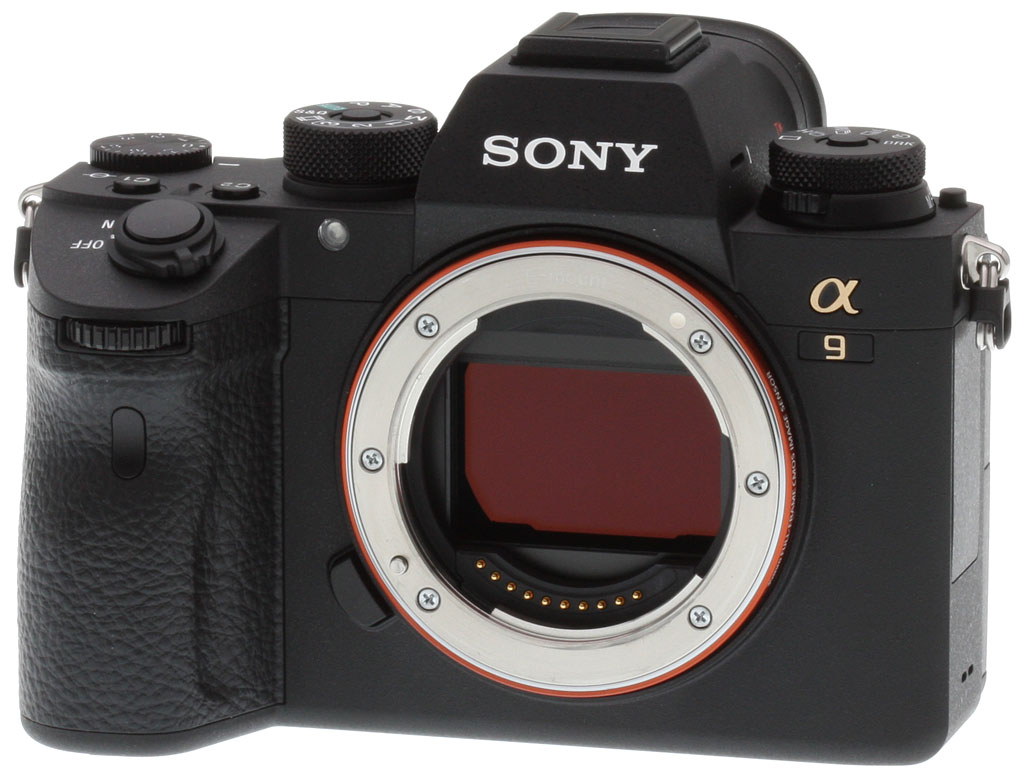
Answering the calls of the most demanding professional photographers, Sony has started a new E-mount camera series with the full-frame A9. This brand-new camera combines a new, state-of-the-art image sensor with a new autofocus system and a variety of new features and improvements to their proven and popular approach to mirrorless cameras. Let’s look at the features and specifications of the A9.
Sony A9 Key Features
- Durable camera body that retains the compact form factor of previous full-frame E-mount bodies
- Joystick and AF-On button for enhanced autofocus control
- Higher-capacity battery
- 3-inch touchscreen display
- High-resolution, 120 frames per second electronic viewfinder with no blackout
- 5-axis in-body image stabilization
- 24.2-megapixel stacked back-illuminated full-frame CMOS sensor
- ISO 100 to 51,200, expandable to 50-204,800
- Up to 20 frames per second continuous shooting
- UHS-II support
- 4K video with full-pixel readout
Camera body
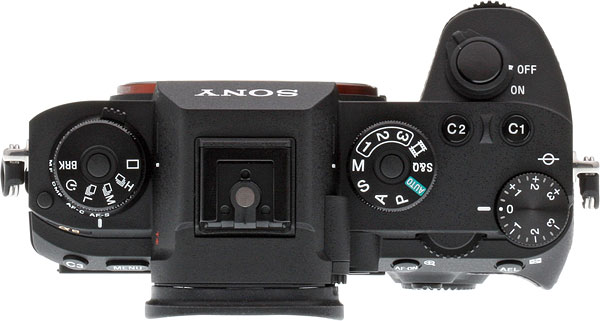
While the A9 shares similar design elements with the Sony A7 series of cameras, it has a few differences that should satisfy Sony shooters. On the top deck of the camera, one of these changes are stacked, independent Drive and Focus Mode dials. No longer will you need to scroll through menus or set a custom function for switching the focus mode. Both dials are lockable as well to prevent accidental changes to settings during shooting.
  |
The back of the camera has seen changes as well. There is now a dedicated AF-On button, perfect for photographers who enjoy using back-button autofocus techniques. Below the AF-On button and to the right of the display more on that in a bit is a new multi-selector joystick. This multi-selector provides direct, immediate control over autofocus points or for scrolling through images during playback. Astute readers will also note that the video record button has been moved next to the EVF, which puts it within natural reach of your thumb.
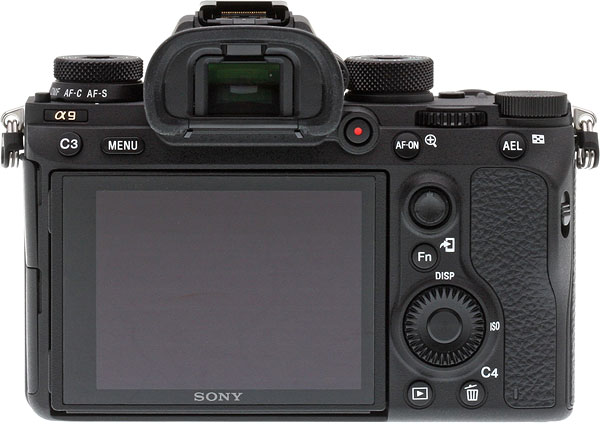  |
The A9 includes numerous ease-of-use changes as well, some of which may not be immediately apparent but will help make the camera more user-friendly. There is a new My Menu feature. This dedicated menu allows users to store and customize up to 30 menu items for quick recall. You can also designate certain settings, such as shutter speed, aperture, AF area and more, to be recalled when holding function buttons. Regarding focus settings in particular, you can register frequently used focus area settings for future use and can use separate or identical focus areas and points for horizontal or vertical-orientation shooting. Customizability matters for many users and in total, there are 11 buttons on the A9 which can be customized and reassigned to control up to 72 different functions.
 |
Designed to meet the exacting standards of professionals, the A9 includes numerous reliability and usability improvements over the A7 series of cameras. The magnesium alloy body has dust and moisture resistance around most of its controls and buttons, allowing the camera to be used in demanding situations, although note that it is not guaranteed to be 100 percent dust and moisture proof despite its seals and tongue-and-groove joints.
There have also been changes to the E-mount itself. Sony has increased the rigidity of the mount and added a pair of screws (bringing the total to six) so that the mount will remain durable and strong when supporting heavy telephoto lenses.
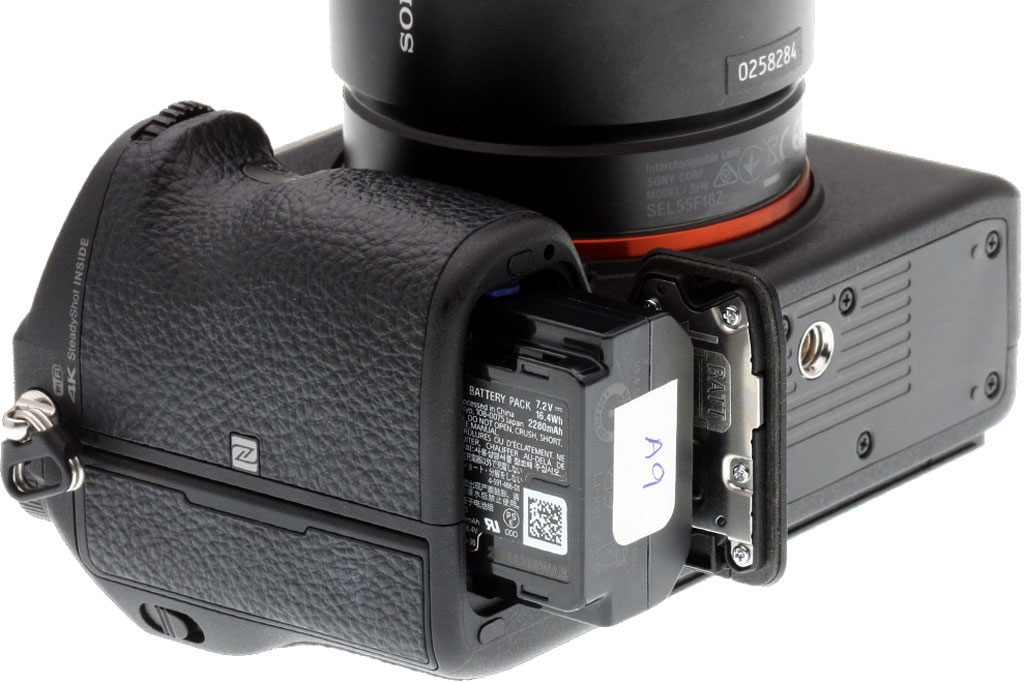
The A9 can be used longer between charges as well, as the new NP-FZ100 battery provides twice the life of the previous NP-FW50 battery, CIPA-rated at approximately 480 still frames on a charge when using the electronic viewfinder, and 650 shots with the LCD monitor. There is an optional VG-C3EM vertical battery grip available which can double battery life, and the optional NPA-MQZ1K Multi Battery Adaptor Kit can hold up to four batteries and act as external power source.
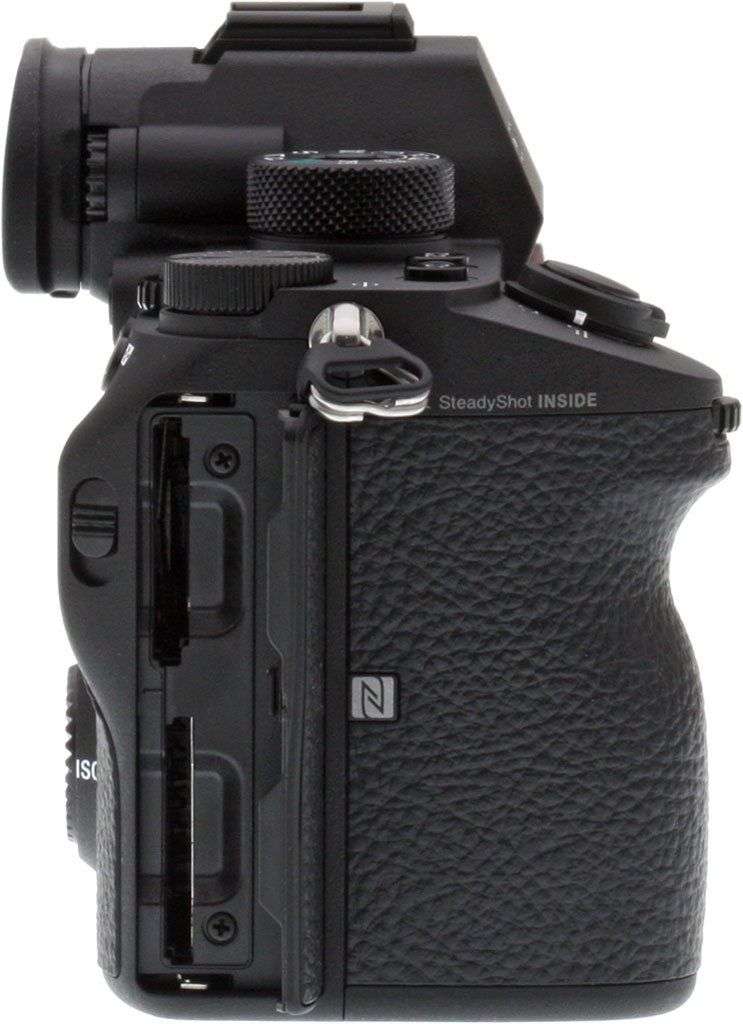
Looking at the right side of the camera, we find dual media slots. The A9 supports SD/SDHC/SDXC memory cards but one of its slots can also use a Memory Stick Duo card. Unlike previous Sony cameras, the A9 now features UHS-II card support, but only in one slot. The second slot unfortunately only supports up to UHS-I.
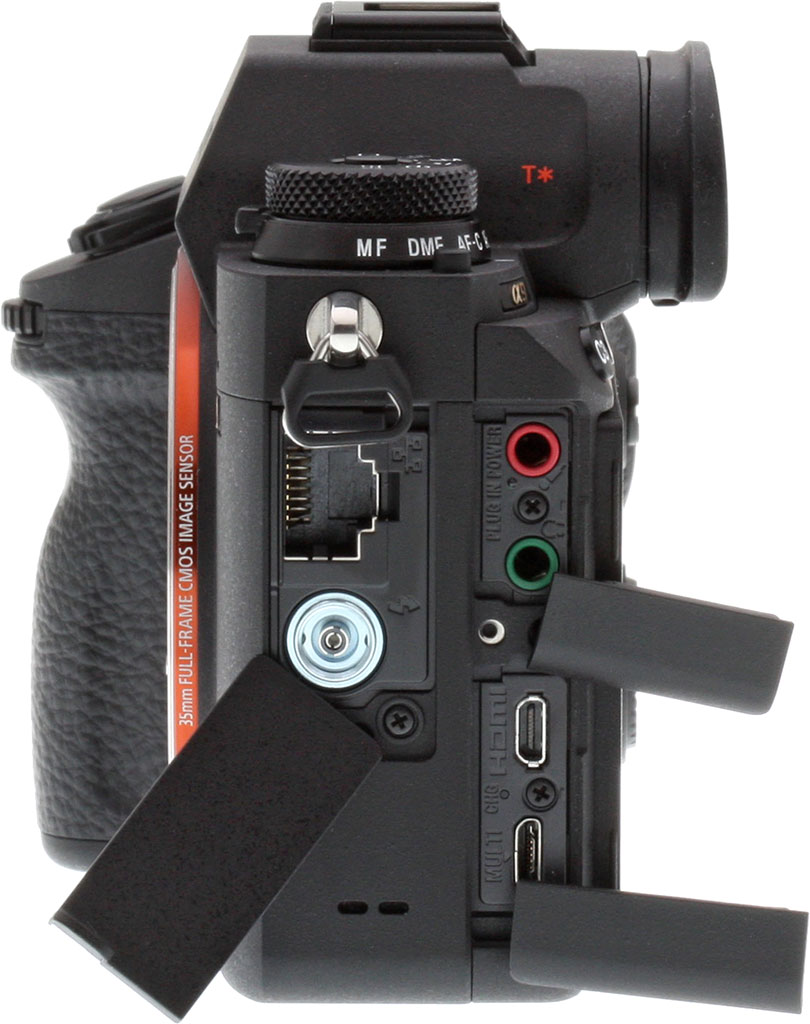
Workflow is critical for photographers on strict deadlines, so Sony has included wired LAN (Ethernet) support for FTP file transfer. Further workflow improvements include new PC remote storage options, faster startup, copyright information embedding, a flash sync terminal, the ability to have the camera automatically shut off at certain temperatures and the ability to edit the first three characters of file names.
Additional wired connectivity includes a Multi Micro USB 2.0 data port which also supports a wired remote, tethering, USB power and in-camera charging, a Micro (Type-D) HDMI port, 3.5mm headphone and external mic jacks, and a Multi Interface hot shoe. The A9 also has an IR receiver in the grip with support for the RMT-DSLR1 and RMT-DSLR2 Wireless Remote Commanders.
The A9 also includes wireless via Wi-Fi, NFC and Bluetooth functionality. In addition to being able to remotely control the camera and transfer images wirelessly with PlayMemories Mobile on your smartphone, the camera can also embed location data from your phone into captured images.
With a newly-developed 5-axis optical image stabilization unit built into the body, the A9 is stated to offer up to five stops of vibration reduction. And since stabilization is applied to the live view image, it helps keep your shots properly composed even when shooting in low light or using a long, heavy lens.
The A9 includes a 3-inch type 1,440K-dot touchscreen LCD. This is the first pro-oriented Sony camera to include a touchscreen display and allows functionality such as Touch AF. The monitor tilts as well, a maximum of 107° upward and a maximum of 41° downward. The display includes WhiteMagic technology (white pixels in addition to red, green and blue) designed to help the display be viewable even when used in bright lighting conditions.
The A9 is all about speed. Being able to capture images quickly doesn’t mean much to sports shooters in particular if you don’t have a good viewfinder experience. We have seen Sony give attention to viewfinder speed and performance in many of its recent cameras, but the A9 aims to take it to the next level with zero viewfinder blackout, even when shooting at 20 frames per second, and a direct viewfinder image of the subject during tracking and capture.
 |
Looking at the viewfinder itself, it is a 0.5-inch OLED viewfinder with 3,686K dots and it operates with a 120fps refresh rate (60fps live-view refresh rate). The Tru-Finder EVF features a generous 0.78x magnification and 100% coverage. The viewfinder also has Zeiss T* coating to reduce reflections.
Paired with the viewfinder is a hybrid shutter mechanism. The mechanical shutter has been refined and offers lower vibration than previous mechanical shutters. Further, the shutter is rated for 500,000 cycles. The silent, zero-vibration electronic shutter offers shutter speeds up to 1/32,000s and is said to offer minimal distortion. The mechanical shutter tops out at 1/8,000s, but both can shoot with shutter speeds as slow as 30 seconds. The mechanical shutter also offers a bulb setting. Further, flash sync speed is 1/250s.
Sony A9 Shooting Features
The A9 is the first full-frame camera to utilize a Sony Exmor RS back-illuminated image sensor with a stacked structure. This stacked design is engineered to offer faster readout. In fact, Sony states that the new sensor is 20 times faster than their previous front-illuminated CMOS image sensor found in the A7 II. The pixel layer of the image sensor sits on top of a separate pixel layer – which has a high-speed signal processing circuit and integral memory – which both sit above the Bionz X image processing engine, which itself includes a new front-end LSI to reduce noise while improving image detail over a wider ISO range.
 |
The 24.2-megapixel Exmor RS CMOS sensor can capture uncompressed or compressed 14-bit RAW images across a wide ISO range of 50 to 204,800, although the native ISO range is 100 to 51,200. Sony is claiming 14-stop dynamic range from the new sensor. Further, the sensor includes a charge protection coating on its optical filter and an image sensor shift mechanism to help keep dust off the sensor.
With a 1200-zone evaluative metering sensor, the Exmor RS CMOS sensor-based metering system of the A9 has a working range of -3 EV to 20 EV. The metering modes include Multi-segment, Center-weighted, Spot (standard and large options are available), Entire Screen Average and Highlight. Exposure compensation is available for +/-5 EV in 1/3 and 1/2 EV steps. Users can also set a standard exposure value of +/-1 EV in 1/6 stop increments which can be set independently for each metering mode.
Regarding spot metering, the A9 can link either a standard or large spot metering area to flexible or expanded spot focus areas. The highlight metering mode helps prevent blown highlights by detecting the brightest area in the frame and the average mode is designed to provide consistent exposure even when changing composition.
The A9 offers more customization to Auto ISO. You can set the shutter speed above which the ISO changes when the camera is set to P or A shooting modes. You can specify a low ISO Auto limit for minimizing motion blur when shooting a moving subject as well.
 |
The A9 uses Sony’s latest hybrid 4D Focus autofocus system. This autofocus system includes 693 phase-detection points which cover 93% of the image area. In addition to these 693 PDAF points, there are also 25 contrast-detection autofocus points. The end result is a hybrid autofocus system which Sony claims is 25% faster than the autofocus system in the Sony A7R II.
Autofocus isn’t solely about speed, however, as accuracy, low-light performance and modes matter too. The A9 includes enhanced Eye AF, providing approximately 30 percent better eye accuracy compared to the Sony A7 II. Face detection has seen improvement. Low light autofocus is rated down to -3.0 EV with an f/2.0 lens, which while not rated for as low light as some professional DSLR cameras, is still very low. The A9 offers an expand flexible spot mode, designed for moving subjects, which can automatically shift focus to one of eight adjacent autofocus points when tracking a subject.
For users with A-mount lenses, it is worth pointing out that the A9 is designed to work well with adapted A-mount lenses as well. Granted, continuous tracking AF caps the burst rate at 10 frames per second with A-mount lenses mounted using the LA-EA3 adapter, but that should still prove plenty fast for many users. See this Sony support page for the various continuous shooting and AF tracking capabilities, as it heavily depends on the lens and adapter type.
 |
Photographers looking for extra reach and using the A9 in APS-C mode (either with a full-frame lens or an APS-C lens) will still be able to utilize many autofocus points. When shooting with a full-frame lens in the APS-C format (10 megapixels), the A9 can use 299 phase-detection autofocus points. When using an APS-C lens, the number drops to 221 PDAF points and 25 contrast-detect AF points.
Speed. That is clearly the primary focus for Sony with the A9 and its specifications are impressive. According to Sony, the camera can capture up to 241 full-resolution compressed RAW images (or 362 max-quality JPEG images) at a blazing fast 20 frames per second. Not only that, but the camera is doing this with full AF/AE tracking and without viewfinder blackout. The A9 calculates AF and AE up to 60 times per second, allowing what Sony says is improved tracking of subject movement and changes in lighting conditions.
If you want to shoot RAW+JPEG or uncompressed RAW, Sony”™s published specifications claim 222 RAW+JPEG frames, 128 uncompressed RAW frames and 118 uncompressed RAW+JPEG image buffer depths. These numbers are similar to what the A9 managed in the lab. Unfortunately, buffer clearing still takes a long time (especially with such deep buffers), even with a fast UHS-II card. See our Performance page for details.
 |
Sony A9 Video: 4K UHD video at 100Mbps
The A9 records 4K UHD (3840 x 2160 resolution) video with full pixel readout and no pixel pinning. This allows the camera to condense up to 2.4 times the necessary data for 4K video into a 4K output. The camera offers clean HDMI output for both 4K and Full HD video to external recorders or monitors and the camera can simultaneously record internally and externally.
4K video can be recorded with a bit-rate up to 100Mbps and frame rate as fast as 30 frames per second in the XAVC 4K file format. Full HD video can be recorded at up to 120fps using the XAVC S HD recording format with a 100Mbps bit-rate. Regarding frame rate, the A9 records video from 1 frame per second up to 120fps in Full HD quality, allowing recording of 60x quick motion to 5x slow motion video. Slow and Quick motion effects can be previewed in camera, eschewing the need for post production.
Autofocus performance is improved for video recording thanks to the new hybrid 4D Focus system. There is now a wider AF area that covers the same amount of the frame as still images and focus tracking is said to be better as well.
 |
Sony A9 Pricing and Availability
The A9 began shipping from May 25th with a price tag of about US$4,500 (CAD$6,000) for the body only.
Alongside the camera, Sony introduced a variety of accessories for the A9. In addition to the new NP-FZ100 battery (~US$80), VG-C3EM vertical grip (~US$350) and NPA-MQZ1K multi-battery adaptor kit (~US$400) mentioned earlier, Sony has released a GP-X1EM grip extension (~US$130), FDA-EP18 eyepiece cup (US$11) with locking mechanism, and a shatterproof PCK-LG1 glass screen protector (US$28) for the new touchscreen display.
In the Box
The Sony A9 box (as tested) contains the following items:
- Sony Alpha ILCE-9 Body
- NP-FZ100 Rechargeable Lithium-Ion Battery
- BC-QZ1 Battery Charger
- AC-UUD12 AC Adapter
- Power Cord
- Cable Protector
- Body Cap
- Accessory Shoe Cap
- Eyepiece Cup
- Micro USB Cable
- Shoulder Strap
- Sony 1 Year Limited Warranty
Recommended Accessories
- Large capacity SDHC/SDXC memory card. Faster UHS-II types are recommended.
- Full-frame E-mount lenses
- Extra NP-FZ100 Battery
- VG-C3EM Vertical Grip
- External P-TTL Flash such as the HVL-F45M
- Camera Bag